
EPISODE · Aug 1, 2021 · 9 MIN
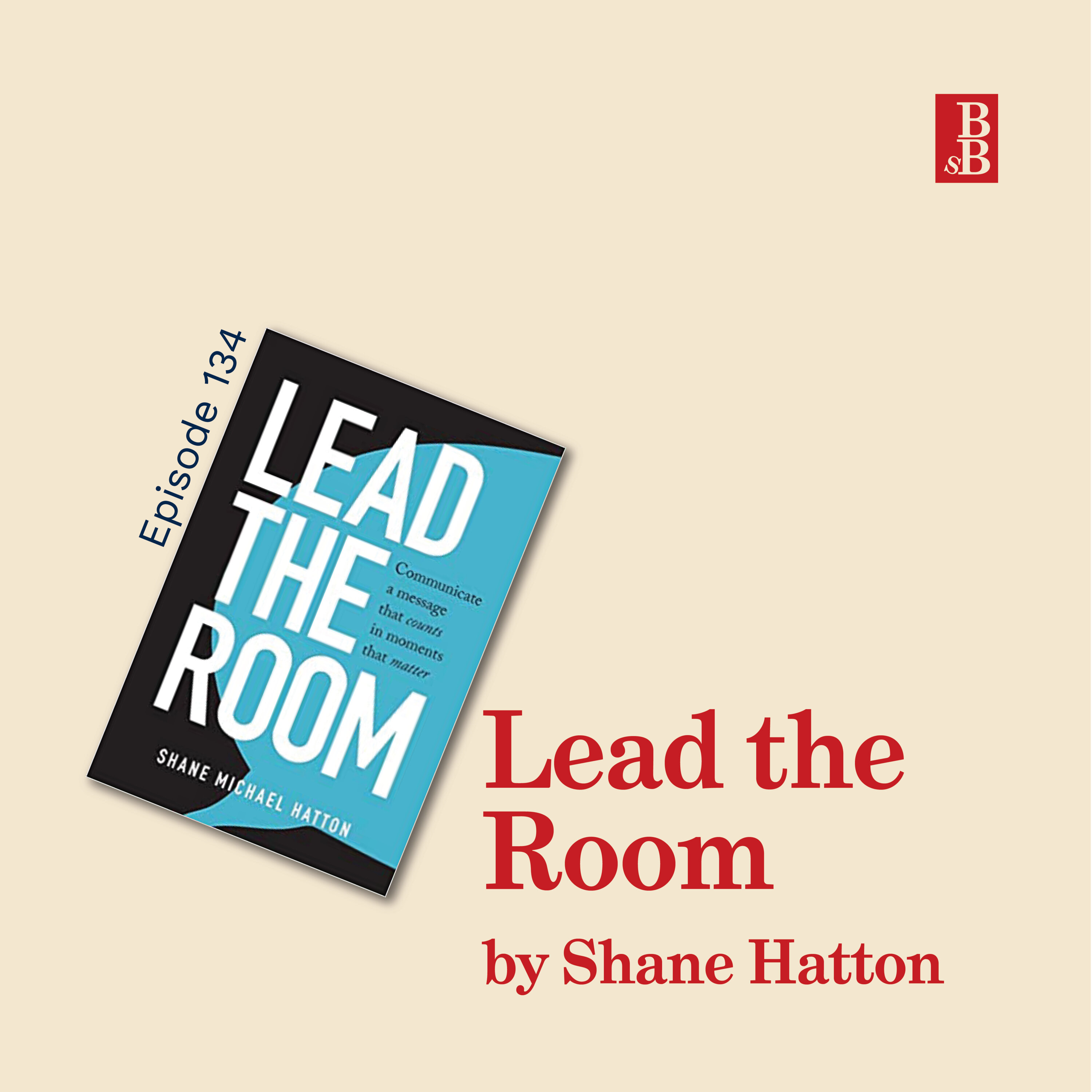
Lead the Room by Shane Hatton: the real secrets behind great presentation skills
from Steph's Business Bookshelf Podcast · host Steph Clarke
About the book We don’t need better speakers. We need more effective leaders. This book isn’t a primer on becoming a better speaker, though if it helps you nail your next presentation that’s great. The real goal is to help you become a more effective leader. In ‘Lead The Room’ you’re invited to think bigger and aim higher than the idea of presentation skills. To think holistically about how you can communicate and connect more effectively. This book will give you the tools to raise your visibility, leverage your leadership platform and lead with more impact at scale. Source: https://shanemhatton.com/ About the author Shane works with organisations to develop remarkable people leaders. The kind that you talk about and remember. Put simply he helps shift people leaders from high potential to high performance and from great to remarkable so that executive leaders can move from transactional to strategic. His clients tell him that his‘secret sauce’ is the ability to bring clarity to their thinking and simplicity to complexity. Shane is an author, trainer, coach and speaker based out of Melbourne, Australia and works online, onstage and in person. He’s a member of the Forbes Global Coaches Council, a Gallup Certified Strengths Coach and the author of ‘Lead The Room — Communicate a Message That Counts in Moments That Matter’ (available in all good bookstores). Source: https://shanemhatton.com/ Big idea #1 — Who, what, and when This goes to the idea that a great presentation or great communication is all in the preparation. Shane says “there’s more to leading a room than being a great speaker or delivering a polished presentation”. He shares a couple of examples in the book of where he saw two different speakers at a conference. One of them had a super polished presentation, but the audience looked bored and disengaged. The second presenter, was visibly a little bit nervous, probably less experienced as a presenter, but had everyone leaning in and enraptured by their energy and the engagement. Most of us worry about how to present. We worry about things like ‘what to do with our hands’ and ‘where to stand’ or ‘how to move’, without actually thinking about the who and the what of a presentation or communication. The who is who you are, what’s your reputation, how credible are you? The what is what you say? Is it clear, succinct, and valuable? How is delivering in a way that connects, and using the appropriate medium or the method that connects. Big idea #2-positioning, messaging and developing This is the core idea and provides the structure of the book. It’s the ‘three big obsessions’ of great communicators. Positioning is all about developing your character, leading your narrative, and building your credibility. This allows you to position yourself as someone who can be trusted in a particular topic. This requires you to manage your reputation, making sure that you’re showing up consistently and being authentic in your values and your behaviours. Messaging is determining your value. Shane describes this as comparing the the ‘boardroom versus the bedroom’ problems that your audience might be worrying about. Boardroom problems might be things like ‘I’m worried about our staff attrition’, or the slightly more surface topics. Whereas the bedroom problems are what you might only admit to your closest confidants. Things like ‘I’m worried that I’m not relevant anymore’, or ‘I’m worried that my job is at risk’. By determining your value, you can make sure that you actually get to the heart of the problem, likely the ‘bedroom’ problems, rather than the surface issues. Then you can define your message, and think about the structure of any presentation or communication that you are putting together. Finally, developing is the evolution of the craft and getting better at thinking, investing, asking, and failing so that your communication skills and style continues to evolve and develop. Big idea #3 — The flight path For the rough structure of presentation or a communication, Shane uses the analogy of the flight path, or the preparation, takeoff, in-flight, and the landing. The five parts of the flight path are; Attention; getting people’s attention upfront by asking a question, making a statement (maybe a controversial one), or telling a story. Tension; giving people a reason to stay engaged by painting a picture of a vision of the future, or really getting into the pain points people are feeling. Perspective; sharing some stats or some research, or key thoughts on the idea or the topic. Resolution; the ‘what then’ question, or the big idea you’re sharing. Action; what should people do next? What is the one thing that they could go and do as a result of you sharing this particular idea? You can listen to me talking to Shane about learning on his podcast Phone Calls with Clever People, here. Support my book habit: https://www.buymeacoffee.com/stephsbookshelfSee omnystudio.com/listener for privacy information.
Embed this episode
NOW PLAYING
Lead the Room by Shane Hatton: the real secrets behind great presentation skills
No transcript for this episode yet
Similar Episodes
No similar episodes found.
Similar Podcasts
No similar podcasts found.