
EPISODE · Aug 18, 2019 · 13 MIN
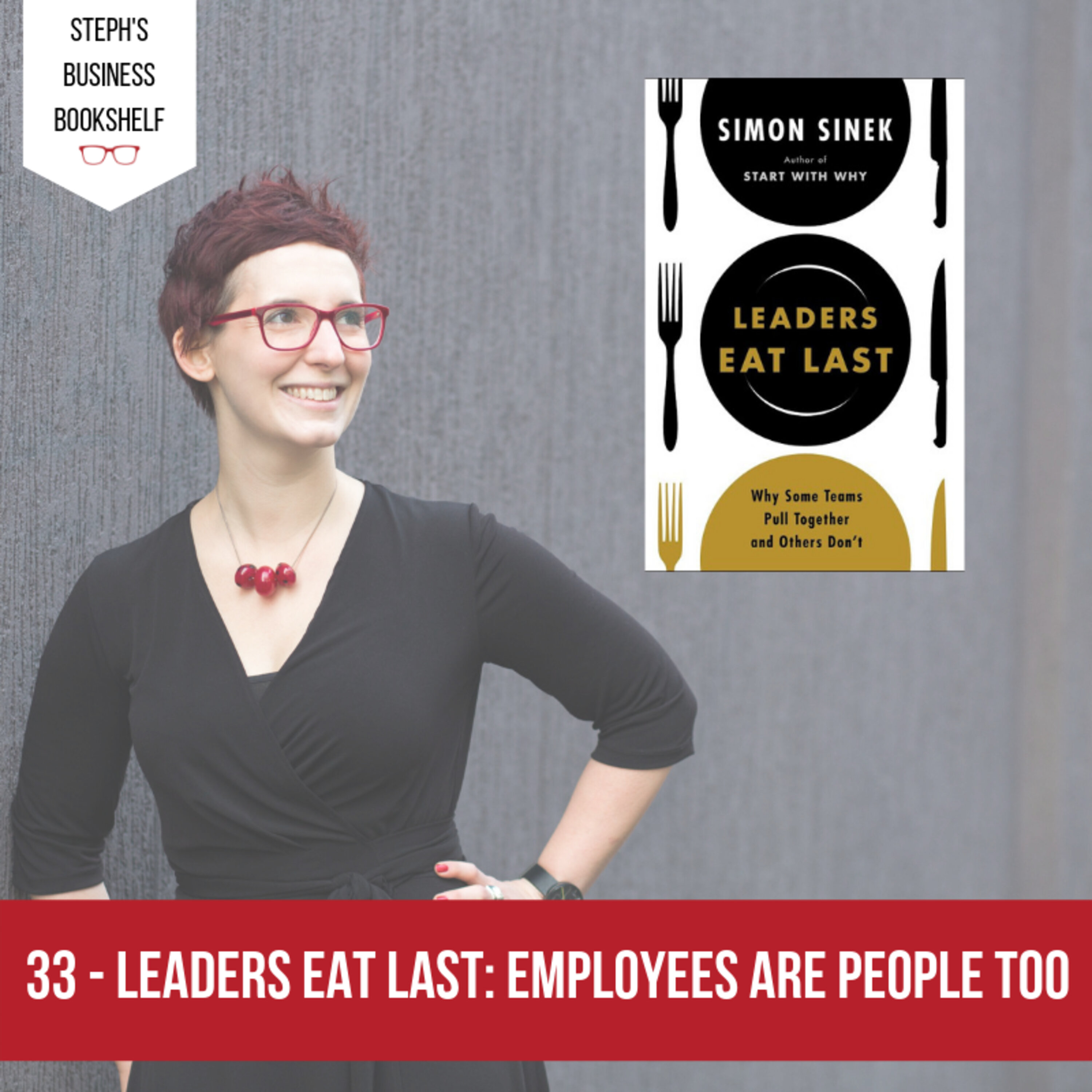
Leaders Eat Last by Simon Sinek: Employees are people too
from Steph's Business Bookshelf Podcast · host Steph Clarke
About the Author Simon is an unshakable optimist who believes in a bright future and our ability to build it together. Described as “a visionary thinker with a rare intellect,” Simon teaches leaders and organizations how to inspire people. With a bold goal to help build a world in which the vast majority of people wake up every single day feeling inspired, feel safe at work, and feel fulfilled at the end of the day, Simon is leading a movement to inspire people to do the things that inspire them. Simon is the author of multiple best-selling books including Start With Why, Leaders Eat Last, Together is Better, and Find Your Why. His new book, The Infinite Game, will be released in 2019. Source: https://simonsinek.com/about/simon-sinek Click here to buy on The Book Depository https://www.bookdepository.com/Leaders-Eat-Last/9780670923175/?a_aid=stephsbookshelf About the Book In his work with organizations around the world, Simon Sinek noticed that some teams trust each other so deeply that they would literally put their lives on the line for each other. Other teams, no matter what incentives are offered, are doomed to infighting, fragmentation and failure. Why? The answer became clear during a conversation with a Marine Corps general. “Officers eat last,” he said. Simon watched as the most junior Marines ate first while the most senior Marines took their place at the back of the line. What’s symbolic in the chow hall is deadly serious on the battlefield: Great leaders sacrifice their own comfort–even their ownsurvival–for the good of those in their care. Too many workplaces are driven by cynicism, paranoia, and self-interest. But the best ones foster trust and cooperation because their leaders build what Simon calls a “Circle of Safety” that separates the security inside the team from the challenges outside. Simon illustrates his ideas with fascinating true stories that range from the military to big business, from government to investment banking. Source: https://simonsinek.com/product/leaders-eat-last/ Links Simon’s website, full of insights and articles on leadership and workhttps://simonsinek.com/discover/ Simon’s TED Talks: https://www.ted.com/speakers/simon_sinek Join in the #shelfie posts on LinkedIn and Instagram See Simon live in Australia More detail on the Milgram experiment mentioned in big idea 2:https://www.simplypsychology.org/milgram.html BIG IDEA 1 (4:30) – Employees are people too. There’s a case study in the book about a factory when the new leadership took over. The employees were treated differently between those in the factory and those in the office. Factory employees need to ask for a break and use payphone if they need to make a phone call while those in the office can use their mobile phones or the office phone, free of charge. This mentality didn’t create great relationships between those in the factory and those in the office. This also completely eroded trust because it is very much two classes of citizens. What the new leadership did was unlock the empathy between the employees by leveling the playing field, taking away many of barriers and rules that separated the two types of roles. They also extended trust by allowing the factory workers to have the same flexible working conditions as those in the office. What they started to do was create trust, relationship and bond between all the workers. This is a huge moment as teams see each other as family to stick together and help each other with examples such as pooling leave balances when someone’s wife became ill and he needed additional time off to help her recover. Extending the trust and building the bridges of workers didn’t just extend the human connection, they also had great business outcomes with increases to revenue, profit and decreases in theft and complaints. BIG IDEA 2 (8:11) – Bad leaders can make you a bad person. The Milgram experiment happened a couple of decades ago to establish – why do good people sometimes do bad things? An interesting correlation they found was what the impact of a leader had on them. In this experiment they had a student, a teacher and a scientist. The student and the scientist were both part of the experiment but the teacher didn’t know it. The student was wired up in an electric machine and the teacher (who didn’t know what they are being asked to do) had to administer an electric shock to the student when they got answers wrong on a test. The scientist was giving the teacher direction and telling them at what point to turn up the voltage and shock them. The interesting part was whether the teacher sees the student. When there is no contact or view of the student being shocked, 65% of the teachers obey the scientist and went through to a potentially lethal shock (by the way, the shock wasn’t real, the students pretended they’d been shocked). While 70% of the teachers stopped quite early during the process when the teacher had to physically put the hand of the student in the electric plate. This has an impact in our organisations, for example, if you can’t see the person you’re hurting or damaging, from an emotional or leadership perspective, it has an impact on how you choose your behaviours and decisions. As you get further away from people, how does that impact your decision? Equally – who is influencing your decisions? Are they a good, or a bad, infliuence? BIG IDEA 3 (10:51) – Bad cultures equal bad leaders. Bad cultures drive things underground and diminish good behaviour. There’s an example in the book from Citigroup and Goldman Sachs where new leaders alienated their staff and created really toxic cultures. This created toxicity and diminished trust and reward and recognise different behaviors which will ultimately drive what people will do – and even in organisations which had previously good cultures. By providing vision, direction and guidance and coaching your team, it can have a much better outcome. Better decision making and communication can be made. Less fear and more collaboration. Just because you’re in charge doesn’t mean you know the answers. Music By: Springtime Song by Jon Gegelman Click here to buy on The Book Depository Support my book habit: https://www.buymeacoffee.com/stephsbookshelfSee omnystudio.com/listener for privacy information.
Embed this episode
NOW PLAYING
Leaders Eat Last by Simon Sinek: Employees are people too
No transcript for this episode yet
Similar Episodes
No similar episodes found.
Similar Podcasts
No similar podcasts found.