Welcome to CMS OnAir, the podcast on migration and refugee issues brought to you by the Center for Migration Studies of New York. I'm Emma Winters, CMS's Communications Coordinator. This is the fourth episode of a series, accompanying immigrants in the COVID-19 era, how Catholic ministries are transforming successful programs. In this episode, you will hear about Dominican University, a Catholic Higher Education institution with a special commitment to immigrants.
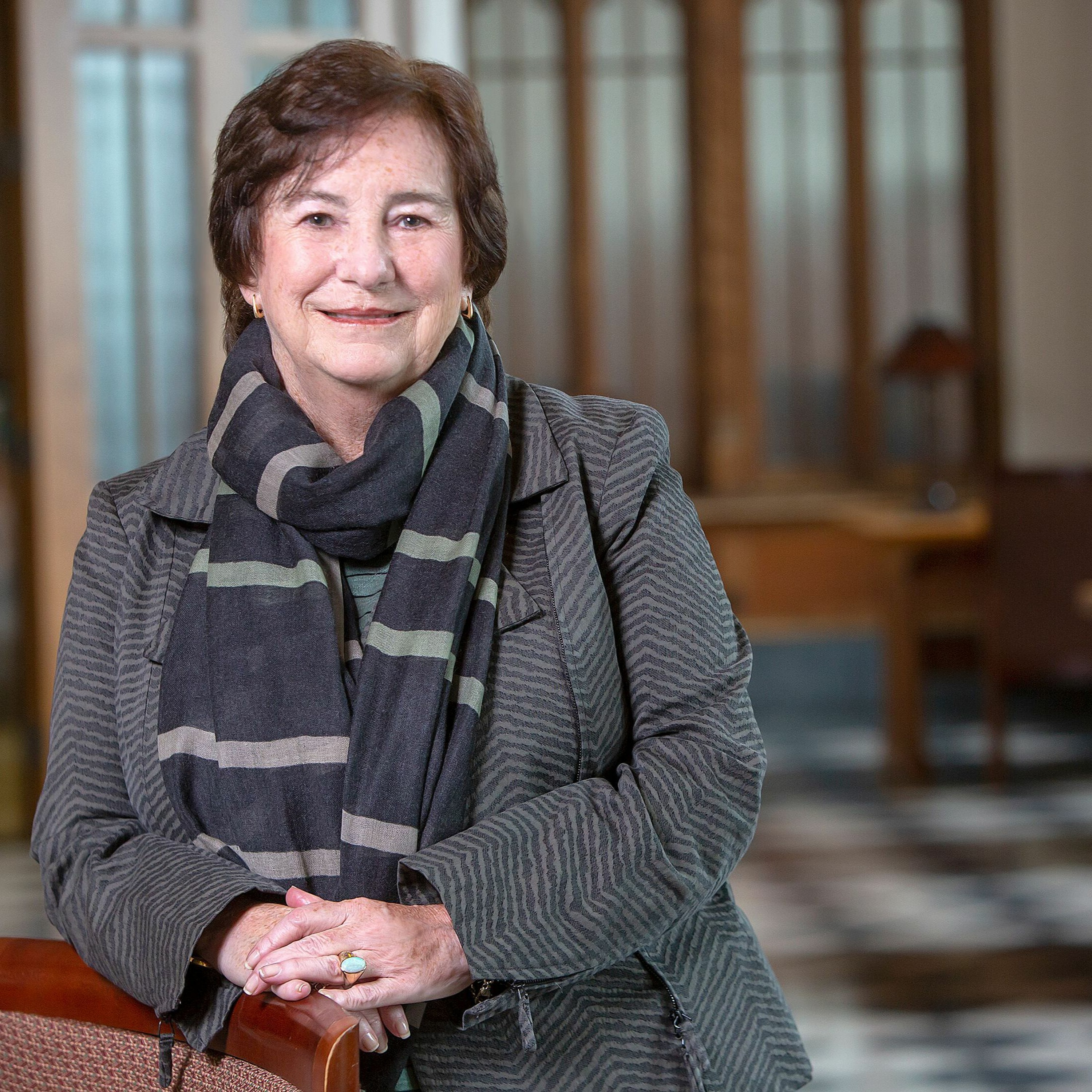
Here to share the university's history as an immigrant serving institution, why the university adopted a sanctuary campus covenant and the challenges presented by the COVID-19 pandemic, racism, and restrictionist immigration policies is Donny Carroll, the president of Dominican University. Donny Carroll has led Dominican University for 27 years and been honored with numerous awards for her work with immigrant students, including the Strangers No Longer Award from the Archdiocese of Chicago and the Moral Courage Award from Faith in Public Life. She spoke with Kevin Appleby in August and at the Center for Migration Studies Catholic Immigrant Integration Initiative Conference in October. Here's CMS's conversation with Donny Carroll.
Well, thank you everyone for joining the Center for Migration Studies podcast today. Today, we have a special guest, President Donny Carroll of the Dominican University in River Force, Illinois. In your tenure, the size of the university has grown, the university has received great recognition as a top college in the Midwest and a lot of that is due to your efforts. But, attendant to the topic we have today, you've been recognized as a leader in reaching out to immigrant students, immigrant populations, educating them, forming them, and integrating them into U.S.
society. And we are grateful to have you here and to have your experience to tell us a little bit about what Dominican has done in the past with regard to immigrant students and what you're doing currently and what your vision is with regard to immigrant students, including undocumented students. So, welcome, President Carroll. The first question I have for you is, could you give us just a little history of Dominican and Mexican represented comprehensively, especially as it relates to foreign-born students and you're outreaching them into welcoming them to Dominican?
I'd be delighted to do that. And thank you for inviting me. This is a topic that I feel very about which I feel deeply. And so, I'm always delighted to have these conversations and to try to move this agenda forward in a responsible way, particularly in this climate and at this time.
Dominican, formerly Rosemary College, formerly St. Clara College, formerly St. Clara Academy really traces its roots back to the service of immigrant communities. And once upon a time in its original location and since now Wisconsin, that immigrant community were the Irish coal miners of the Upper Midwest.
And Samuel Mazzicelli, who was the founding father of the Cincinnati Dominican congregation, was deeply committed to providing education for women and men in that community and was very conscious of the cultural context for that education. In fact, in addition to working with lead miners, he also worked with the Native Americans in that area and insisted that the education be provided to them in their own language. So he was one of those early pioneers of what we today call language access. So Dominican stands on the shoulders of some great, pioneering educators relative to first generation of the college and the green communities.
And that has been our history, no matter the location and no matter the time. The student profile has changed. You know, we were Irish lead miners. When I first arrived at Rosemary College in 1994, our immigrant community was substantially Polish families and Italian families.
And then as the demographic of Chicago has changed, as we've seen migration south and west, the West Side of Chicago has seen an enormous growth in our Latinx families and communities. And so I like to think of Dominican University as having a multicultural identity that is currently aligned with our Latinx profile. And so there's a long history of being responsive to immigrant communities. We have been an HSI, Hispanic serving institution since 2011.
We are currently 50% first generation of college undergrads, 50% Latinx students and 50% palle-eligible students. So we are proud of our strong social mobility index and the high graduation rates we have for first generation to college students of lower income, often students of color, a variety of immigrant backgrounds. Thank you. That's helpful history.
Let's fast forward a little bit to the current day. I was interested in seeing that you have a sanctuary campus covenant, which strikes me as very unique among colleges and universities. Could you explain what the sanctuary campus covenant is and how that plays out at Dominican? Absolutely.
We actually have two sanctuary campus documents that direct policy and many of our programs in our outreach. And it's interesting that we're talking about it now because these documents book in this political chapter. Dominican has been a strong advocate for undocumented students for many, many years. And so in 2016, with all of the challenge to DACA and the concerns about deportation and the general feeling of attack and disenfranchisement that many of our immigrant families and particularly our undocumented students felt at that point, the university was really looking to make a strong statement of support.
And so in 2016, we introduced what we called our sanctuary campus resolution. And what was particularly important about this document was not only the content but the process. It was recommended through our climate equity and inclusion committee. It was approved by both the staff assembly and the faculty senate and it made its way up to a formal board resolution.
So the entire campus community had made a strong public commitment to be a place of welcome, a place of safety, a place of belonging for all marginalized students, but in particular, those undocumented students who were struggling so valiantly at that point. And so that initial resolution became the umbrella for a great deal of work the institution has done since then, resulting in what we recently passed, which is we call our sanctuary campus covenant, which reflects the greater understanding of the systemic issues around marginalized student groups. It expands our public statement of commitment to the moment and the time. It's a stronger anti-racism statement.
There's a greater critical consciousness in this document and a stronger commitment to collective action. It aligns with our strategic plan, which is a title creating a world of difference and it has much more specificity on how we might address recruitment, policy, faculty training and development in what continues to be a very challenging time. Not only for undocumented students, but for students and families across many different identities and issues. Thank you.
And I encourage our listeners to go on your website and to look at the sanctuary campus covenant. You may reference to some of the challenges that marginalized students might face. Could you talk a little bit about what are some of the challenges that a former and student and a student who's otherwise marginalized might face in obtaining their education and what Dominican University does to help them meet that challenge? Often we don't think about maybe what the challenges are for those who are in a more vulnerable position than the rest of us may be and how some of those challenges can be daunting.
So anything you can share on how the university responds to the unique experience of immigrant students and the unique realities that they face as they attempt to get their education. Well I should start by saying it's a humbling challenge for all of us and the answers are evolving and some we can control and shape and change and others are poignant because they're outside our control. I would group it in a number of different buckets. The financial policy obstacles to successfully completing a college degree are significant and I think one of the places that Dominican makes an enormous contribution very tangibly is financial.
You know that we know that most of our undocumented students don't have access to the federal dollars be the grants or loans that other students do. Only recently have had Illinois undocumented students had access to any map related money. So one of the things that we try to do is make it financially possible for students not only to attend but to persist to graduation. But the challenges is so much bigger because undocumented students face so many family pressures.
There are so many quiet biases in terms of COVID-19 right now. Healthcare for undocumented students is an enormous challenge and one that's easily compromised by the fact that many families don't want to step forward and expose their status in order to get healthcare. Challenges that we might imagine are complex for us already are often much more complex for an undocumented student. Then you have all those other cultural and environmental challenges.
These days we're describing it very often as a hierarchy of values that in many cases and in many communities. First generation college students, students of color feel that they are valueless, that their experiences is perceived as less worthy, that their opportunities are narrowed by history and experience. And one of the things that Dominican tries to do imperfectly and always striving is to create a sense of belonging. To let our students know that they are assets not only for the institution but once they graduate for this change in interdependent global world, they're not charity to the institution.
It's true that their contribution, their determination, their sense of purpose, their commitment to family and community are characteristics that strengthen the Dominican community at large and enrich our experience. So we work very hard to value the heritage, the talents and the possibilities of all of our students and create an environment where they feel not only welcome but challenged and where they feel there are real opportunities. We try to be very granddable, we try to understand the law and policy and where there are limits for undocumented students and how we advise them on careers and opportunities so we're not just adding to their frustration but we're helping them bridge to very real opportunities. And we talk to them about where there are risks.
You go through in many cases a nursing program or in many cases a medical studies program and can you sit for credentialing in some states yes, in other states no, sometimes now but not before or maybe not tomorrow. So we have to be encouraging but practical, supportive without being disingenuous about the challenges and always I like to think with a sense of hope. One of the most challenging elements particularly for undocumented students is how long this limbo has persisted and how for every two steps forward there's a step back and how do you retain resilience when progress is not linear and always forward moving. So we try to be encouraging, caring and vocal in our advocacy.
I think one of the reasons that we see so many undocumented students active in again is because we speak up on their behalf. We accompany them through their journey and we value who they are and what they might contribute. Thank you for that. If you don't mind just briefly I wanted to ask you about your DACA students.
I know the American public is more educated on immigration because of the DACA students and they're in a precarious situation legally depending on the whim of our political leaders. So can you talk a little bit about how many DACA students you may have and what special challenges they're facing? About 10% of Dominicans undergraduate student body is undocumented. Most of those students are DACA students and so this is not only an extensive community institution but we have critical mass and critical mass creates a sense of community that creates a sense of persistence and that's important.
The question that people usually don't ask though and I think it's the more important numbers question is how many undocumented or documented students apply to Dominican that you can accept because of some of the financial restraints. I was asking our admissions director that the other day and this year we will have 40 to 50 new freshmen, DACA or undocumented students. We probably had 300 to 350 qualified undocumented students apply and he felt it's money with no object. We would have had two or three times the number of students we have but we simply to adequately find more than those 40 or 50 students who will join us.
So it's about 10% of our undergraduates but if there were other colleague institutions that would help more aggressively I can guarantee them I can give them another 300 freshmen that would jump at the opportunity for a private application. So I want to ask you now about the current state of our nation with the current immigrants on two levels. First of course you reference the COVID pandemic and I know that has an impact on marginalized communities who don't have the access to healthcare and how that might impact immigrant students but also not to be partisan but the current political leadership and administration certainly hasn't been friendly to immigrant communities. Could you talk a little bit about how that is overall with the pandemic plus the enforcement mentality of our current administration.
How that is major job more difficult because it's first of all created more fear in immigrant communities but also put them in a position where their health isn't risky. How is the university responded to these outside factors that are difficult to control and how they impact immigrant students? We have a number of Title V grants I'm straying a little bit as context and one of them is supporting a fairly substantial equity pedagogy initiative that is helping us reshape our curriculum to be more critically conscious and multicultural in our delivery. The speaker who was talking to us last week said something very provocative to me and it's not my own song I'm giving him credit.
He said there are three pandemics we're facing right now. One is COVID-19. The other is this painful evolution of our bias and that is bubble to a point of violence at particularly in Chicago and other communities. And then there are the economic consequences.
So I think one of the things that we need to consider when we think of an immigrant student or an immigrant family or a doctorate student is that they are affected by those repandex. There's a lack of racial empathy. They surely have often by the community they're in but by the lack of healthcare, higher probability of being affected by COVID-19. And then there are job prospects of their family, their access to an income which for so many immigrant families is month by month job by job.
I mean one of the things that people ask me often as we're planning to reopen is why are you reopening and aren't students sheltered in place. Well in fact the truth is many of our students have never had the privilege to stop working. In fact in many cases a mother or father has lost a job and they've had to step in and work more hours at Target or at the community store where they live. So this is a student body and a family cluster that is right on the line facing this triple pandemic.
What do we try to do? We try to be supportive. We try to intervene with emergency funding when we can. We're critically aware of the mental health challenges that evolve with all of this pressure and try to be formally supportive but also to have faculty and staff that have a particular sensitivity and a willingness to be supportive.
I think that's one of the things that Catholic University does well. We have a strong sense of commitment to the whole person. A desire to not only see that whole person but to respect their dignity and to live in solidarity with them. So I think we create an environment that is safer, not safe but and supported in a very difficult time.
I mean this is a toxic political environment. There's no other way to describe it. And for so many of our students, particularly our DACA students who have gone on the record who have exposed their location, their name, their families in some cases, we try to understand what it means to live day in and day out with that lack of security, with that fear of making their families vulnerable. We encourage their voice.
Somebody asked me the other day, how is all this changing? How students react? I said, it'll be louder. I expect our students to be louder.
The thing to those student voices is an important piece of Donna Carroll's leadership style and the formation of Dominican University's mission. Here she is at CMS's Catholic Immigrant Integration Initiative Conference in October. We have to start with understanding how the perspective is changing. Right after the Supreme Court decision, one of our DACA leaders wrote an op-ed piece for the Chicago Defender.
And in it he talked about how when his sister first got her DACA, he remembered that she said with real enthusiasm, I feel like I exist. That identity issue was so important. Then you fast forward eight years to the threat of rescinding DACA, to the toxic political environment, to all the economic and health disparities. And Carlos, this young man, he reflected and said, I realize that unlike my sister, I'm not looking to be humanized.
I'm looking for justice. And I think it's important for all of us working with immigrants, particularly with undocumented students, to realize that the narrative has changed. And to realize that what's going on now, especially for our civically engaged DACA students and others, is that everything's magnified. The triggers are shorter and the voices of students are louder.
And that's not inappropriate because it's a very threatening time. And the other factor that's changing, at least at Dominican, is that once upon a time they were single issues, and now what I'm seeing is that students talking about intersectionality. But we're seeing that no student wants to be recognized as a single dimension. I am undocumented.
Or I am this or that. They're really looking at integrating the different identities in their lives and allying together around those identities in a very different way. And I think we have to adjust our narrative and our services to their sense of integration. So as one example, one of the things that Dominican is doing right now and our students is we've established this new center.
And the students named it's our center for cultural liberation. And it's bringing together students across differences to really dialogue about their identity and really to empower one another. And it's been exciting to see. And they're also supporting one another.
I mean, I think anybody working with undocumented students knows that their inability to participate in the CARES Act initiative recently was a very wounding and personal slight. And so that these types of gatherings help us, help students helping each other. And actually they came to me. And as a result, I went to the board and we introduced something called the Trustees COVID Relief Fund.
And we provided for all of our undocumented students as we would for any students who would have access to CARES Act. So I guess I start by saying we have to recalibrate our perspective, understand where students are right now, understand their advocacy for justice and their sense of intersectionality, and then build services from there. And that's what Dominican is trying to do at this point. I have one final question, and then I'll let you have some closing remarks.
You're the president of a great university, and you have incredible knowledge of this issue. If you were president of our country and were sitting in the Oval Office, I'm not going to ask you to list 10 things, but maybe two or three things you would put on your immigration agenda. What would those be? Goodness, I guess to see the possibilities and not the limits.
I mean, I say this again and again, that 99.9% of our immigrant families and our undocumented families are contributing to the growth of the country. And we will be better and we will have greater capacity with their contribution. It's often like we talk about love. You don't have to cut it into pieces, small pieces.
In blossoms, I think that the contributions of our immigrant families and our undocumented families will only make us richer. We have to get our act again and make progress and recognize that it's irresponsible of us, this country that has so much wealth and so much intellectual capacity and has demonstrated an ability to compromise other issues, for us not to craft a pathway to information. It's overdue, and it's if we want to talk about criminal cities, criminal of us, not to resolve this. President Carroll, did you have any five comments for our listeners and also where our listeners could go to contribute to the university's mission in any way as well?
That would be helpful. What have I learned over many, many years of doing this work that you can't compartmentalize once upon a time, my focus was narrowly on the experience of our undocumented students. And I learned that that's not possible because so many of our students come from blended families, multi-generational families and experiences, so that as an active advocate for undocumented students, I also have to be an advocate for constructive integration with one as old. And the other thing I think I've learned and I would encourage other people to recognize is no student is one issue.
Any individual student is not merely undocumented. He or she has different talents, disciplines, different backgrounds, different racial histories, and we need to focus on all of that and to celebrate what that means at Dominican, you know, and for our future. There's a lot of talent out there and shame on us if we don't provide opportunities for that talent to make an contribution. President Carroll, thank you for your leadership, for being with us today and for your contributions and the contributions of Dominican University to the common good of all.
If you want to learn more about Dominican University, please visit dom.edu. CMS on airs, the music is provided by the music case. For more podcasts like this one, you can follow CMS on air on Spotify, Apple podcasts, SoundCloud, or wherever you get podcasts. To find a full transcript of this episode or get more information on CMS's research, publications, and events, visit us at CMSNY.org.