Lectionary.pro for the Third Sunday of Easter, Year A
from Lectionary.pro Hosted by John Fairless
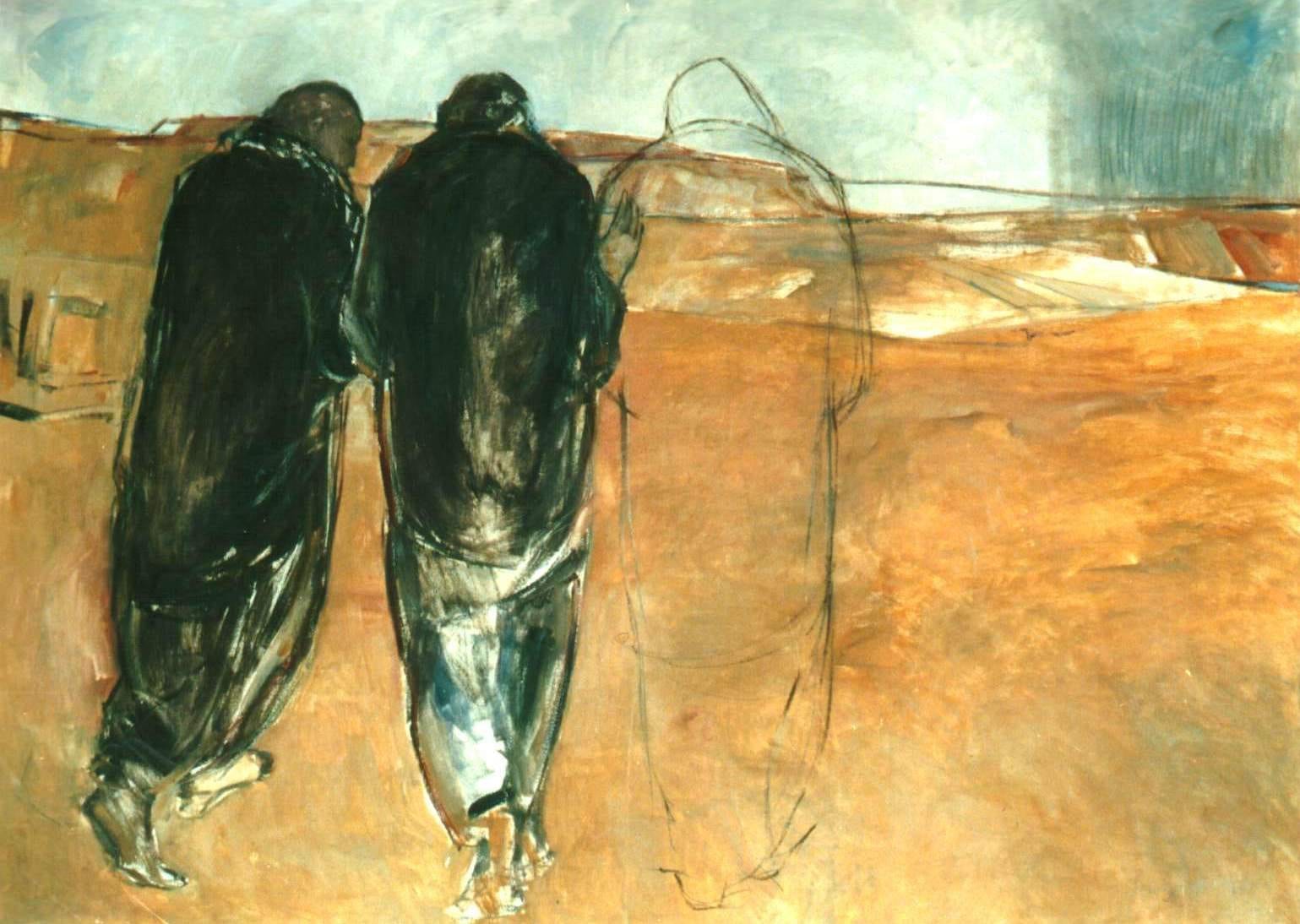
The Emmaus Road courtesy of The Missional Network (April 15, 2020) Welcome, friends, as we continue the Easter season. I have meticulously checked my sources for this week, but if I’m off again — you’ll let me know! RCL Readings Acts 2:14a, 36-41 The First Lesson — Peter’s Pentecost Proclamation Summary Picking up from Peter’s Pentecost address — which has already happened at this point in the text, but not yet in our observance of the season — this passage reaches its climax: Peter declares that God has made the crucified Jesus both Lord and Messiah. The crowd, cut to the heart, asks what they should do. Peter calls them to repent and be baptized in Jesus’ name for the forgiveness of sins and the gift of the Holy Spirit, promising that the gift is for them, their children, and all who are far away. About three thousand respond and are baptized that day. Key Ideas for Preaching 1 1. The scandal of the cross transformed: Peter boldly declares that the one whom ‘you crucified’ God has made Lord. The resurrection is not a recovery from defeat but the vindication of Jesus. Preach the audacity of Easter proclamation in the face of complicity and failure. 2. Conversion begins with being ‘cut to the heart.’ The question ‘What should we do?’ is the right response to genuine conviction. Preachers can explore what it means to be moved before being moved to act. 3. Baptism as both boundary-crossing and gift-receiving: the promise extends to those ‘far away.’ This phrase resonates with Gentile inclusion (including us!) and has ongoing implications for who belongs in the community of faith. 4. The communal shape of salvation: three thousand are added. Repentance in Acts is never merely private; it is the beginning of participation in a new community. Significant Cautions ⚠ The phrase ‘you crucified him’ has been historically weaponized as anti-Jewish polemic. Preachers must be careful to contextualize this as Peter speaking to a Jewish crowd about a shared moment of failure — not as a timeless indictment of Jewish people. Scapegoating must be actively resisted. ⚠ Avoid presenting ‘repent and be baptized’ as a simple transactional formula. The broader narrative of Acts shows that response to the gospel is a lifelong reorientation, not a one-time transaction. ⚠ The ‘three thousand’ figure can tempt triumphalism. Balance the celebration of growth with the call to depth of discipleship that follows in Acts 2:42-47. Psalm 116:1-4, 12-19 The Psalm — A Song of Deliverance and Vows Summary This psalm of thanksgiving opens with a declaration of love for God rooted in personal experience: the psalmist called out in distress and God heard. Death, Sheol, and anguish had surrounded the speaker, but God delivered. The appointed portion then jumps to verses 12-19, where the psalmist asks what can be offered in return, and answers: lifting the cup of salvation, calling on the Lord’s name, and fulfilling vows before the assembly. The Lord is praised for holding precious the death of his faithful ones. Key Ideas for Preaching 1. The psalm models an honest spirituality that begins not in abstract doctrine but in lived distress. Preachers can invite congregations to name their own ‘cords of death’ as the starting point for genuine praise. 2. The rhetorical question — ‘What shall I return to the Lord?’ — is a profound invitation to examine gratitude. Rather than a transactional mindset, the psalmist’s answer centers on public, communal acknowledgment. 3. ‘The cup of salvation’ offers natural connections to Eucharistic theology and to the Easter season. This is a rich image to develop in preaching or liturgy. 4. Verse 15 — that the death of God’s faithful ones is ‘precious’ — is surprising and worth exploring. It resists cheap comfort and affirms that God takes suffering and mortality with the utmost seriousness. Significant Cautions ⚠ The phrase ‘precious in the sight of the Lord is the death of his faithful ones’ can be misread as glorifying martyrdom or suffering for its own sake. Careful exegesis shows it means the opposite: God does not take the loss of beloved ones lightly. ⚠ The psalm’s confident, first-person voice can feel alienating to worshippers in the middle of suffering who cannot yet say ‘the Lord has dealt bountifully with me.’ Acknowledge that some are still in the distress described in verse 3. ⚠ Avoid truncating the psalm’s communal dimension. The vows are made ‘in the presence of all his people’ — the act of testimony is public, not merely private. 1 Peter 1:17-23 The Epistle — Ransomed to Love Summary The epistle calls its audience — communities living in exile and social marginalization — to live in reverent fear during their time of exile, grounded in the knowledge of what has ransomed them. They were not redeemed with perishable things like silver or gold, but with the precious blood of Christ, the unblemished lamb, foreknown before the foundation of the world and revealed in the last times for their sake. This knowledge should lead to sincere, unhypocritical love for one another, because they have been born anew through the living and enduring word of God. Key Ideas for Preaching 1. The language of exile and sojourning is powerful for contemporary congregations who feel like cultural minorities or displaced persons. ‘Exile’ is both a literal reality for some and a metaphor for the church’s relationship to the surrounding culture. 2. The contrast between ‘perishable’ and ‘imperishable’ runs through this passage and the wider letter. Preachers can explore what it means to be founded on something that neither corrodes nor fades. 3. The image of Christ as the unblemished lamb connects Passover, Isaiah 53, and Easter. This Paschal resonance is especially powerful in the Easter season. 4. The passage ends with a call to genuine (literally ‘non-hypocritical’) love. The indicative — you have been ransomed — grounds the imperative — now love one another. This is a clean example of grace preceding ethical demand. Significant Cautions ⚠ The language of ‘reverent fear’ needs careful handling. It should not be used to cultivate anxiety or an image of God as threatening. The context makes clear it is the fear that reorients priorities, not the fear that paralyzes. ⚠ The sacrificial language of ‘precious blood’ can be heard through frameworks of penal substitution in ways that distort the text. The emphasis here is on the costliness and preciousness of redemption, not on appeasing an angry God. ⚠ The phrase ‘futile ways inherited from your ancestors’ could be used to disparage Jewish tradition or the religious heritage of non-Western communities. Preachers should contextualize this as a reference to specific pagan practices of the letter’s Gentile audience, not a broad dismissal of religious inheritance. Luke 24:13-35 The Gospel — The Road to Emmaus Summary On the afternoon of the resurrection, two disciples walk from Jerusalem to Emmaus, discussing the catastrophic events of the past days. A stranger joins them, and they are unable to recognize him. They explain their shattered hopes: they had trusted Jesus would redeem Israel, but he was crucified, and reports of an empty tomb have only confused them further. The stranger — Jesus — calls them foolish and slow of heart, then interprets for them all that Moses and the prophets said concerning himself. When they arrive, they urge the stranger to stay; at the table, he takes bread, blesses it, breaks it, and gives it to them. At that moment, their eyes are opened, and he vanishes. They return to Jerusalem to report that their hearts were burning as he opened the scriptures, and that they recognized him in the breaking of the bread. Key Ideas for Preaching 1. This story is a paradigm of Christian formation: scripture interpreted, community gathered, bread broken, and witness sent. It traces the basic shape of Sunday worship itself. 2. The disciples’ grief and confusion at the outset is a realistic portrait of faith struggling with loss. Preachers can honor the congregati… This is a public episode. If you'd like to discuss this with other subscribers or get access to bonus episodes, visit lectionarypro.substack.com/subscribe
Embed this episode
No transcript yet.