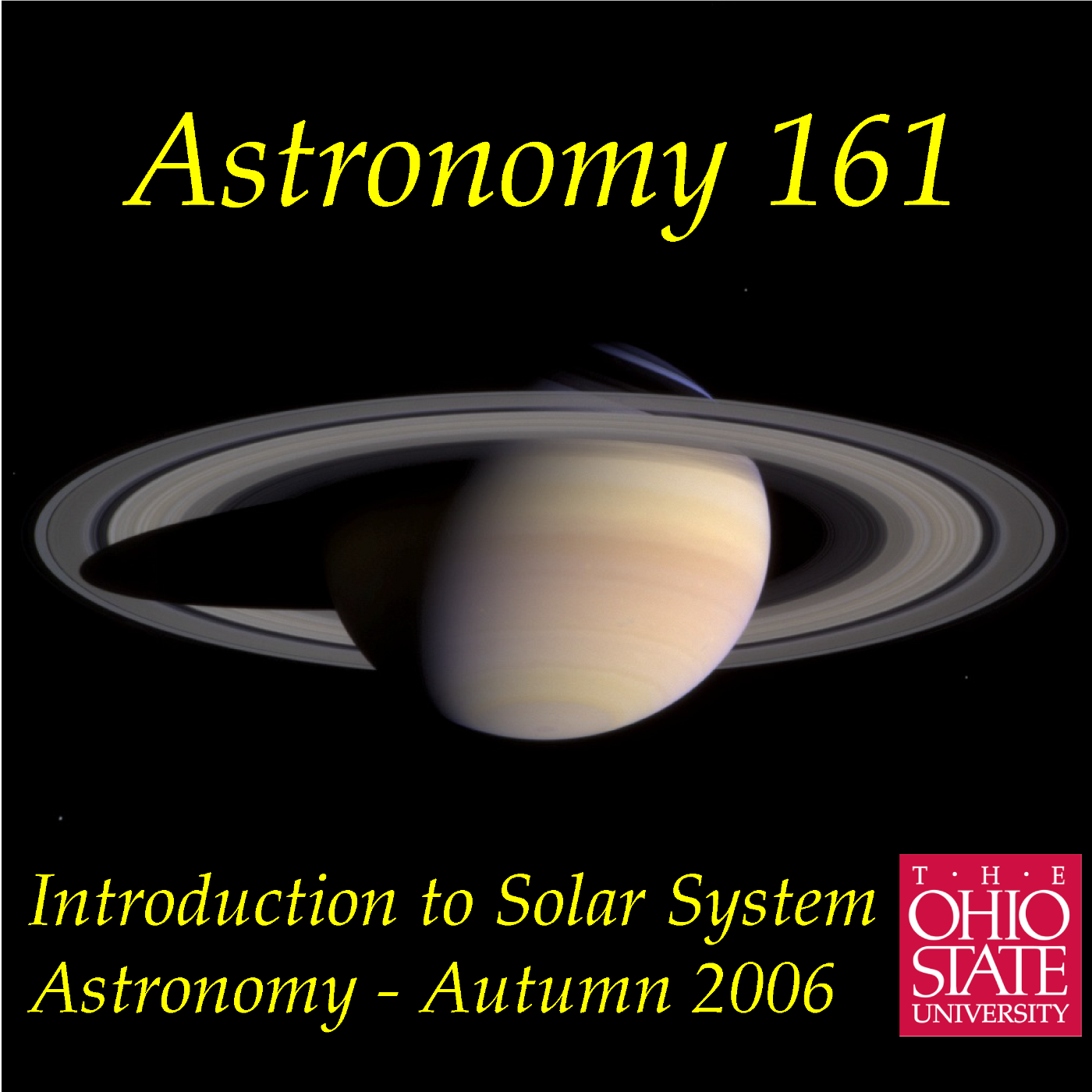
Lecture 40: The Saturn System episode artwork

EPISODE · Nov 21, 2006

Lecture 40: The Saturn System

from Astronomy 161 - Introduction to Solar System Astronomy · host Richard Pogge

Saturn is attended by a system of 56 known moons and bright, beautiful rings. The Moon system is the focus of our attention today. Saturn has one giant moon, Titan, which is the 2nd largest moon in the Solar System, and the only one with a heavy atmosphere. On Titan, the atmosphere is mostly nitrogen and methane, but the temperature and pressure are such that methane plays the same role that water plays on the Earth: it can be either a solid, gas, or liquid. I will review tantalizing evidence from the Cassini and Huygens probes that there is, in fact, liquid methane and maybe even liquid methane lakes on Titan. Most of the other moons are ancient, icy, and heavily cratered - geologically dead worlds - but one, Enceladus, is a big surprise. The shiniest object in the Solar System, Enceladus has spectacular fountains - cryovolcanos - that spew water vapor from reservoirs created in its tidally-heated interior. This ice repaves much of the surface of Enceladus, giving it a young, shiny surface, and builds the E ring of Saturn. Recorded 2006 Nov 21 in 100 Stillman Hall on the Columbus campus of The Ohio State University.

Saturn is attended by a system of 56 known moons and bright, beautiful rings. The Moon system is the focus of our attention today. Saturn has one giant moon, Titan, which is the 2nd largest moon in the Solar System, and the only one with a heavy atmosphere. On Titan, the atmosphere is mostly nitrogen and methane, but the temperature and pressure are such that methane plays the same role that water plays on the Earth: it can be either a solid, gas, or liquid. I will review tantalizing evidence from the Cassini and Huygens probes that there is, in fact, liquid methane and maybe even liquid methane lakes on Titan. Most of the other moons are ancient, icy, and heavily cratered - geologically dead worlds - but one, Enceladus, is a big surprise. The shiniest object in the Solar System, Enceladus has spectacular fountains - cryovolcanos - that spew water vapor from reservoirs created in its tidally-heated interior. This ice repaves much of the surface of Enceladus, giving it a young, shiny surface, and builds the E ring of Saturn. Recorded 2006 Nov 21 in 100 Stillman Hall on the Columbus campus of The Ohio State University.

NOW PLAYING

Lecture 40: The Saturn System

0:00 0:00

No transcript for this episode yet

We transcribe on demand. Request one and we'll notify you when it's ready — usually under 10 minutes.

Frequently Asked Questions

How long is this episode of Astronomy 161 - Introduction to Solar System Astronomy?

Episode duration information is not available.

When was this Astronomy 161 - Introduction to Solar System Astronomy episode published?

This episode was published on November 21, 2006.

What is this episode about?

Saturn is attended by a system of 56 known moons and bright, beautiful rings. The Moon system is the focus of our attention today. Saturn has one giant moon, Titan, which is the 2nd largest moon in the Solar System, and the only one with a heavy...

Can I download this Astronomy 161 - Introduction to Solar System Astronomy episode?

Yes, you can download this episode by clicking the download button on the episode player, or subscribe to the podcast in your preferred podcast app for automatic downloads.
URL copied to clipboard!