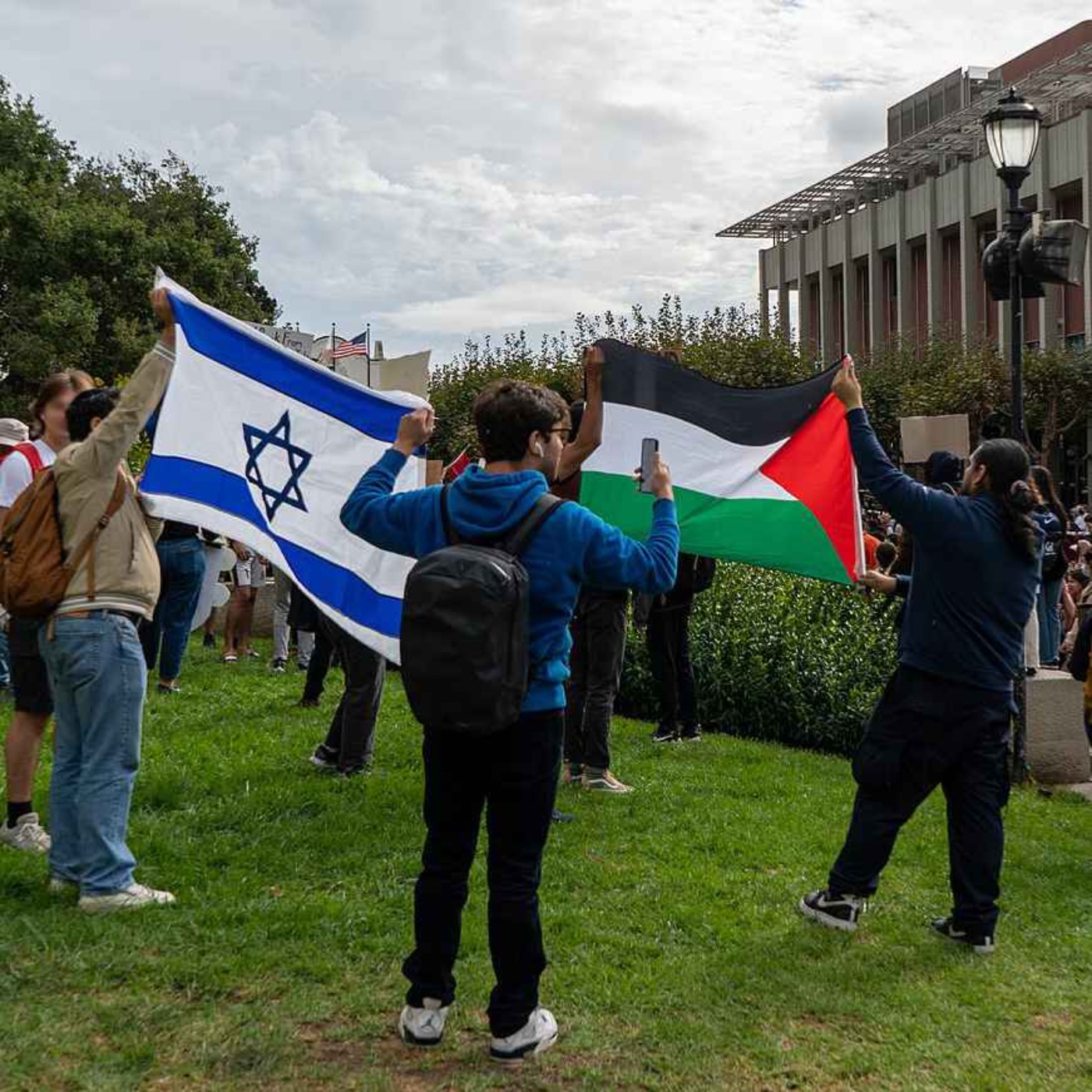
Legal scholars on free speech challenges facing universities today episode artwork

EPISODE · Sep 20, 2024 · 1H 41M

Legal scholars on free speech challenges facing universities today

from Berkeley Talks

In Berkeley Talks episode 209, renowned legal scholars Erwin Chemerinsky, dean of Berkeley Law, and Nadine Strossen, professor emerita of the New York School of Law and national president of the ACLU from 1991 to 2008, discuss free speech challenges facing universities today. They covered topics including hate speech, First Amendment rights, the Heckler’s Veto, institutional neutrality and what steps universities can take to avoid free speech controversies. The conversation, which took place on Sept. 11, was held in celebration of the 60th anniversary of the Free Speech Movement, in which thousands of students protested successfully for their right to free political speech at UC Berkeley. Instead of having a moderator, the speakers were given a list of questions they posed to each other, and took turns answering them. At one illuminating moment, Chemerinsky asked Strossen what steps she might take to reduce the harmful effects of polarized political speech on campus. “I think that punishment is not an effective way to change somebody's attitudes,” Strossen answered, “which is what we are concerned about, especially in an educational environment. Treating somebody like a criminal or even shaming, shunning and ostracizing them is not likely to open their hearts and minds. So I think it is as ineffective as a strategy for dealing with discrimination as it is unjustified and consistent with First Amendment principles.“But there are a lot of things that universities can and should do — and I know from reading about your campus, that you are doing … It's gotten justified nationwide attention.”Strossen went on to emphasize the importance of education, not only in free speech principles, but in other civic principles, as well, like the history of discrimination and anti-Semitism. Beyond education, Strossen said, “universities have to show support for members of the community who are the targets of hateful speech by raising their own voices, but also by providing psychological and other counseling and material kinds of support.”The event was sponsored by HxA Berkeley and Voices for Liberty, of George Mason’s Antonin Scalia Law School. It was co-sponsored by Berkeley Law’s Public Law and Policy program, the Berkeley Liberty Initiative and the Jack Citrin Center for Public Opinion Research.Read the transcript and listen to the episode on UC Berkeley News (news.berkeley.edu/podcasts).Music by Blue Dot Sessions.Screenshot of HxA Berkeley video. Hosted on Acast. See acast.com/privacy for more information.

In Berkeley Talks episode 209, renowned legal scholars Erwin Chemerinsky, dean of Berkeley Law, and Nadine Strossen, professor emerita of the New York School of Law and national president of the ACLU from 1991 to 2008, discuss free speech challenges facing universities today. They covered topics including hate speech, First Amendment rights, the Heckler’s Veto, institutional neutrality and what steps universities can take to avoid free speech controversies. The conversation, which took place on Sept. 11, was held in celebration of the 60th anniversary of the Free Speech Movement, in which thousands of students protested successfully for their right to free political speech at UC Berkeley. Instead of having a moderator, the speakers were given a list of questions they posed to each other, and took turns answering them. At one illuminating moment, Chemerinsky asked Strossen what steps she might take to reduce the harmful effects of polarized political speech on campus. “I think that punishment is not an effective way to change somebody's attitudes,” Strossen answered, “which is what we are concerned about, especially in an educational environment. Treating somebody like a criminal or even shaming, shunning and ostracizing them is not likely to open their hearts and minds. So I think it is as ineffective as a strategy for dealing with discrimination as it is unjustified and consistent with First Amendment principles.“But there are a lot of things that universities can and should do — and I know from reading about your campus, that you are doing … It's gotten justified nationwide attention.”Strossen went on to emphasize the importance of education, not only in free speech principles, but in other civic principles, as well, like the history of discrimination and anti-Semitism. Beyond education, Strossen said, “universities have to show support for members of the community who are the targets of hateful speech by raising their own voices, but also by providing psychological and other counseling and material kinds of support.”The event was sponsored by HxA Berkeley and Voices for Liberty, of George Mason’s Antonin Scalia Law School. It was co-sponsored by Berkeley Law’s Public Law and Policy program, the Berkeley Liberty Initiative and the Jack Citrin Center for Public Opinion Research.Read the transcript and listen to the episode on UC Berkeley News (news.berkeley.edu/podcasts).Music by Blue Dot Sessions.Screenshot of HxA Berkeley video. Hosted on Acast. See acast.com/privacy for more information.

NOW PLAYING

Legal scholars on free speech challenges facing universities today

0:00 1:41:16

No transcript for this episode yet

We transcribe on demand. Request one and we'll notify you when it's ready — usually under 10 minutes.

Carnivores Don't Get Sunburn - Carnivore Diet Talks Carnivores Don't Get Sunburn - Carnivore Diet Talks Welcome to “Carnivores Don’t Get Sunburn,” where we have fun and explore the carnivore diet and its transformative power. Join us as we uncover real stories from individuals who have thrived on this diet, defying convention and embracing optimal health. Plus, stay tuned for our upcoming documentary featuring diverse carnivores overcoming health challenges. Learn more at www.carnivoredietdocumentary.com.Excitingly, we’re working on an upcoming documentary where we’ll feature carnivores from various walks of life, conquering diverse health challenges. Join us on this journey and learn more at www.carnivoredietdocumentary.com.Join us in uncovering the power of the carnivore diet. Prepare to be inspired, informed, and empowered to embrace optimal health and well-being.Welcome to “Carnivores Don’t Get Sunburn: Unveiling Real Stories of the Carnivore Diet.” Stay tuned for our upcoming documentary. Discover how this lifestyle can transform lives. Learn more at www.carnivoredietdocumentary.com IT IS WHAT IT IS with SHALLZ - SHALLY ZOMORODI Shally Zomorodi What?  "It is what it is" with ShallZ – Shally ZomorodiWhen? WeeklyHow long? 35 minutesEvery week, Mother of 4, wife, morning TV news anchor and ultimate hostess, Shally Zomorodi talks about life - its up's and downs and how to stay on track in her weekly podcast, ‘It is what it is.’  Known for her high energy, infectious smile and ability to see the cup as half full Shally talks about all things in life and how to work through its challenges. From parenting, marriage, friendships, current events to how to smile when it just seems impossible ‘It is what it is’ is the perfect podcast to help inspire you to dance through the rain. Tracking Nuclear Weapons Programs Center for Strategic and International Studies The CSIS Proliferation Prevention Program talks to experts about transparency and nuclear weapons. Cover Stories with Chess Life US Chess Chess Life Editor John Hartmann talks to the authors of each month's Chess Life cover story.

Frequently Asked Questions

How long is this episode of Berkeley Talks?

This episode is 1 hour and 41 minutes long.

When was this Berkeley Talks episode published?

This episode was published on September 20, 2024.

What is this episode about?

In Berkeley Talks episode 209, renowned legal scholars Erwin Chemerinsky, dean of Berkeley Law, and Nadine Strossen, professor emerita of the New York School of Law and national president of the ACLU from 1991 to 2008, discuss free speech challenges...

Can I download this Berkeley Talks episode?

Yes, you can download this episode by clicking the download button on the episode player, or subscribe to the podcast in your preferred podcast app for automatic downloads.
URL copied to clipboard!