
EPISODE · Nov 14, 2024 · 1H 32M
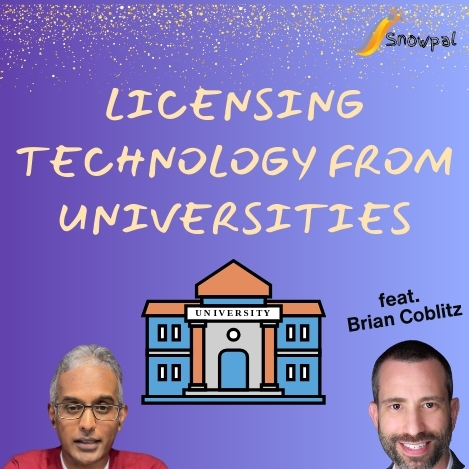
Licensing Technology from Universities (feat. Brian Coblitz)
from Software Development, Finance and AI · host Krish Palaniappan and Varun Palaniappan
In this episode, Krish Palaniappan speaks with Brian Coblitz, the executive director of the George Washington University Technology Commercialization Office. They discuss the intricacies of licensing technology from universities, the importance of building long-term relationships, and the challenges startups face when engaging with academic institutions. Brian shares insights on how to navigate the technology transfer process, the significance of understanding university research, and the collaborative opportunities available for startups. Krish Palaniappan and Brian Coblitz delve into the intricacies of partnerships between startups and universities, focusing on the expectations of domain expertise, monetization strategies, revenue sharing models, and the importance of patent costs. They discuss the value proposition for startups in engaging with universities, emphasizing the innovative potential of university research and the critical role of product-market fit in successful technology transfer. Takeaways • Licensing technology is akin to renting an idea. • Universities excel in basic research but not in product development. • Building long-term relationships is crucial in technology licensing. • Startups should reach out to university technology transfer offices for collaboration. • There is no centralized database for available technologies to license. • Understanding the right contacts in universities is essential for startups. • Sponsored research can follow after a licensing agreement is made. • The patent life is typically 20 years, necessitating long-term partnerships. • Conversations with university offices can lead to valuable insights and opportunities. • The process of technology transfer involves both protecting and marketing innovations. • Domain expertise is crucial for partners in university collaborations. • Startups are generally expected to fund the development process. • Revenue sharing can include fees, royalties, and equity. • Patent costs can be significant and need to be reimbursed early. • Universities provide innovative research that can lead to viable products. • Partnerships can help startups raise funding by leveraging university credibility. Chapters 00:00 Introduction to Technology Licensing 07:56 Understanding Licensing Technology from Universities 15:45 Navigating University Partnerships 22:40 Bridging the Gap Between Research and Industry 29:12 Understanding Domain Expertise in Partnerships 32:00 Monetization Strategies in University Partnerships 35:49 Revenue Sharing: Fees, Royalties, and Equity 39:55 Navigating Patent Costs and Reimbursements 45:26 The Value Proposition for Startups in University Collaborations 56:17 The Role of Product-Market Fit in Technology Transfer 01:00:41 Navigating International Patent Filings 01:02:08 Understanding Startup-University Collaborations 01:03:32 The Role of Intellectual Property in Startups 01:05:29 University Goals: Building vs. Monetizing 01:07:05 Engaging with Universities for Innovation 01:09:57 Events and Resources for Entrepreneurs 01:12:36 Building Relationships with Local Universities 01:16:47 The Importance of Passion in Entrepreneurship 01:21:03 Global Perspectives on Technology Transfer
Embed this episode
NOW PLAYING
Licensing Technology from Universities (feat. Brian Coblitz)
No transcript for this episode yet
Similar Episodes
No similar episodes found.
Similar Podcasts
No similar podcasts found.