
Hey, guys, come watch me from Snap. And I've got big news. Snapdecker live. Watch Nashville's Wine in Theater.
Friday, March 16th. I'm bringing the best story to us in the world. Laugh, try laugh some more. Amazing night out.
And yes, she's coming. The funniest woman in the world, Jen Colbert. I do my hunting in the lady forest. Jen Colber rocks a brand new story.
Get [email protected] I've never gotten applause for it before. If you guys could call my mom, that'd be awesome. She's still pissed. Snappers.
Put on your traveling shoes. Today's story lands in Iraq, but not the Iraq you're thinking of. Before the American wars, before Saddam Hussein, before all that. We're going to the 1940s, and at the time, a large Jewish community thrived in Baghdad.
Avraham Huss, remember celebrating Shabbat as a little boy. You must understand we were Jews in Iraq, religious Jews in Baghdad. We had good relations with the neighbors. They gave us the feeling that we could live.
Repeats every Friday night. We would all sit together and sing songs for Shabbat. Inside the house, there was a courtyard, so we wouldn't go out much. My family, dad, mom, brothers.
We were 10 all together. My father would do the kiddush, the full Kiddush, completely. Then we sang ashakai. We ate meat, fish, rice, then sweets and chocolates.
The entire family would sit all night and sing and enjoy. And we would long for Israel. From the day that I opened my eyes, we would even pray to the direction of Jerusalem and the synagogue. We would think about Jerusalem, where the feeling that without Jerusalem would not exist.
But they weren't allowed to go to Jerusalem. Iraq had banned Jewish immigration there. After the State of Israel was created in 1948, being Jewish in Baghdad became less and less safe. Jews were dismissed from civil service, their businesses boycotted.
And a Jewish businessman was arrested and publicly hanged for selling goods to Israel. Are you proud? Yes. Sometimes there were disturbances, but we had everything we needed.
One spring morning when Abraham was five years old, there was noise in the house. People running around. His parents woke him up in a frenzy. My parents saying, we need to get our things together, get dressed, get the suitcases out, we need to go to the synagogue.
The synagogue was the meeting point where all the Jews were gathering. As a young child, I, of course, was afraid from all the noise. We did everything so fast. The year was 1950.
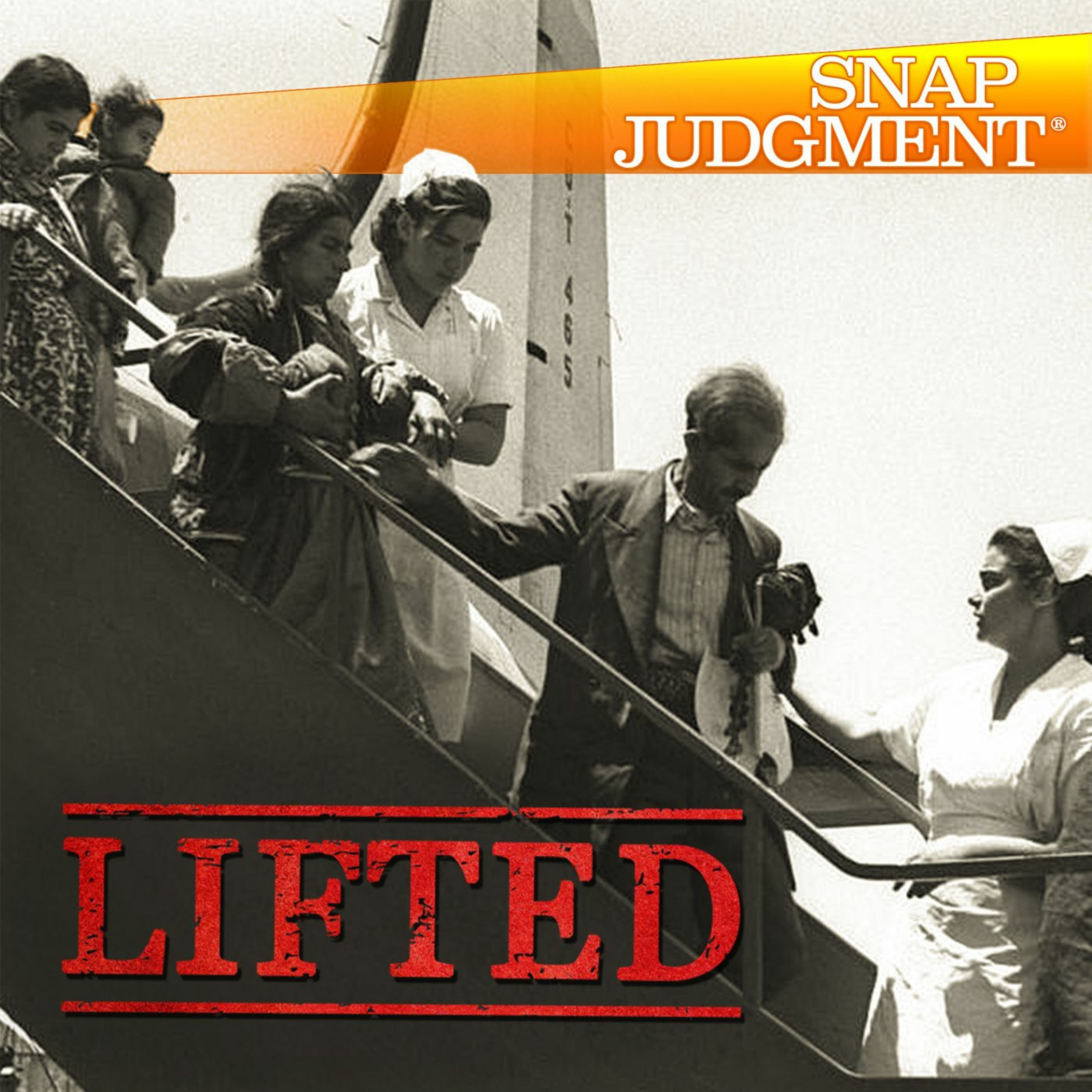
The Iraqi government had just passed a bill that for one year only gave Jews permission to move to Israel. At the Synagogue men were handing out immigration paperwork. Avraham's dad signed over his family house to the government in exchange for his permission to leave. A massive airlift was being coordinated by an American organization, the Joint Distribution Committee, which would help evacuate 130,000 Iraqis from Ajad to Israel.
We bought it only with the clothes that were on us and a few other small clothes in a small suitcase and all of the rest of our possessions we left in Iraq. The airplane was packed full. Avraham sat on the floor in his pajamas, squashed between his seven siblings. Once they got into the air, the flight attendants served breakfast and I checked it straight away.
We hadn't eaten something like this sweet foliage. Nobody ate anything. We didn't eat, we didn't drink. But it was fun.
Look, I was five. We sang songs. This was for us, the dreamer they spoke of at home. And it came through.
When we descended from the plank, my father kissed the ground. He bent down and kissed the ground, and I don't understand what dad is doing. Kissing the ground. I had seen him when he kissed mom by the ground.
But I saw mom was doing it and my big brother and my sisters were doing it. So I also kissed it. For us, Israel was our mother. They stood up from touching their lips to the ground and felt the land, their homeland, beneath their feet.
The next thing they knew, they were packed into a bus and headed for Sha' Ara Aliyah, a tent city where thousands of new immigrants started their lives in Israel. They took us in immediately and sprayed us with ddt. It was as if they took us into a cage like cows, and we wanted to escape, but they sprayed us in every direction. We were crying.
We breathed in glasses. It took us some time to recover. It wasn't easy. Look, the conditions were very bad.
There was Aliyah, immigration from all different countries. The family was then sent to a dusty, underdeveloped town near Tel Aviv, Verna Taharon. Without jobs, money, or even the ability to speak Hebrew, Abraham and his siblings spent their days collecting food, playing games and wandering the streets. We found an orchard of oranges and we ate oranges.
It saved us. Today, my favorite food is still oranges. One day, after breakfast, Abraham went for a walk. He heard loud music and followed the sound until he saw two men standing outside a truck.
The guys in the beginning spoke with us nicely. They were tall, beautiful. They spoke nicely. They were wearing bootstraps, shirts, short pants and sandals.
The men were handing out candy. I hadn't eaten sweets for a long time. I took the sweets and they told us, come and we'll give you a little trip. I thought I was going to have fun with them and got into the truck.
There were about 10 or 12 children there. We were driving and driving and driving. I said, we want to go home. And they said, we'll take you home when the time comes.
But it didn't end. I got up and I shouted, I want to go home. I screamed. But the cry didn't help.
And they took us. I spoke in Arabic. They didn't exactly hit us, they pushed us. I had a feeling that this wasn't the first time they did this.
Seven hours went by. The sun went down. Every once in a while the van stopped and kids were taken off. And then the van would start moving again through the darkness.
By the time Avraham got out of the van, it was the middle of the night. We got down from the vehicle. A man took us to some house, knocked, and an old man and woman opened the door. They told Avraham these would be his new parents.
This is your father and this is your mother. The house was nice. There were tables, nice couch, nice chairs. I even saw a plate with fruits on the table.
That couple, maybe they were nice. But I was so angry that night. I smashed all the windows in the house. They finally caught me and from all the exhaustion, I slept.
When Avraham woke up the next day, his new parents told him he had a new name. Alika Ru Sabah. In Iraq, I was called Sabah. His new name in Israel was Avraham.
There they dressed me in tall, nice shoes and pants and shirts, things that I didn't have, even underwear I didn't have. Did they ever comment on the situation? I really don't know if they knew it was a kidnapping. Abraham was at Kibutz, alone on lush green land right near the Lebanese border.
Back then, in Israel's early days, kibbutz life was the foundation of the new Israeli society. It was communal utopia. Every day in the morning I would get up, and until the evening, I would wander around the bus of the kibbutz. And next to the bus, each bus that came, I would look, maybe mom and dad would come and get me.
I looked in the windows of every car that went by. Every car. I always worried, why don't they come get me? From time to time I would think, maybe they didn't want me, as if they threw me out, that maybe they don't want me anymore.
I assumed that there were other kids in my situation with the kids. But they didn't talk about it no one ever talked about it. One morning I'm wandering the farms. I was dressed a lot nicer and better.
Now, from far off, I see a bus arriving. I get close to the bus, get 30 or 40 meters towards it. And I see someone that I recognize getting down from the bus. I get another step closer and I got stuck.
I suddenly saw my father. And I was in shock, I couldn't move. And he got down on the bus. He also saw me.
And the same thing, he, also frozen, was standing at a distance of 30 or 25 meters. Then I stopped breathing. I went another step closer and I see that it's my father. I ran to him and hug him.
We. We two of us. My father was tall, his eyes were bright. But I saw my father was tired.
It's not the same father. And I say to him, why did it take you so much time? I'm looking for you every day. He says to me, every day I go to different kibbutz.
I look every day in a different place or two. And he hardens me and we cry. He said, I will not leave you. Then he said to me, I want to speak with the manager of the kibbutz.
My father was angry with them and said, how have you done such a thing to take a child and not tell the parents? He asked me to take him to the men in child of the kibbutz. Abraham walked his father to the kibbutz director and together they walked into his office. But the director told Avraham to wait outside.
He said, I will go talk to him and then I will come back straight to you. I could not sit, I could not stand. I was just going back and forth, thinking that I'm finally with my father, but there's still a chance that he could leave me. I was just lost in my thoughts.
Reunited at last. We'll see on Snapchat. The Lifted episode continues. Stay tuned.
Welcome back to Snap Judgment. The Lifted episode. The last we left Avraham, he was waiting to be reunited with his father, Sam Chapman. It was about half an hour that he was gone, but it felt like 10 hours.
To me, that half an hour was the difference between life and death. I didn't know what would happen next. Avraham's father finally walked out of the office and approached his son. And he said to me, look, here in the kibbutz, you have a warm house, you have a bed, you have shoes and clothes.
You should stay here, study. You will go and become big, and then I will take you home. I will come Visit you every three weeks with your mother? Look, my father is not a primitive man.
He is a logical man. He made a calculation. One plus one. If that says that kibbutz is good, it's good.
Avraham's father and the kibbutz manager made a deal. Avraham would stay at the kibbutz and he'd go home on the holidays. He'd move back in with his family around Hasharon when he became a man. By Jewish custom, when he turned 13.
At the start, he came to visit every three weeks. Actually, in the beginning, during those three weeks between the times my father visited, I was very nervous and angry. I would get dirty on purpose. I acted out.
But then he came as he said he would. He bought candies and sweets. My mother made cookies filled with dates. It's a Meraki suite.
That was the best thing I could have gotten for a child. There's just nothing better than that. He stayed with the couple for about a month and was then transferred to Kibutzki Bhat Brenner in central Israel. There he slept in a hall with other children.
It was a huge place for 500 people. A little noisy, but it felt like being a big family. It was a social place to meet people, where I actually built my social circle. At the kibbutz, you have to learn how to take care of yourself.
I never expected that someone else would come to do what I need to do for myself. They expressed that by saying, if you want something, you work for it. You work for four hours and study for four hours. You need to work for your food.
You need to work. If I did something bad, I would get bitten by the manager of the kibbutz. In the beginning, I rebelled. I wasn't able to work for hours like the other kids.
But of course there was longing. Of course we're human. I miss my family. I was dying to get to the holiday to visit my family.
Every holiday was a special experience to be with the family again. The first Hanukkah, after he had been kidnapped, he got permission to go back to his family. On the way, there was full of excitement, but also fear because I didn't know if there was stage just tent back there, if I would have a bed, if there was food, all these things. I got used to the kibbutz.
I was so excited to see my siblings too, because I almost forgot about them. Also, I knew that I lost the memory of my mother's touch. When I got home, I didn't know who to hug first, my mother or My father. I was so excited.
I spoke Arabic with my parents. It was almost like he had never left, almost like he had never been kidnapped. As if he hadn't been assigned a new mother and father, as if his name hadn't been changed, as if instead he had been just shipped off to boarding school. But everyone treated me like an adult.
They respected me and valued me. They spoke to me like an older child. I was a kibbutznik. It's a serious thing.
I was the dream of the crop. Like, for example, if I was sitting at a table together with my family, my brother would take the meat from his plate and would give it to me. Understand what's happening. My brother will care for me more than for himself.
Avraham went back to kibbutz when Hanukkah ended. His parents started visiting less often, about every three months. But Avraham didn't mind. He was enjoying kibbutz life.
He was popular. He played sports. He worked hard and ate well. Then after he turned 13, he returned to his family.
When I returned home, I wasn't the same as Rama. I got a lot of confidence. I mean, I could do everything that I wanted, whatever I felt like doing. Everyone wanted to be my friend.
Everyone loved me. Everyone wanted to be with me. Once Abraham returned home, he became kind of Elias Am, between which we knew immigrants and Israelis. At school, he uses the Hebrew word gesher bridge to describe his role in Ramat Hasharon.
He got married and had five kids with his first wife, then two more with his second wife. Did you ever confront the kibbutz manager, anyone in charge at the kibbutz, about what happened, even if it was much later on? No, never. I was a young child.
Even I didn't know I was killed. I didn't have such vocabulary. I knew I was in an uncomfortable situation, but I didn't know then what I know now. Eight years ago, Avraham was home reading the news and learned about a piece of hidden history about other people like him.
Missing children of Jewish immigrants from Arab countries. Many siblings and parents in Israel said their kids were stolen right after birth at the hospital that nurses told parents their kids had died. Shadida came to Israel from Morocco in 1948amid a wave of mass immigration. For decades, hundreds of these new immigrants, mostly Jews from Yemen, other Arab countries known as Mizrafim, claimed their children were kidnapped.
It's known as the Yemenite children affairs, but it affected families from Morocco, Tunisia, Libya, the Balkans and Iraq. When I read it, I had this moment of Whoa. This also happened to me, but it was confusing because my parents did find me. So how could this also be the same story?
I was shocked. I didn't want to believe it. How long did it take you to understand that you yourself had been kidnapped and part of this larger scandal? There were a few days after I saw it on the news.
I had to walk around and ask questions. It was not a nice thing to talk about. It was very painful and emotional. I was the director of the community center then, and a journalist from the community newspaper interviewed me.
Then I started to tell my own story. Do not to hurt the country. I'm angry about the way I was stated. It was too much.
You don't. You just don't make a statement that way. And do you ever go back to the scene of the kidnapping in Rama Sharon now? It's an acquisition point of an electric company.
When I go by it, I get an electric shock, like a physical shock of electricity. It's emotional. It's very difficult to describe, but it's in the heart. An electric shock to the heart.
I see it every day, twice a day. I see it from my car, either on the left side or the right side when I'm driving. The country did this because they believe that they could save the children. They did it because they loved us.
That's why I don't come and say, Israel is not good. I love Israel. I fought in three wars. Israel gave me a lot.
But my case of being kidnapped wasn't like all the others. I was lucky that my father found me. Those who were kidnapped and never found. That hurts my heart.
There were hundreds who were kidnapped, but very few who were kidnapped were able to go home to their families. Many waited and waited. They made a mistake. It was a mistake.
And did you ever have a conversation about it with your dad? Like, later on? Did you talk about the kidnapping or his decision? No, no, no.
We never spoke about it. I tried to hide it, not to talk about it. Look, it's a decision that's very. If there was the same situation again, I would do the same thing.
Because we live in a world where we want our children to get the best. Today I have a feeling of confidence and I also give it to others. Yes, the kibbutz kidnapped me, but it gave me something in return. It's a strange world.
Thank you, Adaham, for sharing your story. The Snap Love as well to Noel Eschel for vocal translation and Tao Janet Klossner and Shir Rubin for help with the translation. Original score by Renzo Goriel. That piece that was produced by Sheena Shiri.
Okay, now let somebody know. Hours of storage. Tiny way. Tell them about the podcast.
This podcast available snapjacket.org and if you unlucky enough to live in Nashville, St. Louis, Kalamazoo, know that Snapdragon Live comes to town. The night of storytelling will knock you on your whatsit. Laugh fire.
Laugh some more. Feel all the field. It's the best night out ever. The world's top storyteller is backed by the beats of Bell's Atlas.
Get tickets while you still [email protected] I can't wait to see you there. And next week, Snapdesmith brings an audio event we're calling it Counted an Open Story. It's been over a year in the making. Let the universe know we can't wait for you to hear it.
And even though this is not the news, no way is this the news. In fact, you'd wave your hands in the air even more. You could shake them as if you did not care. And you would still still not be as far away from the news as this is.
But this is WNYC.