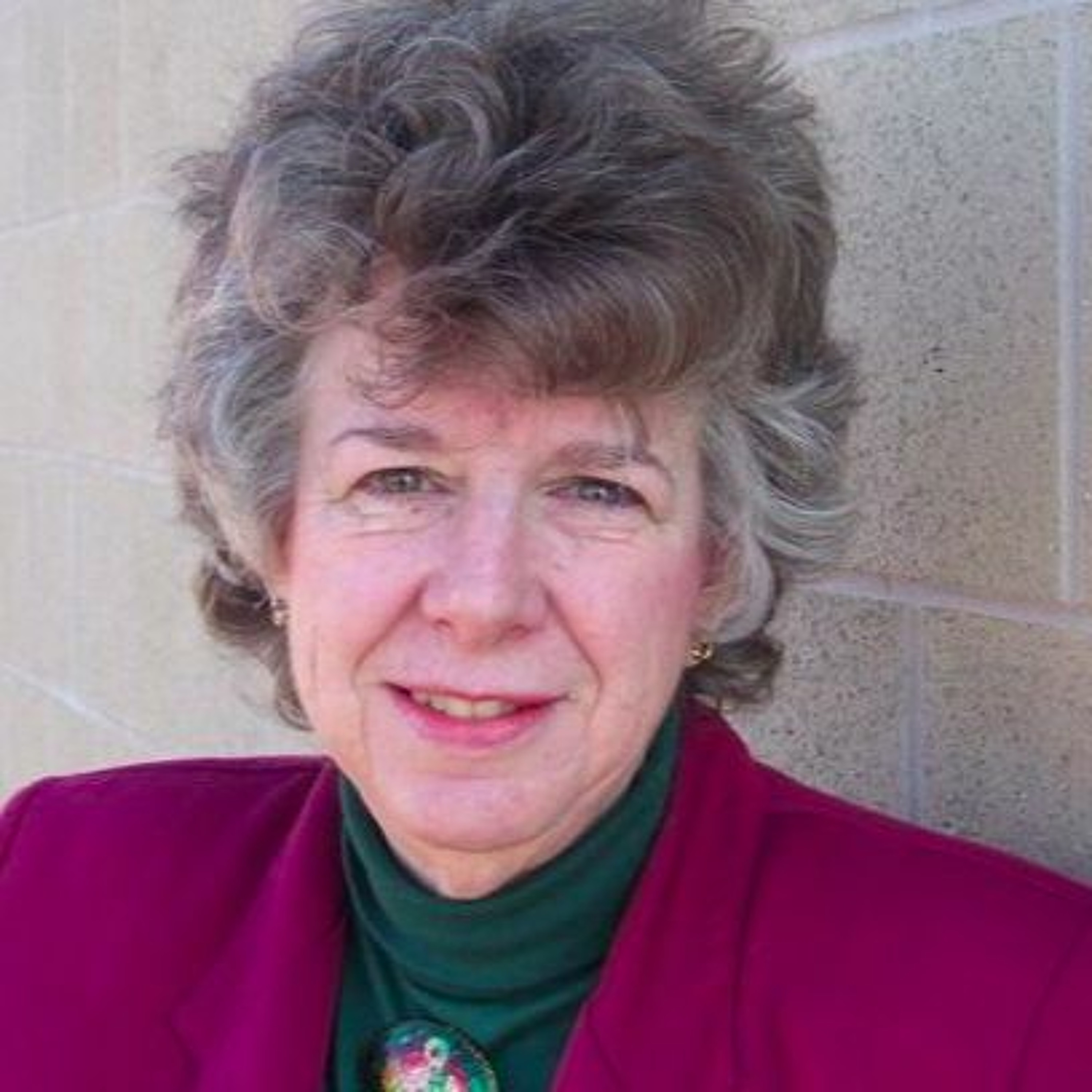
Welcome to CMS On Air, the podcast on migration, refugee and population issues brought to you by the Center for Migration Studies of New York. This is Rachel Reyes, CMS's Director of Communications. In this episode, I speak with Linda Rabin, Associate Research Professor of Anthropology at the University of Maryland. For more than 20 years, Linda has worked on international migration issues as an activist and scholar.
The second edition of her book, Sanctuary and Asylum, a social and political history, has just been released. This interview with Linda was conducted a few weeks prior to the 2016 elections in the United States and it speaks to the issue of sanctuary. So welcome Linda. Thank you for joining me on our podcast, CMS On Air.
Why don't we first begin discussing the purpose behind your book? Well, it started with my trying to be involved with asylum issues, was in the mid-90s and I heard about a particular case that I tried to follow and figure out what I could do. And as a member of Amnesty International, I decided to try and help a young woman who was being detained. She was an asylum seeker.
And I sent a letter to the editor of the New York Times and to my amazement, it was published. It was about the conditions of her detention. And the Times printed an editorial right across her my letter that said that she should be released from detention and given asylum. Within a week, she was released from detention and within six weeks she had asylum.
She had been in detention for more than 16 months. So I found that really electrifying. But then I couldn't really find a way to be involved because I'm not a lawyer. And especially in Washington, lawyers seem to have a lock on immigration issues.
So I did try to educate myself and then after about 10 years of trying to follow the issue, I decided the best contribution I could make would be to write a book about it. So I did write a book. It was called Give Refuge to the Stranger. And it sank like a stone in 2011 when it was published, perhaps because I was ahead of the curve.
And then a couple of years after the book came out, I decided to do what started out as a second edition. But it's really a new book and it updates and expands upon what I talked about in Give Refuge to the Stranger. And it seems to have come out at the right moment. So people are paying attention to it and I'm going around speaking in a lot of places about it.
Students are particularly interested in this issue. So this is a subject whose time has definitely come. And certainly the presidential campaign has brought it to a lot of people's attention. But there's still a lack of understanding of the magnitude and the significance of these issues.
There are a lot of basic things that I wanted to convey through the book about what the different kinds of people are who seek refuge. I wanted to talk about the long, long tradition of sanctuary and asylum to inspire people who are working on this issue as activists that they're part of something very much bigger than all of us. So those were some of my reasons for writing this particular book. Could you give a brief historical overview of Sangerie and maybe identify a few signature examples?
Just to talk in the broadest possible terms, I believe that giving refuge to strangers is something that's part of our DNA as a species. And it has to do with the fact that as a species we move around, we don't stay in one place for many different reasons. And we're also not the only species that gives refuge to strangers. So I wanted to trace this all the way back to the beginning insofar as I could.
So I talk about sanctuary traditions in many different cultures and religious traditions because that's where it really starts as a religious institution. And I found that there is a 2000 year history in the Catholic Church of Giving Sanctuary. So I wanted to talk about how that evolved and how after about a thousand years, sanctuary as a legally recognized institution came to an end. But then it was replaced by a secular legal institution called Asylum.
So this very, very long evolution and development of these two institutions is the framework of the book. Sometimes sanctuary and asylum run along parallel paths. Sometimes their paths intersect. Sometimes they come into conflict.
Sometimes they diverge completely. Sometimes people continue to give sanctuary even when it's considered to be illegal and often at great risk. So some of the examples of that are the Underground Railroad, which was one of the most successful mass social movements in Western history and also one of the most successful sanctuary movements. It was very decentralized.
There were hundreds of roots leading from the south all the way to Canada and going from the south to the Caribbean and South America. And most of the people who were involved in it knew very little about the rest of the Underground Railroad. They knew about what was going on maybe within 20 miles of where they lived. So people would be passed along from one house or a person to another.
And there were possibly thousands of people who were helping slaves escape. This took place over a 60 year period from around 1800 until 1860. And for the last 10 years of it, there was a Fugitive Slave Act which made things very, very difficult for slaves trying to escape. So they really had to go all the way to Canada to be safe.
And it was illegal during its entire existence. It was illegal. It was often a federal crime to assist a slave to escape. But nonetheless, people felt morally bound to do it, often on the basis of very strong religious beliefs.
And another example is the Holocaust Rescuers. And one rescuer that I like to point to is Pope John XXIII. He was a bishop in Bulgaria during the Second World War. And he tried to negotiate with the Bulgarian government, which was sort of neutral, sometimes leaning towards the Russians, sometimes leaning towards the Germans.
So he persuaded them not to cooperate in deporting Jews that were in Bulgaria. He also did the same thing, I believe he was in Greece. And I think that there is a direct line from his activities as a Holocaust rescuer to some of the provisions of Vatican II, especially about religious freedom. I think that they came out of his personal experience as a Holocaust rescuer.
And I don't know how aware people are of this history of his. I hope it's mentioned in his canonization because it seems to me to provide a very powerful example. And he wasn't the only Catholic religious. There were many nuns and priests who helped people escape.
One favorite story of mine from the book is a French nun who bicy-gold 12 to 14 hours a day for about five days to spread a statement by the local bishop condemning what the Nazis were trying to do to Jews in France and occupied France. So she took a very, very great risk. She was not caught, but other pre-sundons were arrested. Some of them ended up in concentration camps and some were killed.
They managed to rescue perhaps a few thousand people, but nonetheless every little bit is significant, I believe. But if you consider the magnitude of the killing that went on, that something like 1.5 million or 2 million of the victims of the Holocaust were children. And Catholic and other clergy were instrumental in trying to rescue children and hide them. So this was in many cases a classic sanctuary giving activity.
Can you discuss the role of religion and faith-based groups in sanctuary, specifically the Catholic sanctuary tradition? Well, I'm not a theologian. I'm not a Catholic, but as far as I can understand, it comes right out of both the old and new testaments that people are instructed to give refuge to the stranger, to welcome the stranger, because as the Bible says, you were once strangers in Egypt. And that's been a constant basis for sanctuary activity in the Christian tradition.
There's also a Jewish sanctuary tradition. There's a Buddhist sanctuary tradition. There are many religious traditions of hospitality. So in Islam, hospitality is a sacred duty.
And that harkens back to Muhammad having to flee. And I might get this backwards. He either fled from Mecca to Medina or from Medina to Mecca. But that was called the Hejra.
And because Muhammad had to flee with his companions, Muslims are required to give hospitality to strangers at every possible opportunity. So I think the underlying aspect of this does have to do actually with our biology, our life as a species. That it is actually adaptive for us to welcome strangers and to diversify our gene pool. And we hear a lot of talk about how human beings drive away strangers and reject the other.
But there's just a strong tradition of people welcoming the stranger. And it usually is based in some kind of religious belief or in the culture of a particular society. So Christians have a particularly rich history because it's documented. So you can go to many churches, monasteries, cathedrals in Britain, for example, and find written records of people who saw it sanctuary and what were the reasons.
And these records are sometimes available for over 500 years. And there were rules about it in the absence of a strong rule of law, secular law, in British and other European societies. The church often stepped in to protect the weak and vulnerable. So this is another aspect of the church as a mercy-giving institution.
And I believe it is related to the development of the idea in Western law that you're innocent until you're proven guilty. Anybody could go to a church and ask for refuge. And questions would not be asked. They would perhaps only be allowed to stay for a certain number of days.
But they would not be turned away. The church was a sacred space. And the church was very keen to establish its premises as a sacred space so that the state could not invade those sacred precincts. So there are political and social aspects to this having to do with church and state sometimes being in conflict for dominance in various societies.
What is life like in sanctuary? Is there freedom of movement or are there limitations? And besides shelter, what services do migrants and refugees receive? It's a great variety.
So you can look at, for example, Westminster Abbey. If you go to Westminster Abbey and there is the precincts of Westminster Abbey, you will see it's actually a brass line on the pavement, which is where the sanctuary starts, where the forces of law and order could not step over that line to go chasing after somebody. And if you look up on the wall, not of the main cathedral part of Westminster Abbey, not the Abbey itself, but next to it, you'll see a street sign. It's called the Sanctuary.
So once somebody, let's say in the 15th century, would go into Westminster Abbey. It was one of a few places where you could obtain permanent sanctuary. It wasn't limited to a certain number of days. And you could stay there all day long, and some people went out at night.
And this was one reason why sanctuary became discredited over time, because there were criminals who sought sanctuary in Westminster Abbey precincts, and they would go out at night and commit crimes and then come back, and the law could not apprehend them. But that's one example of a kind of sanctuary. And there were people there who were making a living, providing services to other people who were living in sanctuary in the precincts. And then, let's fast forward to Southside Presbyterian Church in 2014.
It's in Tucson, Arizona. They took two people in over the course of a couple of years. And both of these people were undocumented. They had lived in the United States for long periods of time.
They had families. Some of the members of their family were either US citizens, or they were eligible for DACA because they'd been brought in as tiny children. But they themselves were threatened with deportation. They had outstanding deportation orders.
So Southside decided to take them in. Southside had a tradition of giving sanctuary going back to the 1980s when it gave sanctuary to Salvadorans who were fleeing from civil conflict in Central America. This time, the two people who were there in sanctuary were both Mexicans. One was there for a few months and was able to make a deal with the government, so his deportation order was waived so that he could continue to pursue his case in freedom.
But the other one, a woman named Rosa, was not able to get a waiver of deportation for some reason. Often these decisions are very arbitrary. When I went to visit, she was living basically in one room. She had a bed and someplace to put some clothing.
And there was a kitchen next door. Her family, who were in a better legal situation than she was, would come and visit her every single day. But she did not feel that she could safely leave the church. So in a way, she was a kind of prisoner.
It was very difficult for her to be there separated from her family in that way. And she was there for more than a year before the local office of Immigration and Customs Enforcement agreed to waive her deportation. And as far as I know, she is still living in Tucson and fighting to get her status regularized. So these are two rather different examples.
There are lots of activities that I call sanctuary that aren't the classic kind of sanctuary, where you literally take somebody into your home or a church or some other place. But there are ways that people have of helping befriending asylum seekers or refugees or undocumented people who need all kinds of help that they can't count on getting from anybody else. And I'm familiar with quite a number of churches in many different cities that are helping people. They may not be giving physical sanctuary, but they are giving other kinds of assistance, including helping people pay their rent, trying to find them jobs, helping them register their kids in school, helping them get medical treatment.
If you're a refugee, you can get those things relatively easily. But if you're an asylum seeker, you're not eligible for government help with those things. So churches are stepping into help. Can you discuss the political or governmental opposition or support sanctuary movements?
Are countries avoiding asylum commitments? Well, every opportunity they avoid asylum commitments, they make it as difficult as possible for people to apply for asylum. And this is a very big and complex issue that I do discuss at length in the book about the different kinds of people who are trying to come in to the United States and other countries. And I would say, as far as I know, the number of undocumented people who actually commit serious crimes is very low.
In fact, it's lower than the crime rate among US citizens. So these particular cases, extraordinary cases, are often used to stir up moral panic among the public. And they're especially used and manipulated by politicians who often distort what the real situation is by making claims like we have open borders, anybody can come in here, we don't know who these people are. This is absolute nonsense.
We have very elaborate procedures and systems and regulations and an entire immigration court system. And many forms of vetting people who come into this country and a thriving deportation apparatus just read today that ICE is estimating that more than 42,000 people are expected to be in immigration detention. This is about 10,000 more people a day than last year. So apparently it's because new populations of people are trying to come into the United States by different routes.
So Haitians, for example, have been coming into the United States trying to cross the southern border. And they are being arrested and detained in great numbers. But it's a pattern. Certain countries will go through different kinds of crises, whether it's political or civil conflict or environmental disaster.
And you get an uptick in the number of people who are trying to come in. And they may try and come in by using people smugglers or come in individually. They may ask for asylum. They may sneak in without authorization.
There are many different ways. Some people come in on tourist visas and overstay. So there are many ways that people come in without authorization. There are what are called sanctuary cities.
These are cities that many of them acquired this designation during the sanctuary movement of the 1980s. When many people were opposing US policy in Central America and they declared that they would take in Central Americans when it was virtually impossible for them to gain asylum. The US government simply refused to recognize that they could have valid asylum claims and describe them as economic immigrants. So hundreds of churches and universities and community organizations came out and said, we are going to give these people refuge.
So on the local level, cities like San Francisco, Chicago, New York, my town of Tacoma Park, Maryland, declared themselves to be sanctuary cities. Tacoma Park where I live, I think maybe we've got a population of 10,000 people. It's still a sanctuary city. So our city council recently passed a resolution saying, we are not going to assist the federal government in picking up people and detaining and deporting them.
Because we don't feel that that's a job for the police. That's a federal responsibility. There is a federal program which Tacoma Park and many other cities have refused to participate in. To the point where in 2014, President Obama actually ended this particular program, which was called Secure Communities.
And then I simply reinvented the program under another name. But they're having much more difficulty in getting the cooperation of sanctuary cities. Partly because the police don't like having this job added to their many responsibilities, they don't have the resources to do it. And the federal government is not giving them resources to do it.
So you've got a conflict. Right now as far as I know, there is a bill in Congress that would prohibit sanctuary cities from stopping cooperation with the federal government. But I don't think that's likely to get any traction. It's been introduced repeatedly over the past 10 years.
And each time it's introduced, especially faith-based groups, raise an outcry and say, you can't do this. We will continue to give people sanctuary and to help people. And you're going to reap the whirlwind if you try to make this humanitarian activity of ours illegal. What is the current public opinion or exception to sanctuary here in the United States?
It's difficult for me to say what the numbers are. I just know that every week I hear or read about towns and cities and churches all over the place that have decided that they're going to give sanctuary or they're going to help all kinds of people who are seeking refuge, whatever the reason. It used to be when I first started working on this issue about 20 years ago, a lot of advocacy groups would restrict their activities to helping asylum seekers. It was like they were the worthy people who were seeking refuge.
Whereas people who were called economic immigrants somehow weren't worthy. So or people who entered undocumented or without authorization were somehow considered not to be worthy and were often criminalized. But over time, as the advocacy groups recognized that asylum seekers were being detained along with unauthorized people and were in the same bad conditions and all these people who were being detained were having their basic human rights violated. It became much more difficult to talk about worthy or unworthy people for sanctuary.
So I believe that that's why what's called the new sanctuary movement decided to focus on undocumented people who had lived in the United States for a long time and had families. And many of whom had no criminal record whatsoever. They were working. They were paying taxes.
They were paying into social security, although they had no chance of ever benefiting from it. So it just seemed very arbitrary to focus only on asylum seekers and not talk about the very poor conditions that many unauthorized people are being held in. I should point out that if you're an asylum seeker, even if you come into the United States with no visa, no passport, no permission of any kind, you are not illegal. Your status has to be determined through a complex, time consuming, expensive procedure through the immigration court system, but you are not illegal.
You're in a kind of limbo. If you come over because you want to have a better life, you want to get a job and you don't ask for asylum, your entry into the United States, strictly speaking, is not a crime. It is like a civil violation, like getting a speeding ticket. But if you are caught and deported and you keep coming back, as many people with families do, then that return, repeated return, does become a criminal offense.
And that's a relatively recent development. So we have created a whole new class of criminals who are incarcerated in federal prisons, just because they kept coming back over the border to be with their families. And yes, there's a small minority of people who do this, who are criminals in every population, every human population. There are criminals and antisocial people who do bad things.
But I don't think you can make generalizations about a whole group, a whole nation, a whole religion on the basis of the small minority of people who do bad things. You mentioned the new sanctuary movement. Could you talk more about what this movement is, who are the actors involved? It started as far as I can tell about 10 years ago.
And there was actually a website that called itself new sanctuary movement. And it was very modest efforts that people in some churches around the country were making. By 2008, when I looked for that website, couldn't find it anymore. The domain name was being sold.
And I think that reflected the fact that they couldn't get enough traction to actually start a social movement. People didn't know enough about the issue. It just wasn't on the radar of most people. But this was also the time when attempts were made to pass comprehensive immigration reform and these attempts failed.
So this meant that many people who might have had a chance of having their status legalized or regularized no longer had that option. So when they came into the United States, they couldn't go back and forth anymore. They had to just stay and take their chances. So this was a new population of unauthorized people who were here for the long term, instead of being seasonal returnees who would go back to their own country and then come back again to pick our crops or do domestic work or work in factories.
So the new sanctuary movement seemed to start up again around about 2012 or so. And I'm not sure exactly what triggered it. Maybe it was because churches in many places were encountering people who were coming to church, who were newcomers, and they didn't know anything about them, and they wanted to help them. And they discovered that these were people who were living in the shadows.
And they had a sense of moral obligation to help them. And they did start out the new sanctuary movement, focusing on, as I mentioned, people who had been in the United States for some time, who had families, who were legal, some members of the family, were US citizens or had permanent legal residents. And they decided that's who they would focus on. People who were in imminent danger of being deported.
In 2014 is when the so-called surge happened of kids and mothers and children and families who were fleeing from El Salvador, Honduras and Guatemala. And even so, even though in 2014 something like 60,000 of them came across the border, just overwhelming Ayes and the border patrol. But even then, this new sanctuary movement was still focusing on people who were long standing members of their communities or their congregations. More recently, I've been in touch with the new sanctuary movement of Philadelphia.
They have decided that they're going to offer sanctuary to some of the Central American kids or mothers and children. So they feel that this is a new development that they need to respond to now. So I think that the new sanctuary movement will keep transforming itself in response to whoever the new population of people is, the people that are now fleeing for one reason or another. I should say I should add that in 2014, 2015, maybe there were 25 churches around the country that were actually taking people in.
And there were another maybe 20 to 25 churches that were helping those congregations and supporting them without actually giving sanctuary themselves. So it's a very small movement and there are other churches that don't consider themselves to be part of it, but they are providing the same kinds of help. So it's difficult to estimate how many churches there actually are. How do you think the election will affect the sanctuary movement?
What are your thoughts on how the next administration will oppose or support sanctuary or advocacy and service assistance to migrants and refugees? Well, I think it's unlikely to expect that governments will support sanctuary. Sanctuary is usually a response to government policies that deny people refuge. And I think it will always be with us.
Hillary Clinton has said that she will end family detention. Politicians make many promises. They may or may not have the wherewithal or the support to fulfill those promises. And obviously Donald Trump has the opposing idea that he is simply going to deport 11 or 12 million people, which I think is simply not feasible.
There actually has been a program in the Department of Homeland Security, which I talk about in the book. It was called Operation End Game. And this was a policy that was published in 2002 and it aimed to deport all deportable aliens by 2013. Well, clearly they didn't do it.
And they were trying their best. But I think it would be impossible. As Hillary Clinton pointed out, it would cause such massive social and political and enforcement problems to be unworkable, as well as going against some basic American values. So I think that whoever is elected president, there will be attempts to pass comprehensive immigration reform.
We're way overdue for that. The law that's now in force is 20 years old. It responds to conditions that were current 20 years ago. It really badly needs to be reformed and recast to respond to what the conditions are now.
And there are many different constituencies that will support different kinds of reform. So there are business people, for example, who want it to be easier to employ foreigners. So they will lobby for a kind of immigration reform, probably what they would call merit-based reform that would allow highly skilled people to come into this country. And they might pass an immigration reform that will make it more and more difficult for unskilled people to come in.
So there's likely to be a lot of bargaining and negotiation, and I expect it is not going to be easy. That's why it's very important for people to ask their elected representatives at every level what their positions are, and to lobby them on these issues. Is there anything else that you would like to tell our listeners? Well, I haven't been able to talk about the many different policies in many countries that are receiving thousands or hundreds of thousands, and sometimes even millions of people fleeing persecution and civil conflict.
I do talk about it in the book, and you can see similarities in asylum policies and the way that governments try to avoid giving refuge. But at the same time, there are always social movements in all of these countries who are trying to welcome, precisely the people that governments are trying to turn away. And that's where my hope comes from. I believe right now asylum is under threat as a legal institution, because governments try to get around it.
But I think sanctuary will always be with us. It's in our DNA, and that's what gives me hope. Thank you very much, Linda. Linda Robbins' book Sanctuary in Asylum, A Social and Political History, is now available through the University of Washington Press.
CMS On Air's theme music is provided by Danny Duddersnine and the Music Case. To get more information on CMS projects, publications, and events, visit us at CMSNY.org.