Listen to this Article: "The Good Priest"
from The Chris Hedges Report Podcast Hosted by Chris Hedges
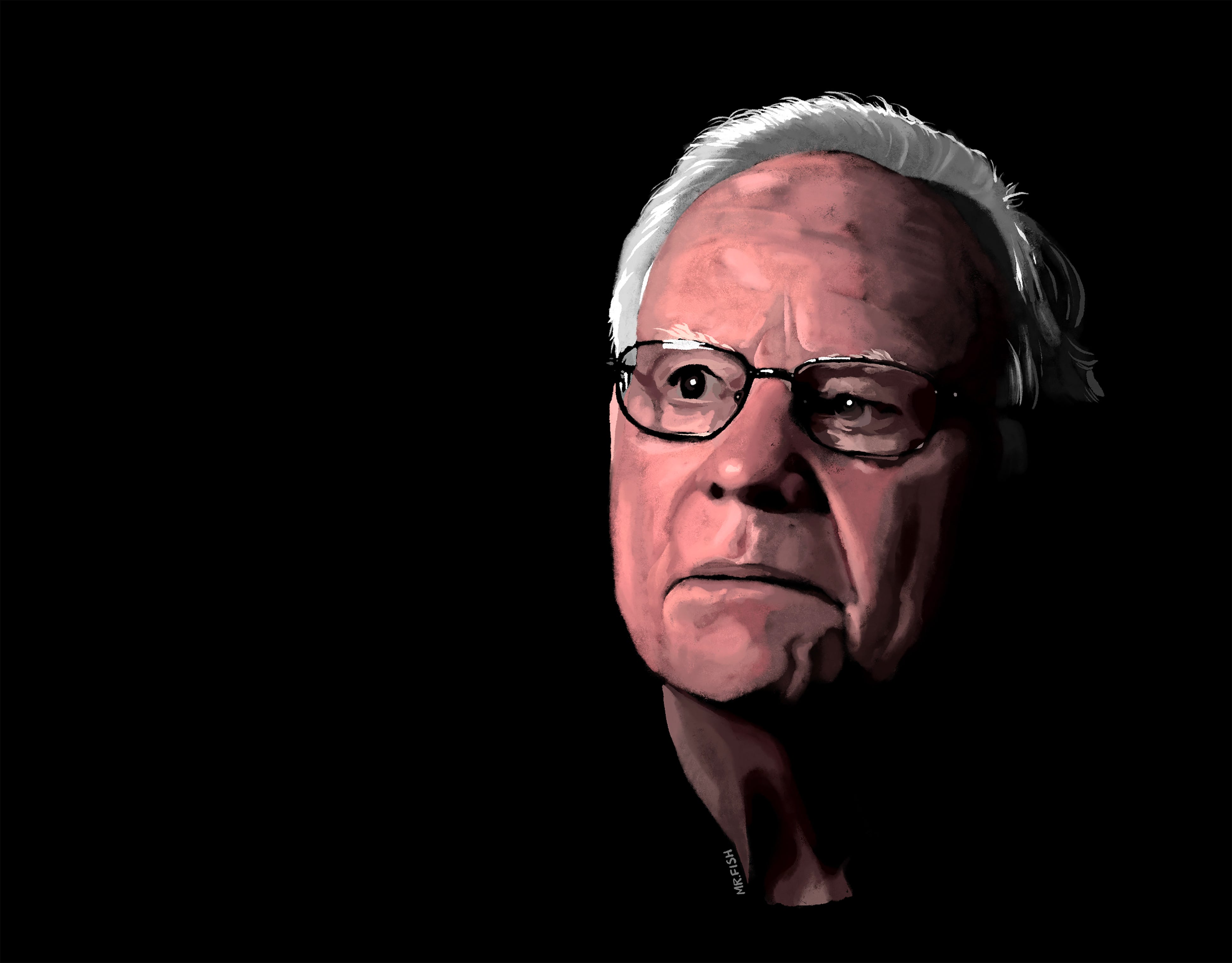
Narrated by Eunice Wong Original Text published 11/13/2022 Father Michael Doyle - by Mr. Fish During the two years the cartoonist Joe Sacco and I spent on our book Days of Destruction, Days of Revolt, written out of the poorest pockets of America, we invariably encountered heroic men and women who — against overwhelming odds — rose up to fight lonely and often losing battles on behalf of the oppressed. Bill Means, Charlie Abourezk and Leonard Crow Dog in Pine Ridge, South Dakota. Larry Gibson and Judy Bonds in the coal fields of West Virginia. Lucas Benitez, Laura Germano and Greg Abbot in the produce fields of Florida. The men and women in Zuccotti Park during the Occupy Wall Street movement. When set against the crushing poverty, environmental degradation, corporate abuse and despair they opposed, the victories they amassed were often miniscule. And yet, to them, and to the people they were able to support, these victories were immense. They kept alive kindness, community, decency, hope and justice. They provided another way to speak about the world. They reminded us that our primary task in life is to care for others. These moral giants, by their very presence and steadfast refusal to surrender, damned the avarice, lust for power, hedonism and violence that define corporate culture. Joe and I met Father Michael Doyle in Camden, New Jersey, one of the poorest cities and most dangerous in the United States. Father Doyle, an Irish priest and poet with ruddy cheeks and snow white hair, ran the Sacred Heart Church in one of the city’s bleakest corners. He died at the age of 88 on November 4th in the church’s parish house. “I haven’t heard God speak in a burning bush, but I hear Him speak from the burning issues of the day, and they are all in Camden,” he told us. Camden is desolate, with gutted and abandoned row houses, boarded-up storefronts, the empty shells of windowless brick factories and the skeletal remains of old gas stations. Weed-choked vacant lots are filled with garbage, old tires and rusted appliances. Cemeteries are overgrown. Open-air drug markets are divided up among gangs such as the Bloods, the Latin Kings, Los Nietos and MS-13 or Mara Salvatrucha. Knots of young Hispanic or African-American men dressed in black leather jackets and occasionally seen flipping through wads of cash, sell weed, dope and crack to clients, many of whom drive in from the suburbs. The drug trade is perhaps the city’s only thriving business. A weapon, usually stashed behind a trash can, in the grass or on a porch, is never more than a few feet away from the dealers. Camden is awash in guns. Camden sits on the edge of the Delaware River facing the Philadelphia skyline, with scrap yards and a vast sewage treatment plant that fouls the air. An elevated multilane highway slices through the heart of the city allowing commuters to pass in and out of Philadelphia without seeing the misery below. “At Ferry and Sixth, we stopped at one of Camden’s 150 open air drug markets,” Father Doyle wrote in one of his newsletters. “Then down Sixth to Viola where Kevin Walls was shot a few months ago. Where his mother bent beside her bleeding son and tried to say the 23rd Psalm in his ear. Though I walk in the valley of death, I fear not evil. There’s plenty of fear at 6th and Viola. There now the most pathetic of urban shrines. His name scrawled on an abandoned wall. Dozens of beer bottles arranged for the glint and glow of a burnt out candle. A teddy bear soiled and wet on an abandoned step. Soft wishes in a hard hearted-place.” “Sometimes I see men and women hardened by time and all washed out like the hills of Appalachia and I wonder what were their first few years of life and what happened in the little places where they played,” he wrote in another letter. “Right here on Broadway, on the blocks above and below Sacred Heart, the prostitutes adorn every corner in all weather. They are like hardy fishermen casting their lines in the constant stream of traffic. The windowless walls of gutted houses gape down like skeletons with holes for eyes on a tragic human scene. At 3:15 PM, Anna May carefully guides little children with Sacred Heart uniforms across the street when the light changes. May God’s holy angels always get them safely across the street and off it before they harden and crack like the pavements and the prostitutes and the failed plans for urban renewal.” You can listen to Martin Sheen read from Father Doyle’s letters in the documentary “Poet of Poverty.” Father Doyle raised the funds to restore Sacred Heart Church, built at the end of the 19th century, and its murals illustrating the Ascension, the baptism of Jesus by John, the marriage of Mary and Joseph, and the return of the prodigal son. In 1984, he founded Heart of Camden, a nonprofit community development corporation that has renovated 250 homes for local families. He sustained the parish’s K-8 school, which the diocese tried to shut down, getting thousands of donors and supporters to provide $1 million a year. He was one of the driving forces behind the creation of the Waterfront South Theatre, the Nick Virgilio Writers House, the Camden FireWorks arts center and the Camden Shipyard & Maritime Museum. Every year, he held a service for the victims of gun violence in the city, reading aloud from the pulpit the names of those killed and the type of weapons used to cut short their lives, as weeping family members, the name of those they lost displayed on a sign around their necks, came forward to light a memorial candle. He started community gardens and opened a medical clinic. He arranged for Mother Teresa to visit the city. He relentlessly defied the destructive forces around him, determined to nurture life, even if it was only a “fragile blade of grass poking up between the cracked cement.” “When I look at all of Camden, I am paralyzed,” he said during one of my many visits to the rectory. “But it’s like a child at the beach. You give them a shovel. They'll make a hole and a hill and work at it all day. They'll have a grand time. And then the tide comes in and the waves bring down the little hill. The little thing is trampled on. But the tide doesn't take what happened, what they were doing, what’s inside. That's preserved forever.” Father Doyle was a member of the Camden 28, a group of left-wing Catholics and anti-war activists who, in 1971, planned and executed a raid to destroy draft files on the Camden draft board. The defendants were arrested but acquitted when it was found that the FBI, which had an informant in the group, had provided tools for the break-in and facilitated the logistics. “What do you do when a child is on fire in a war that was a mistake and you can’t extinguish the flame — the napalm flame — with water or anything else?” he said in his closing statement at the trial. “What do you do about that? What do you do with an old man whose bones are splintered by anti-personnel weapons in a war that was a mistake? We have no answer to that. There is no answer in the law for a child on fire in a war that was a mistake.” He organized a memorial service for 300 young men from South Jersey killed in the Vietnam war. Years later, he would still carry a card with the name of one of those killed, Lawrence J. Virgilio from Camden. The bishops were not pleased. He was fired from Holy Spirit High School near Atlantic City where he taught and transferred to Sacred Heart, a run-down and neglected parish, in 1974. He had to chop firewood to heat the church. It was meant to be a punishment, a demotion, but Father Doyle saw it as the greatest blessing of his life. “I’ve failed…nicely,” he joked. He called Camden “a concentration camp for the poor” and saw the city as a template for all that had gone wrong in America. He likened the suffering around him to the crucified Christ, nailed to “the cross of awfully polluted air” and “the broken sidewalks, the broken lives, the ugly scenes that wail for beautification, the d… This is a public episode. If you'd like to discuss this with other subscribers or get access to bonus episodes, visit chrishedges.substack.com/subscribe
Embed this episode
No transcript yet.