
EPISODE · Dec 17, 2025 · 13 MIN
Living Diagnostics: When Bacteria Read—and Remember—Your DNA
from The Deep Dive Lab: Unraveling Materials Science · host Son Hoang
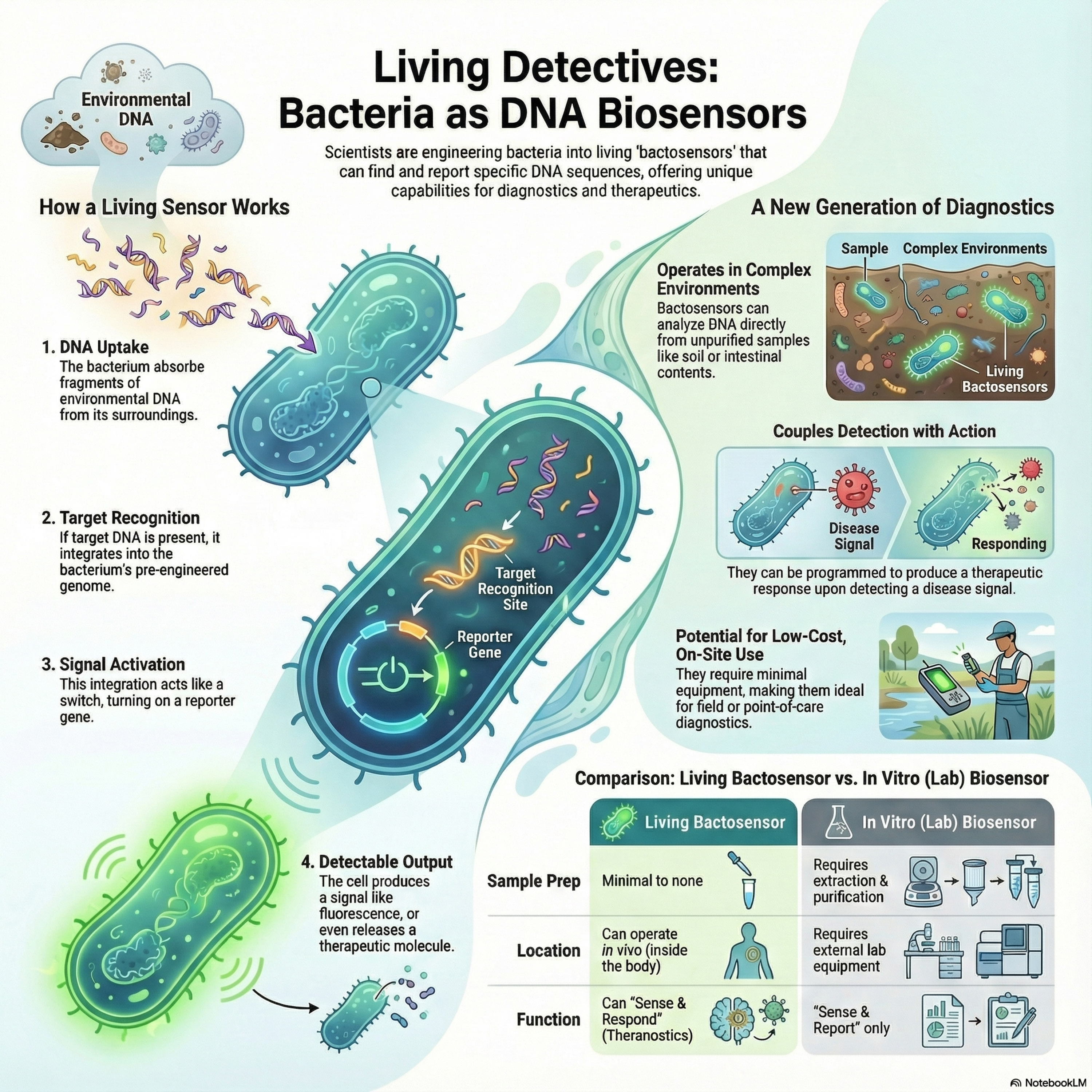
🧬 What if DNA testing didn’t require expensive machines—but living cells instead?Modern DNA analysis underpins cancer diagnostics, infectious disease surveillance, and precision medicine, yet it relies heavily on centralized laboratories, purified samples, and costly instrumentation. Recent advances in synthetic biology are transforming this landscape by engineering bacteria as living DNA biosensors, or bactosensors.In this episode, we explore how engineered microbes can:🦠 Detect target DNA directly from raw, unprocessed samples🔍 Discriminate single-nucleotide differences linked to disease💊 Combine diagnosis and therapy through “theranostic” responses🧠 Record transient biological signals as stable genetic memory🌍 Enable accessible, low-cost diagnostics in resource-limited settingsBy harnessing natural bacterial DNA uptake systems and integrating CRISPR-based sensing with synthetic gene circuits, these living biosensors function as programmable biological computers—capable of sensing, remembering, and responding within complex biological environments.ReferenceBacteria as living biosensors for DNA. Nature Reviews Bioengineering (2025).
Embed this episode
NOW PLAYING
Living Diagnostics: When Bacteria Read—and Remember—Your DNA
No transcript for this episode yet
Similar Episodes
No similar episodes found.
Similar Podcasts
No similar podcasts found.