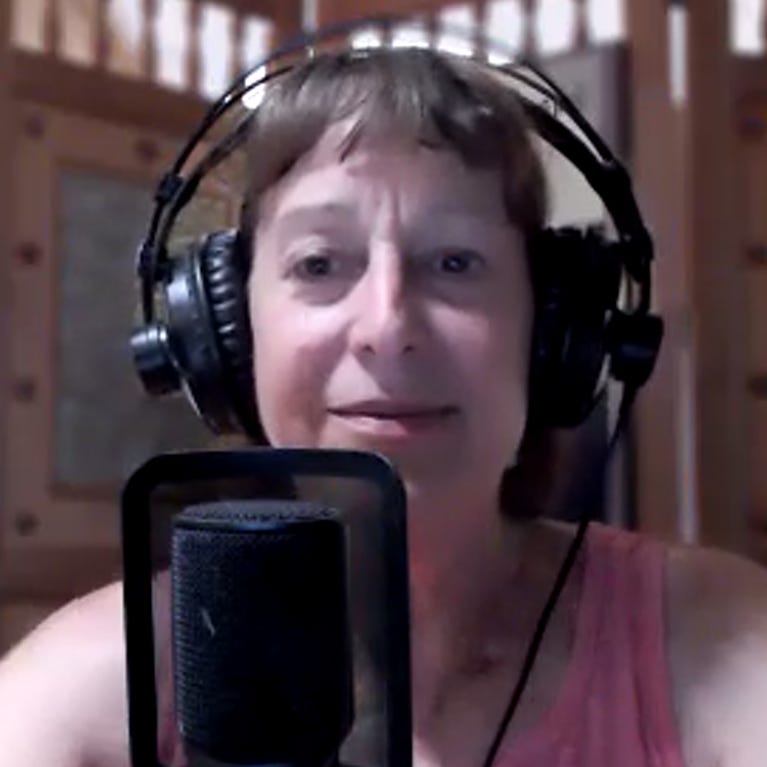
Logic, gnosis, and the scientific method
from Gnostic Reformation, Clear and Simple Hosted by Cyd Ropp
Welcome back to Gnostic Insights and the Gnostic Reformation on Substack. I have another treat for you this week, a conversation with my brother Bill and myself concerning what is knowledge? How do we know what is true? This is a field of philosophy known as epistemology. My brother Bill was a philosophy professor. He taught this at the university level for many years. I hope you enjoy this conversation and you learn something from it. [Cyd] Okay, recording in progress. Here we are. Hi, Bill. Welcome back to Gnostic Insights. [Bill] Well, it's nice to be back. I thought of a topic here that we've considered for a while. Let's get it done. [Cyd] All right! [Bill] Okay. So the question is, what is knowledge? And what is it to really know something to be the case? [Cyd] Wait a minute. Is this epistemology? Is that what is meant by epistemology? [Bill] That's right. Theory of knowledge, epistemology. It's as old as the hills. In fact, the conflict was back with Plato and Aristotle. Aristotle's saying we can get knowledge, and I'll explain kind of how we do it, theoretically do that. Plato said, no, you can't get it that way. You have to know it from the beginning. How about that? That's what we call our gnosis, right? [Cyd] Right. That's why Plato is included in the scrolls of the Nag Hammadi. Yes. [Bill] So the question is, where does gnosis fit in with regard to the knowledge? Okay. That's the point. So I thought, okay, let's just take it from the point of the scientific position, because the presumption is, isn't it, that science gives us knowledge, right? That's the presumption. So the debates that take place out there, someone says, well, that's not science, and so therefore they're negating what's being said. Okay, let's get this one answered. It's a common belief that scientists believe that scientific method gives us knowledge. And so anything that is gained outside of science is not known. In other words, the word sometimes is dogma, right? The idea, you hold a position, but you can't verify it scientifically, but you hold it, so you're being so dogmatic. So let me make this point here. So here it is. The best that science can really give us is well-founded belief, and I'm going to argue that. So that's the best. So why do I say that? Well, the scientific method is based on logical principles of modus ponens and modus tollens, okay? And let me explain what that means. [Cyd] How do you spell that? [Bill] M-O-D-U-S, modus ponens, P-O-N-E-N-S, okay? And tollens, T-O-L-L-E-N-S. Now, symbolically, okay, I'm going to use words like this, and you'll get it. You'll get it for your listeners, by the standards. If P gets you Q, and if you have P, then you have Q. That's modus ponens. The idea, conditional. If P gets you Q, and you got P, then you have Q. That's the conclusion. [Cyd] So if you're saying if P is obliged to bring Q along, then if you don't have Q, you don't have P. [Bill] Exactly, that's well said. So in science, the problem occurs, you could put it this way. A problem is created, say that the science, there's a problem out there that science is trying to resolve. And so it creates a hypothesis, in other words, an explanation for a problem that's occurring out there, okay? And then science says we test the implications of that hypothesis. What does it tell us to look for? Okay, so we go looking for that. And it tells you, you got it, okay, you should find an R, an S, a T, a Q, or whatever, right? Whatever it needs. So you'll go out looking for those implications, and they show up, they're there, okay. So what you're doing is supporting the hypothesis. The reason being, how this is, remember back, if P gets you Q, and you don't have Q, you don't have P, we understand that. But if P gets you Q, and you have Q, you can't conclude you have P, you can't come backwards. Example, if it's raining, then the streets are wet. Oh, look, the streets are wet. Well, it must be raining. No, because they can get wet other ways. You can't come backwards on the conditional, right? So if the hypothesis implies a bunch of things, and those things are found, you're supporting your hypothesis, but you can't come all the way back and say it's true. [Cyd] Hmmm. You're supporting it, but not proving it? [Bill] That's it exactly, that's beautifully stated. All right. So what then occurs, thinking about this now, is that that's the case for any hypothesis that science proposes, is it can be rich with consequences. It can be rich with what to find. And so what happens is, okay, it's, look, it's working out. That implies that, and look, it's there, and it's there, and it's there, it's there, anything you put, it's there. So what's happening, you're supporting your hypothesis, but you still aren't proving it. So the idea is a well-founded, a well-founded hypothesis becomes a theory at best. It becomes a well-founded theory because it continues to work out, but you'll never get the theory to utter truth. You'll never know it to be the case. So that's the logic of the scientific method. But what happens is this—scientists come up with hypotheses, they become theories, they become really well-founded theories. And then what they do is they, they get a hold of it and say, oh, oh, we can't let this happen. So they turn their theories into dogma. That's not science! So you pick any major theory, like general theory of relativity, oh, it's beautifully supported, right? Some will say, you ask a scientist, oh yeah, it worked. Guess what? There may be a consequence down the line that defeats it. That's why it's a great theory so far. It hasn't been defeated. Quantum mechanics, to point that out, quantum theory and so forth. They're just theories. They are, they are possibly false. [Cyd] Now you're saying that this is by definition the way science works and hypotheses and whatnot. It's not just that you're some sort of naysayer that doesn't want to accept conclusions. [Bill] No, what I will say is that you will rarely meet a scientist that's willing to give up a theory. That's really, in other words, a theory that’s holding on. For example, how about climate change? They're not willing to give up, give up climate change because it's become dogmatic. When in fact it should be open continuously for investigation, implications being found and tested. So science by its very nature at its best gives us well-founded theories that may later turn out to be false. That's science. But scientists generally won't, they don't want that because they don't want defeatablity of something that they absolutely love. If I told you, if I asked a scientist, so someday, you know, general theory of relativity may turn out to be false. It may turn out to be false. And they say, what? I don't think so. Well, of course they don't think so. So again, that's the dogmatic point. So what critics of the Gnostic gospel would say, well, this is not science. You can't prove the Gnostic gospel. You can't prove everything you got into the works there, Cyd. Your answer is, I don't have to prove it because it is dogma. They say, oh, you used the word dogma. So it may not be true. That’s right. It's Gnostic—meaning we knew it all along. Back to the Plato point. Plato said, you can't have knowledge unless you've known it all along. Aristotle would say, we can do it. We can prove it. So he would believe in the scientific method. Aristotle would believe in that. He would talk about consequences, testability and all that. Verification, how much do you need to verify? And that became the problem in epistemology is how much do you need in order to prove something to be the case? You can't. The way I just described it, you can't. So Plato, sitting here, eh, you've known it all along, if you know. So knowledge has to be known all along, had to be known all along, but it's not possible to say that you've achieved knowledge from a belief. You can support a belief. You can build on it. Now, when I say there is some knowledge that we would say is provable—that would be logic… This is a public episode. If you'd like to discuss this with other subscribers or get access to bonus episodes, visit cydropp.substack.com/subscribe
Embed this episode
No transcript yet.