
EPISODE · Dec 8, 2025 · 1H 9M
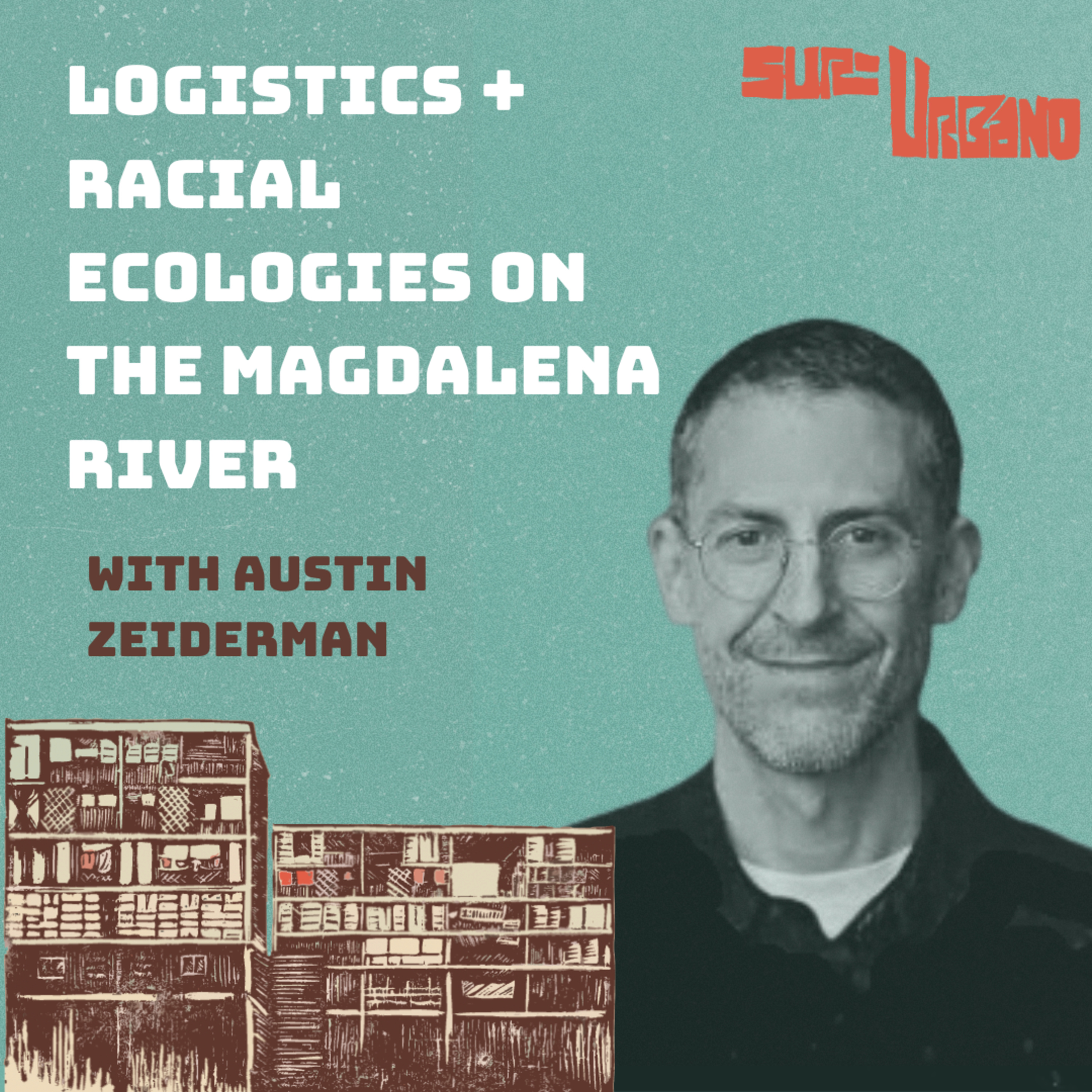
Logistics and Racial Ecologies on the Magdalena River with Austin Zeiderman
from Sur-Urbano · host Latin American Cities Working Group
The Magdalena River has been the central artery of Colombia's history: it was the path of colonization as well as of commercial circulation linking the coast to the interior. But it was also the site and product of racialized violence from slavery to the Colombian armed conflict in the 20th century, when parts of the Magdalena became almost synonymous with paramilitary violence and the river itself was declared a victim of the armed conflict. The paramilitaries demobilized in 2005 and then peace was signed with the FARC guerrillas in 2016; shortly after,a state-backed megaproject was announced that would transform the waterway into a logistics corridor, linking the logics of security and circulation with those of pacification. Our guest today, Austin Zeiderman, is the author of Artery: Racial Ecologies on Colombia’s Magdalena River. While Zeiderman may have originally set out to study a logistics corridor, what he found was an even richer study about the historical and contemporary co-production of race, capital and space along the country’s central fluvial artery. An anthropologist and geographer, Zeiderman applies an ethnographer’s approach to the situated practices both ofpower and resistance. He takes us close to the companies managing the logistics sector, their actuarial logics of security and risk, and imperatives of circulation. At the same time, Austin details the life inside a tow-boat, the way gender, race and labor have historically interacted from the old bogas boats to the present day, and the way tacit knowledge resists the fungibility of racialized labor even today. We are a podcast about cities, and precisely for this reason, I wanted to highlight the invisible labor that circulates goods and fuels in and out of our urban hubs, which more often than not, have turned their backs on their nearest ports. Books like Austin’s – which center the long lives of logistics and their embeddedness in what Austin calls “geo-racial regimes” – are indispensable for understanding the broader forces which shape Latin American cities. Austin Zeiderman is Professor of Geography in the Department of Geography and Environment at the London School of Economics. He is an interdisciplinary scholar who specializes in the social and political dimensions of urbanization and the environment in Latin America, and holds a PhD in Anthropology from Stanford University.My cohost is Robinson Markus. Robbie is a PhD student in urban planning at UCLA, has a masters in Sociology from LSE, and studies the intersections between housing and climate change in Latin America. Keep in mind that Robbie's audio had some difficulties, so we don't hear as much from him as we should have!
Embed this episode
NOW PLAYING
Logistics and Racial Ecologies on the Magdalena River with Austin Zeiderman
No transcript for this episode yet
Similar Episodes
No similar episodes found.
Similar Podcasts
No similar podcasts found.