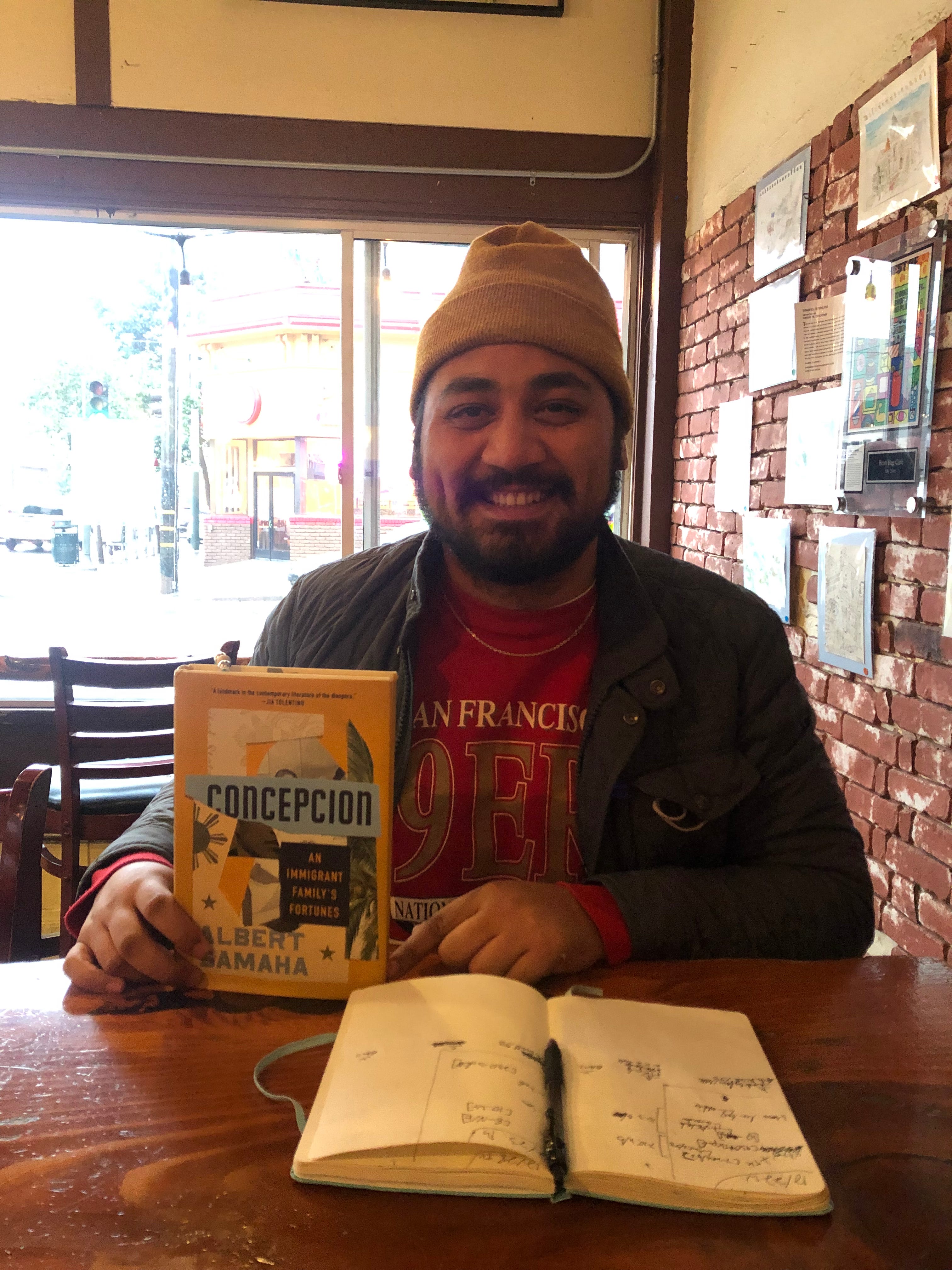
Loitering With Albert Samaha & Friends
from Loitering Hosted by Sonia Paul
Hello, everyone! It’s been a long year, to say the least. Hard to believe 2021 is about to close. Before it does, however, please check out this special episode of Loitering, featuring Albert Samaha, Johana Bhuiyan and Arvin Temkar. We discuss Albert’s new book, Concepcion, and dig into the process of excavating family history and identity. I like to think of it as the good thinking, good listening podcast we could use for our ears right now! Let me know what you think. Peace, Sonia Sonia Paul 0:13 Okay, thank you both for agreeing to join me for this book club/book talk about Concepcion, by Albert Samaha. And so before we like get into the book discussion, could you each introduce yourselves so listeners know who are friends of Loitering right now? Sure. Johana Bhuiyan 0:34 I am Johana Bhuiyan. I am a tech reporter and editor at The Guardian. I live in the Bay Area. I'm half Filipino, half Bangladeshi. That's pretty much the pertinent information. Arvin Temkar 0:48 Oh, that's super cool. Yeah, we're all half. We're all mixed. That's really interesting. So my name is Arvin Temkar. I am a freelance photojournalist and writer in Atlanta. And I used to live in the Bay Area. So a lot of the book was really interesting to kind of learn about the history of San Francisco. And I met Sonia in the bay, Sonia Paul 1:08 And to Arvin's point about all of us being mixed, I think that is interesting. All of us have a connection to Filipino culture. My mom's side of the family is born and raised in the Philippines. They're like mixed Indian-Filipino from the Philippines. So there's so much of that culture in my family as well. So to that end, I'm curious because how this started is that I knew Arvin would be reading this book, and I was interested in reading this book. And then I was like, let's have a book club. I know who was probably reading this book as well. And that would be Johana. But also, like, let's pinpoint what was compelling each of us to read this book. Johana Bhuiyan 1:47 I worked with Albert at BuzzFeed. So that was part of it, part a lot of it was just in support of. But I also I mean, I am really interested in my Filipino culture and learning more about the history of the Philippines. There was a lot of like, wanting to learn a little bit more about my Filipino ethnicity. My dad is the Bangladeshi one. I grew up largely culturally Bangladeshi. So I learned how to speak Bangla. Like, I really don't know a ton of the Tagalog. So honestly, any opportunity I get to learn a little bit more about Filipino culture and people who have Filipino backgrounds. And obviously, Albert, knowing him personally, I was really interested in, and he had done a couple of articles too about his mother. And I was actually hoping to read a little bit more about that as well. Sonia Paul 2:30 Yeah, did you to have a chance to like, exchange information or experiences about being half Filipino? Johana Bhuiyan 2:38 No, I honestly, like did not know that. He was half Filipino. I like did not know what ethnicity he was. Until he started writing about his Filipino mom. I'm like, Oh, this makes a lot of sense, based on his name. Like, I'm like, this all started to click for me. But yeah, I'd never put two and two together. We had like, talked about it after I stopped working on Buzzfeed. But it was never like a topic of conversation. Sonia Paul 2:59 Hmm, interesting. How about you, Arvin. Arvin Temkar 3:02 I also know Albert, we're friends. And we went to journalism school together. So obviously, I want to support him and his brilliant writing. But you know, I'm also just super interested in all of the topics that he writes about, particularly in this book, the question of whether his family or anybody's family is better off moving to the United States and kind of pursuing the American dream, as many of us have been raised to believe. I didn't mention this earlier, but my mom is Filipino, and my dad is Indian. But I relate mostly to my Filipino side. And I think that's because I learned my mom's language when I was little. I have a lot of cousins in the United States who are Filipino, my mom cooked food from her country. And I didn't really have that same experience on my dad's side. It was kind of interesting also to kind of read the book and learn a little bit about Albert's dad, but also kind of recognizing that he seems to really identify particularly with his Filipino side. I think I have a similar experience. Sonia Paul 3:59 Yeah, I was also really intrigued to read this book because I feel like I haven't come across many books about Filipino identity and culture from like a second generation experience. Also super interested in that critique, as Arvin mentioned, of like, is it a good thing that people chose to immigrate to this country. And also the experience of coming from a half identity or like a bicultural experience? And then writing about that diaspora community or about that immigrant community? I just don't feel like we have a lot of that in literature at this moment. And so one of the things I was thinking about when reading this book is that considering that he's examining his own Filipino identity and acknowledges he grew up with that side of his family and really embraces that, how did that portrayal resonate with you? Arvin Temkar 4:51 I thought it was really interesting that Albert describes kind of this black and white dichotomy in our culture, and kind of questions where other people fit in, particularly if you're Filipino. And the part that resonates with me in the book in regards to your question is, he kind of does this cultural analysis of this movie called The Debut, The Debut. Sonia Paul 5:16 Yes! Arvin Temkar 5:17 And where the main character kind of falls, how that relates to his experience. And I guess Albert relates a lot to Black culture, and the character in that movie seem to fall in with white culture. And he kind of compares and contrasts these experiences. And I really did that personally, because I've always felt like I have kind of related more to the white culture, but had noticed in my school that it felt like many of the Filipinos were relating more to Black culture. So it's always been like just a weird dynamic. And I think partly that might be because I moved around a lot when I was a kid. And I didn't have many other Filipino friends, until I got to like, MiddleSchool AND high school, where I was on an army base, and there were a lot of Filipinos, Johana Bhuiyan 6:03 I mean, I was gonna ask you where you grew up, because I think that adds a lot of context, you know, whether you identify more with white or Black culture as a person of color. I mean, that was something similar, but I thought was interesting in the book. And it's something that I think about quite a lot. Because I do feel like speaking of the lack of representation, or a lack of any kind of narratives about what it's actually like to be Filipino, I think growing up without that, you basically are forced to choose between white and Black culture, because what is a second-generation Filipino culture? What does that look like? Or what is brown culture look like? You know, we just didn't have a very real concept of that. I mean, I grew up in Queens, New York. And so I definitely, I moved more toward Black culture. But I think I also felt more accepted by Black culture and much more comfortable. And so it is interesting to me that while Albert, he felt closer to Black culture than white culture, his family kind of took on and accepted a lot of sort of the white stereotypes, white expectations, kind of saw whiteness as — whether or not it was a net positive — accessing that whiteness, or that closeness to whiteness would be the thing that provided them a lot of opportunities. In order to progress in American society, they needed to accept whiteness, which I think is pretty true of a lot of my immigrant family. Right. Like, I think that that was sort of the… This is a public episode. If you would like to discuss this with other subscribers or get access to bonus episodes, visit loitering.substack.com
Embed this episode
No transcript yet.