
EPISODE · Apr 16, 2026 · 21 MIN
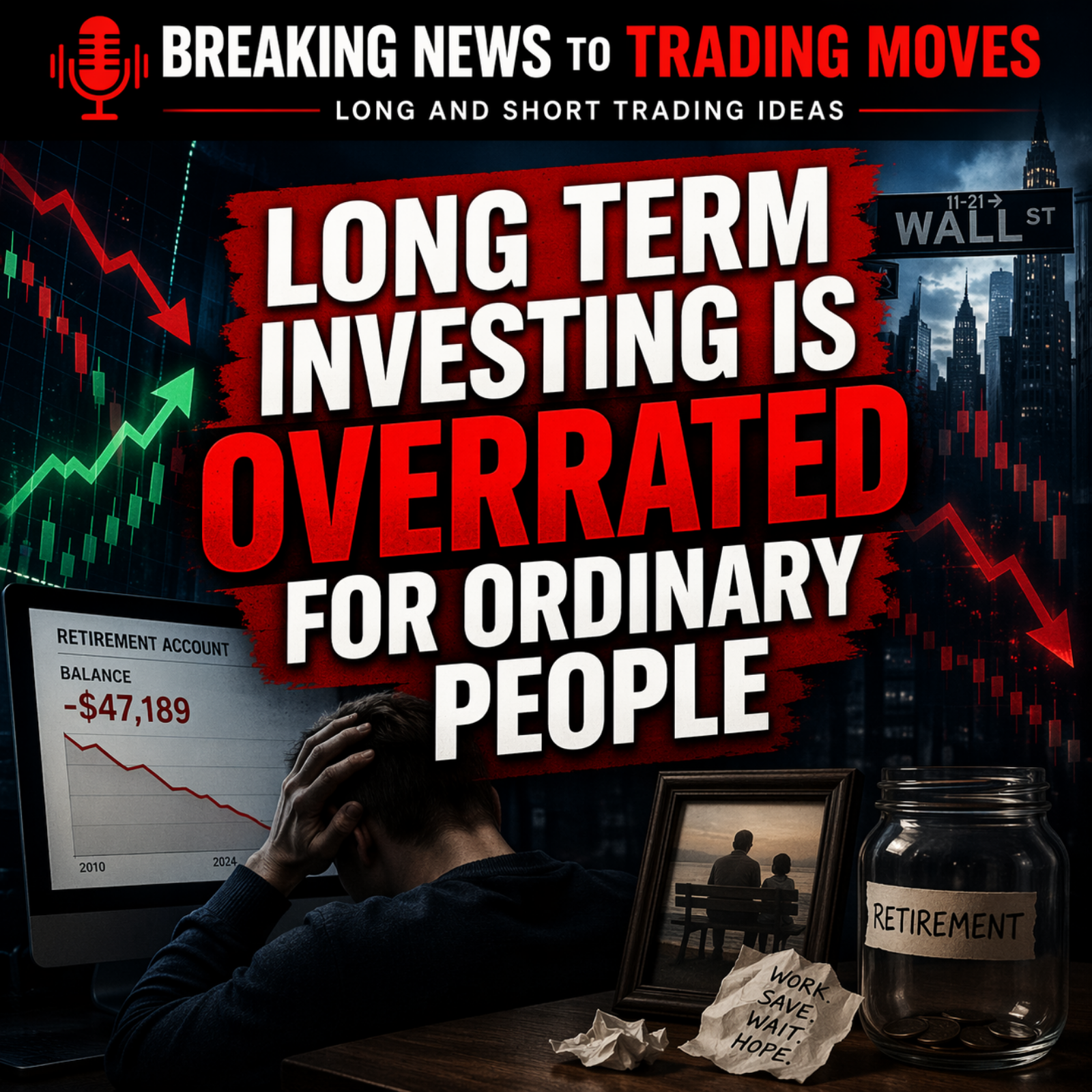
Long Term Investing Is Overrated For Ordinary People
from Breaking News To Trading Moves
Passive investing is often presented as the safest and simplest path for long-term investors. Low fees, broad diversification and consistent market exposure have made index funds and ETFs one of the most powerful forces in global finance.But what if passive indexing is no longer just a neutral investing tool? What if it has become a structural force that shapes price action, rewards size over fundamentals and quietly increases fragility across the market?In this episode of Breaking News to Trading Moves, we explore whether passive indexing has become a hidden market driver rather than just a passive participant. The discussion breaks down how automatic buying flows, index construction and mega-cap concentration can distort price discovery and create risks that many investors do not fully see.What this episode exploresHow passive indexing became dominant in modern marketsWhy index funds keep directing capital into the biggest namesHow passive flows may reinforce momentum and stretch valuationsWhy diversification can look broad while risk stays concentratedWhat happens to liquidity when everybody owns the same tradeHow price discovery may weaken when fewer investors focus on fundamentalsWhy market leadership keeps narrowing into a small group of stocksWhat this means for active investors, traders and long-term holdersKey takeawaysPassive investing has many real advantages, but this episode challenges the idea that it is automatically low risk. When large amounts of money are allocated mechanically, the biggest stocks can keep getting bigger simply because of their index weight, not necessarily because they are the best value.That creates an important question for investors: are markets still pricing businesses efficiently, or are they increasingly being driven by systematic flows?The episode also looks at the danger of false comfort. On paper, an investor may believe they own a diversified portfolio. In reality, a large share of performance can still depend on a handful of dominant companies, sectors or themes.Why it matters nowFor traders, passive flows matter because they affect leadership, volatility, correlations and reversal risk.For investors, passive indexing matters because crowded exposure can work extremely well in rising markets, but can become a major weakness when sentiment shifts, liquidity tightens or concentration begins to unwind.This is not a blanket attack on passive investing. It is a reminder that “passive” does not always mean neutral, and “diversified” does not always mean safe.Who should listenInvestors using index funds or ETFsTraders focused on market structure and flowsAnyone concerned about concentration riskPeople trying to understand mega-cap dominanceInvestors who want to think beyond the passive vs active cliché#StockMarket #Investing #Trading #PassiveInvesting #IndexFunds #ETFs #MarketStructure #PortfolioRisk #PriceDiscovery #ConcentrationRisk #MegaCapStocks #Finance #LongTermInvesting #TradingIdeas
Embed this episode
Ready to play
Long Term Investing Is Overrated For Ordinary People
No transcript for this episode yet
Similar Episodes
No similar episodes found.
Similar Podcasts
No similar podcasts found.