
EPISODE · May 17, 2024 · 12 MIN
Lost civilizations and the promise of new knowledge
from Razib Khan's Unsupervised Learning · host Razib Khan
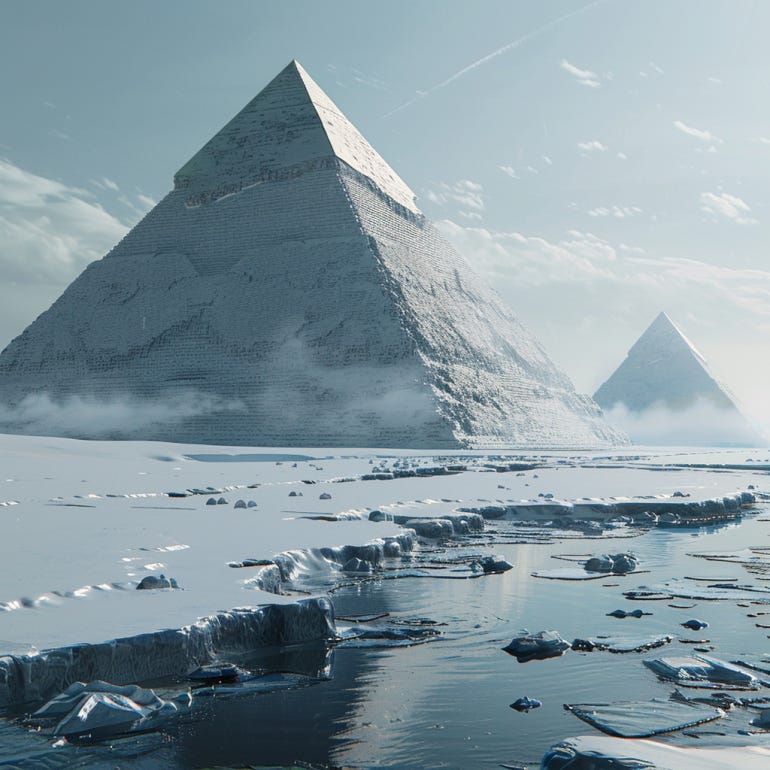
This is a free preview of a paid episode. To hear more, visit www.razibkhan.comIf you have a sibling with autism, your future child’s risk for an autism diagnosis is increased by a factor of 2 to 3.5×. Orchid’s whole genome embryo reports can help mitigate your child’s risk by screening for over 200 genetic variants definitively linked to autism and other neurodevelopmental disorders. Discuss your situation with a genetics expert.On this episode of Unsupervised Learning Razib discusses the idea of “lost civilizations,” the possibility that there were complex societies during the Pleistocene Ice Age. This topic recently rose to salience after a dialogue between writer Graham Hancock and archaeologist Flint Dibble on Joe Rogan’s podcast. Hancock is a longtime guest on Rogan’s show and he promotes a theory that an advanced “lost civilization” during the Ice Age left remnants of its culture across the world, for example the pyramids of both Egypt and the New World. In the exchange, Dibble, a vigorous online critic of pseudo-archaeology came back with scientific orthodoxy; civilization emerged after the end of the Ice Age, and there is no evidence for anything during the Pleistocene.Razib explains why evidence from biology makes it clear that Hancock is almost certainly wrong. No massively advanced global civilization during the Ice Age left its imprint across the world. Though the archaeological evidence is strong, the data from DNA is even more unambiguously robust and informative. But then Razib steps back and asks what “civilization” is, and presents the possibility that stillborn cultures might have existed during the Ice Age. Civilizations that left no descendants and barely any archaeological footprint. He also argues that the modern conception of civilization starting in Sumer and Egypt 5,000 years ago is simplistic, and American ideas about an arrow of history ascending onward and upward tend to be misleading as a guide to the past. Though the orthodox view is mostly right, there are always gaps in our knowledge and surprises around the corner. Graham Hancock’s enthusiasm for what we can know is commendable, his conclusions long ago outpaced his evidence. In the future, understanding the past will be done with even more powerful tools, but we must proceed with humility upon the foundations of all we know while acknowledging what we don’t.Related: Why Civilization Is Older Than We Thought and Paradise Lost.
Embed this episode
Ready to play
Lost civilizations and the promise of new knowledge
No transcript for this episode yet
Similar Episodes
No similar episodes found.
Similar Podcasts
No similar podcasts found.