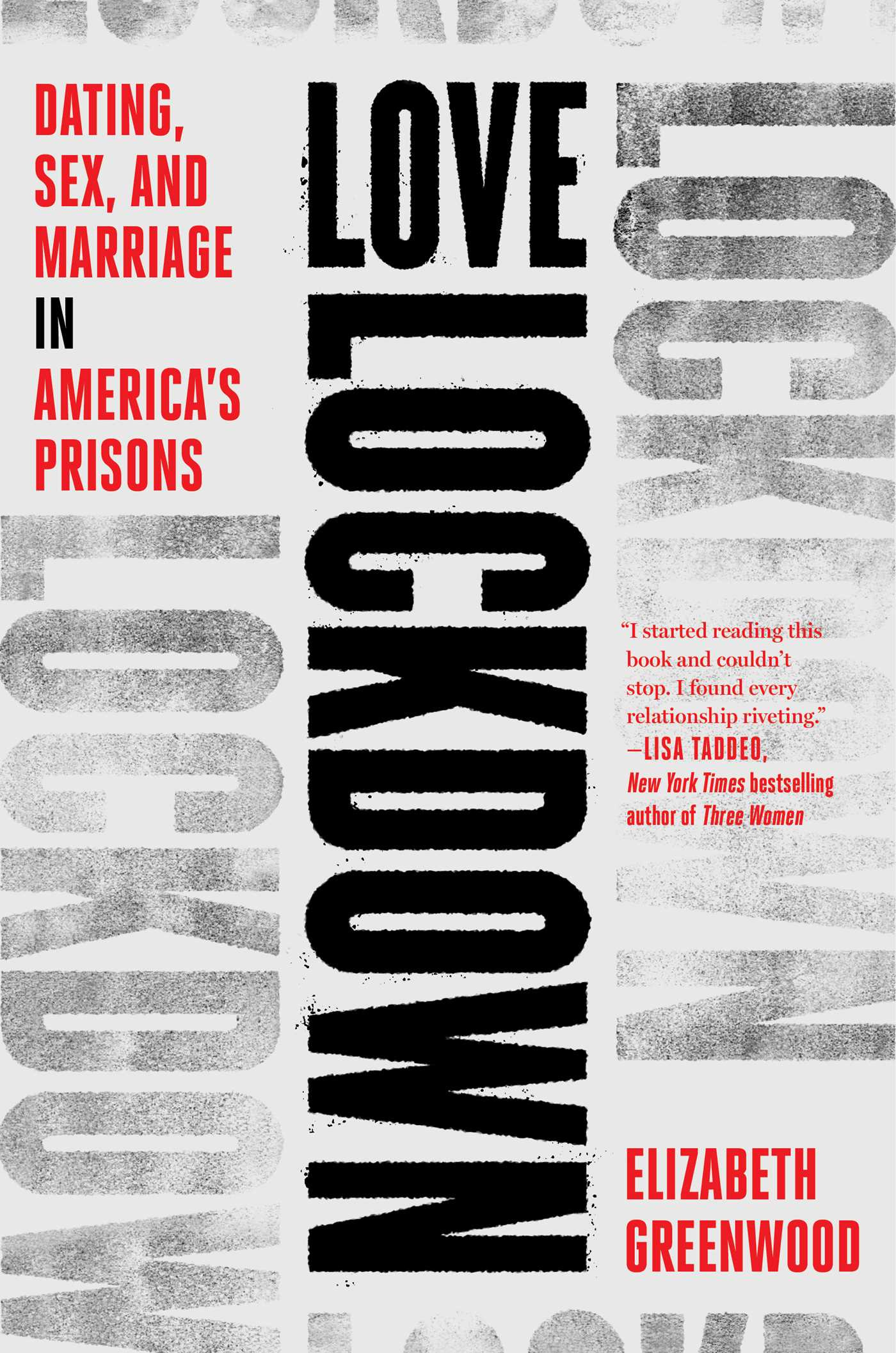
Love Lockdown
from Lean Out with Tara Henley Hosted by Tara Henley
Here’s a question: Does every human being deserve to have love in their life? The American prison system — through its policies — often answers that question with a “no.” But the human need for companionship, affection and care runs deep. Every year, some of the roughly two million people behind bars fall in love with people on the outside. And the way that the prisons treat these bonds says a lot about the state of mass incarceration. Brooklyn writer Elizabeth Greenwood spent five years reporting on romantic relationships among inmates. She’s the author of Love Lockdown: Dating, Sex, and Marriage in American Prisons. And she’s our guest, today on Lean Out. TH: Liz, welcome to Lean Out. EG: Thank you so much for having me. TH: Great to get to speak with you today. I found your book so engrossing; I picked it up and I could not put it down. It’s very good storytelling. Now, to start, you have a friend, a former hedge fund manager Sam Israel, who absconded with half a billion dollars and is now incarcerated. I want to know, how did that friendship come about — and how did it spark an interest in love in the prisons? EG: I started corresponding with Sam Israel when I was researching and reporting my first book, Playing Dead: A Journey Through the World of Death Fraud. That is about people who have faked their own deaths to varying degrees of success, and about the whole disappearance and fraud industry. Sam staged his own suicide in 2008 after being revealed as one of the biggest Ponzi schemers in American history. Up until Bernie Madoff’s crimes came out just a few months later, he was the biggest Ponzi scheme. I corresponded with Sam. We conducted most of our correspondence via CorrLinks, which is one of many third-party email applications that prisons utilize. I asked Sam about his experience faking his death. And then our correspondence really grew into a kind of friendship. I still talk to him frequently. It’s one of most bizarre friendships of my life, and also one of the most satisfying. Long after I had asked him about all the death fraud stuff, he would occasionally mention to me that people would hear about his story, usually via some tawdry news tabloid program, and people, usually women, would write to him. They wanted to meet him, get to know him. I just found that so interesting because, of course, I’ve heard about this before. We usually think of the more high-profile serial killers and how they have groupies, and this lurid, train wreck vision about what that’s about. But here’s Sam. He still has a long sentence left. He’s not even that famous. I just was so curious about what that was about. So, I started looking into this. I started speaking to some of the women who’d written him. And what I found was that this is much more complicated, and much more understandable as an impulse when you get to know people and hear their whole stories. TH: The stories are powerful, as I mentioned. Introduce us to Crystal and Fernando. EG: Crystal and Fernando are a couple who met in the early 90s. They were both very young at the time. Crystal was 18. Fernando was in his early twenties. Fernando Bermudez is a Dominican American man. He was living in the Washington Heights neighbourhood of New York City, and he was picked up and ended up being wrongly convicted for a nightclub murder that took place in 1991. This story, at the time, made national news, partly due to the fact that Fernando’s family was lobbying so vocally about their son’s innocence, which was very real. He had an alibi that put him 10 miles away from the crime when it happened, and upon a closer look — which didn’t happen for 18 years, unfortunately, which he served in maximum securities prisons in New York — there was a lot of procedural problems with the way he was picked up. This is all to say: In the early 90s, Fernando was serving time on Rikers Island, the jail in New York City, while he was awaiting trial. Crystal was living a very cloistered, sheltered life in Oklahoma. As a young woman, she saw his father on the nightly news, proclaiming his son’s innocence, and the way she describes it, something about Fernando’s father and his story just pierced her heart. She knew she had to write to this person. Crystal is very religious; she wanted to tell him about the Lord. This was back in the 90s; there were not the ways we can interact with people who are incarcerated today. Finally, she got the address for the jail and sent him a letter. From there, they corresponded. She came to New York and met him. They got married while Fernando was still on Rikers, I believe, or very early into his false imprisonment. And because New York is one of only four states in the United States that allows for conjugal visits, once they were legally married, they were able to have weekends, about every six weeks, in privacy. They ended up having a family. They had three children who were conceived on prison property during the 18 years Fernando and Crystal were both fighting for Fernando’s freedom. He was eventually released. He received a settlement from the state of New York for his wrongful conviction. The couple is still together. They are grandparents. They now live in North Carolina. Even though Fernando was wrongfully convicted, he still spent 18 years in prison and he came out with all of the PTSD and challenges that anyone in that environment would. So they got their happy ending, thank God, but it’s also still been a challenge for them readjusting and dealing with the mental health issues they both sustained having been in the system for that long. TH: I want to come back to conjugal visits. But first, this book really smashes the stereotypes about these types of relationships. One of those stereotypes is that the women hold all the control in the relationship. I was surprised to see how much waiting around by the phone there was for these women. EG: That was also very surprising to me. We think that the person in the free world has all the power. But visits don’t happen all that often and a lot of the day-to-day affection and communication of a relationship with someone in prison happens through phone calls, through letter writing, through email correspondence. It turns out that the person in the free world is really at the whim of the prison system. You can’t just call up a prison and say, “I want speak to my husband.” They have to call you, at certain times when that’s available — and those times can change on a dime due to institutional upheaval, which sometimes does seem to be very random and capricious. So, there’s very little control that the outside partner has. They find themselves waiting by the phone, and sometimes structuring their whole day around that phone call. When you only get to talk to someone 15 minutes a day, those are the most important 15 minutes. Until they get that phone call, they’re holding their breath. People in prison are in a perilous situation. There can be fights, lockdowns; you don’t know what’s going on. TH: You mentioned letter writing, and that really emerged as a theme. What are the benefits of that mode of communication? EG: The world we live in today is so fast. Our attention spans are the time that a TikTok video takes to play. There’s just so much speed and stimuli in our lives. When it comes to dating, that same phenomenon is really mirrored in swiping through people on the different apps. The whole culture of dating feels so fast. It feels so disposable. In a prison relationship, everything is really slowed down. Of course, slower than people would want. But just because of the structure of prison and what’s available, it’s a very slow correspondence that people take to get to know each other. When it comes to couples who met while incarcerated, which is the type of couples I looked at here, people met often through pen pal sites. It’s so uncommon for us these days to do anything in long-hand, let alone get to know someone through the very old school process of w… This is a public episode. If you would like to discuss this with other subscribers or get access to bonus episodes, visit tarahenley.substack.com
Embed this episode
No transcript yet.