
EPISODE · Jan 8, 2026 · 34 MIN
LOVE VALLEY, NORTH CAROLINA - THE WILD WEST TOWN IN THE HEART OF THE SOUTH
from Duke Teynor · host DUKE TEYNOR
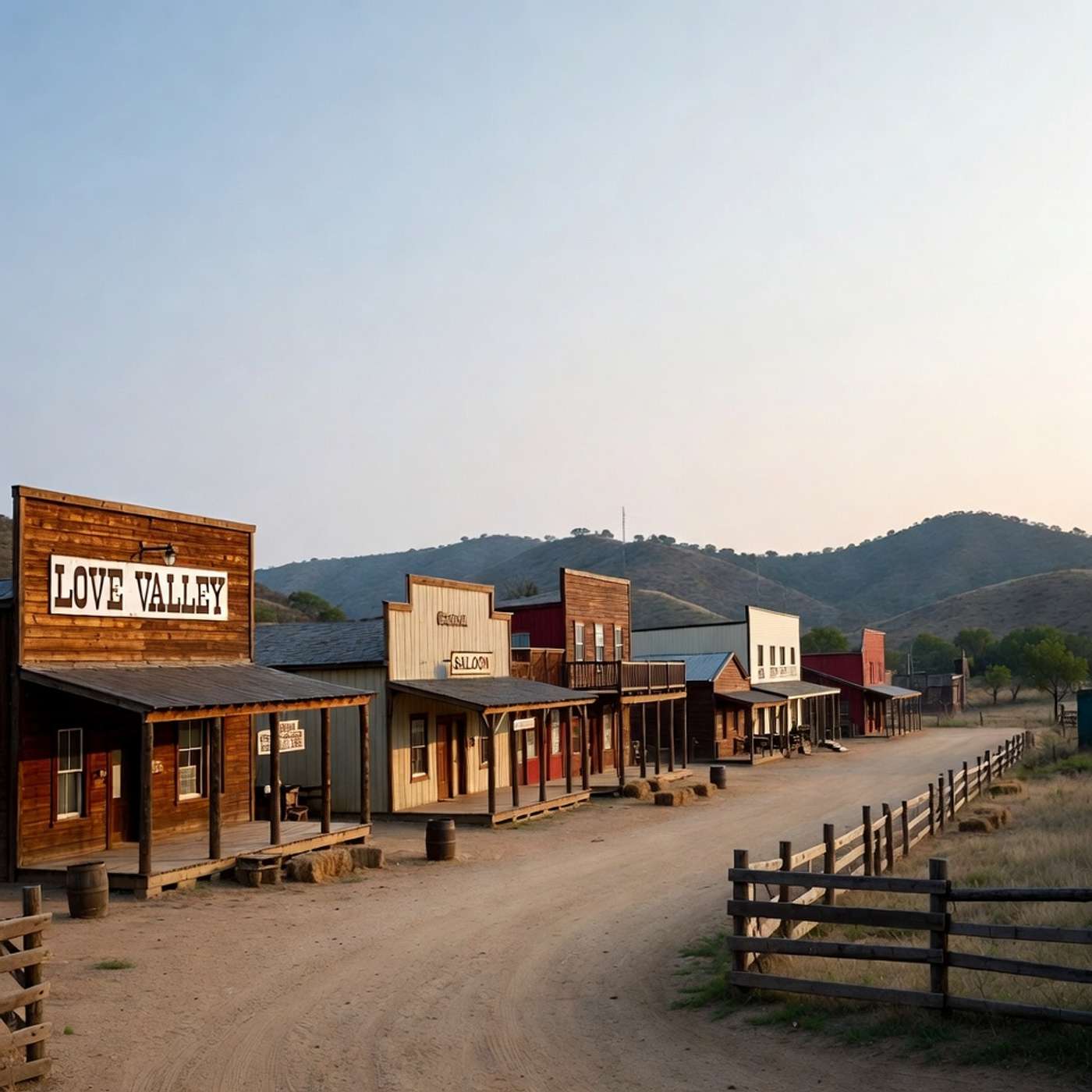
Picture this: You're driving through the rolling hills of North Carolina. Past tobacco farms and horse pastures. Through typical small Southern towns with their churches and barbecue joints.And then suddenly, you round a corner and see it—a town that looks like it was plucked straight out of an old Western movie. Dirt streets. Hitching posts. Saloons with swinging doors. Cowboys on horseback riding down Main Street.You haven't traveled back in time. You've just arrived in Love Valley, North Carolina—one of the most unique, fascinating, and downright bizarre towns in America.I'm Summer, and welcome to the Duke Tyner podcast. Today, we're diving deep into the story of Love Valley—how it started, why it exists, what it's like today, and the surprising connections it has to Hollywood and country music royalty.This is a story about one man's wild dream to recreate the Old West in the middle of North Carolina. And somehow, against all odds, that dream is still alive.Let's ride into Love Valley. SEGMENT 1: THE FOUNDING - ANDY BARKER'S WILD WEST DREAMLove Valley's story begins with one man: Andy Barker. And trust me, Andy Barker was a character.Born in 1929, Andy grew up in Charlotte, North Carolina. He was a successful businessman, a devout Christian, and a man with a vision that everyone thought was completely insane.In 1954, at just 25 years old, Andy Barker bought 1,000 acres of land in Iredell County, North Carolina, about 50 miles north of Charlotte.His plan? To build an authentic Old West town. In North Carolina. In the 1950s.People thought he'd lost his mind.But Andy had a philosophy. He believed that modern American society was becoming too urbanized, too disconnected from nature, too reliant on automobiles and technology. He wanted to create a place where people could live simply, close to the land, connected to horses and the cowboy way of life.He wanted to recreate the values and lifestyle of the Old West—self-reliance, community, simplicity, and a connection to the land.So he started building. And not just any town—a historically accurate Old West town.The original Main Street was just 100 feet long. Every building was designed to look like something from the 1880s. Wooden storefronts with covered walkways. Hitching posts for horses. A saloon. A general store. A church at the end of the street.But here's the kicker: No cars were allowed in the town limits. Only horses.Main Street was—and still is—a dirt road. If you wanted to visit Love Valley, you came on horseback, or you parked your car outside of town and walked in.Andy Barker officially incorporated Love Valley as a town in 1963. It became North Carolina's newest—and most unusual—municipality.And yes, they actually had a mayor and town council. Andy was the first mayor, serving from 1963 until his death in 2008. That's 45 years as mayor of his own Western town.But why "Love Valley"?Andy was a deeply religious man. He named the town "Love Valley" because he believed that love—Christian love, neighborly love, love of the land—was the foundation of a good community.The name has caused some confusion over the years. People assume it's some kind of hippie commune or romantic getaway spot. Nope. It's literally a cowboy town named after Christian principles.By the late 1960s, Love Valley had about 100 full-time residents, all living without cars, all traveling by horse, all embracing the cowboy lifestyle.It was bizarre. It was audacious. And somehow, it worked. SEGMENT 2: THE HEYDAY - RODEOS, CONCERTS, AND 30,000 VISITORSThe 1960s and 70s were Love Valley's golden age. This wasn't just a quirky little town—it became a legitimate destination.Andy Barker started hosting events. Big events.The Love Valley Rodeo became the town's signature attraction. Professional rodeo riders came from across the country to compete. Bull riding, bronco busting, barrel racing, roping competitions—the real deal.On rodeo weekends, thousands of people would descend on this tiny town. They'd camp in the surrounding hills, ride their horses through the trails, and party in the saloons.But then something unexpected happened: Love Valley became a concert venue.In the late 1960s and early 70s, Love Valley hosted major country music concerts and even rock festivals. Artists like:Waylon JenningsWillie NelsonCharlie DanielsThe Allman Brothers BandThe Marshall Tucker BandThese weren't small shows. We're talking about 10,000 to 30,000 people showing up to concerts in Love Valley.Picture this: A tiny Western town in the middle of nowhere, North Carolina, suddenly hosting massive music festivals. Hippies, cowboys, bikers, and Southern rock fans all converging on this dirt-street town.The most famous event was the 1970 Love Valley Rock Festival, which drew an estimated 25,000-30,000 people over several days. It was North Carolina's answer to Woodstock, except it happened in a cowboy town and featured both rock bands and rodeo events.Can you imagine the culture clash? Cowboys on horses next to hippies smoking weed. Southern rock blasting through speakers while someone's roping cattle. It was absolute chaos—and apparently, it was amazing.But the massive crowds created problems.The infrastructure of Love Valley couldn't handle tens of thousands of people. Sanitation became an issue. Traffic (yes, cars had to park somewhere) overwhelmed the area. Local authorities got nervous about drugs and the countercultural vibe.By the mid-1970s, the big concert festivals ended. Love Valley returned to being primarily a rodeo town and equestrian community.But for about a decade, Love Valley was the wildest, most unexpected party destination in the South. SEGMENT 3: THE TOWN LAYOUT - WHAT LOVE VALLEY ACTUALLY LOOKS LIKELet me paint you a picture of what Love Valley looks like if you visit today.Main Street is the heart of the town. It's exactly 100 feet long—you can walk the entire length in about 30 seconds.The street is dirt. Not paved. Dirt. Because horses don't need pavement.On both sides of Main Street, you've got authentic Old West-style buildings:The Love Valley Saloon - The social hub of town. Swinging doors, wooden bar, country music on the jukebox. You can order a beer and sit on the porch watching horses go by.The General Store - Sells western wear, horse tack, souvenirs, snacks. It's functional but also serves tourists.The Town Hall - Where the mayor and town council conduct official business. Yes, they still have town meetings and pass local ordinances.The Chapel - A small, beautiful church at the end of Main Street. Andy Barker built it as the spiritual center of the community.Various shops and cabins - Some are businesses, some are residences. All maintain the Western aesthetic.At the end of Main Street, there's a hitching post rail that runs the length of the street. This is where people tie up their ho...
Embed this episode
Ready to play
LOVE VALLEY, NORTH CAROLINA - THE WILD WEST TOWN IN THE HEART OF THE SOUTH
No transcript for this episode yet
Similar Episodes
No similar episodes found.