
EPISODE · Apr 14, 2025 · 1H 13M
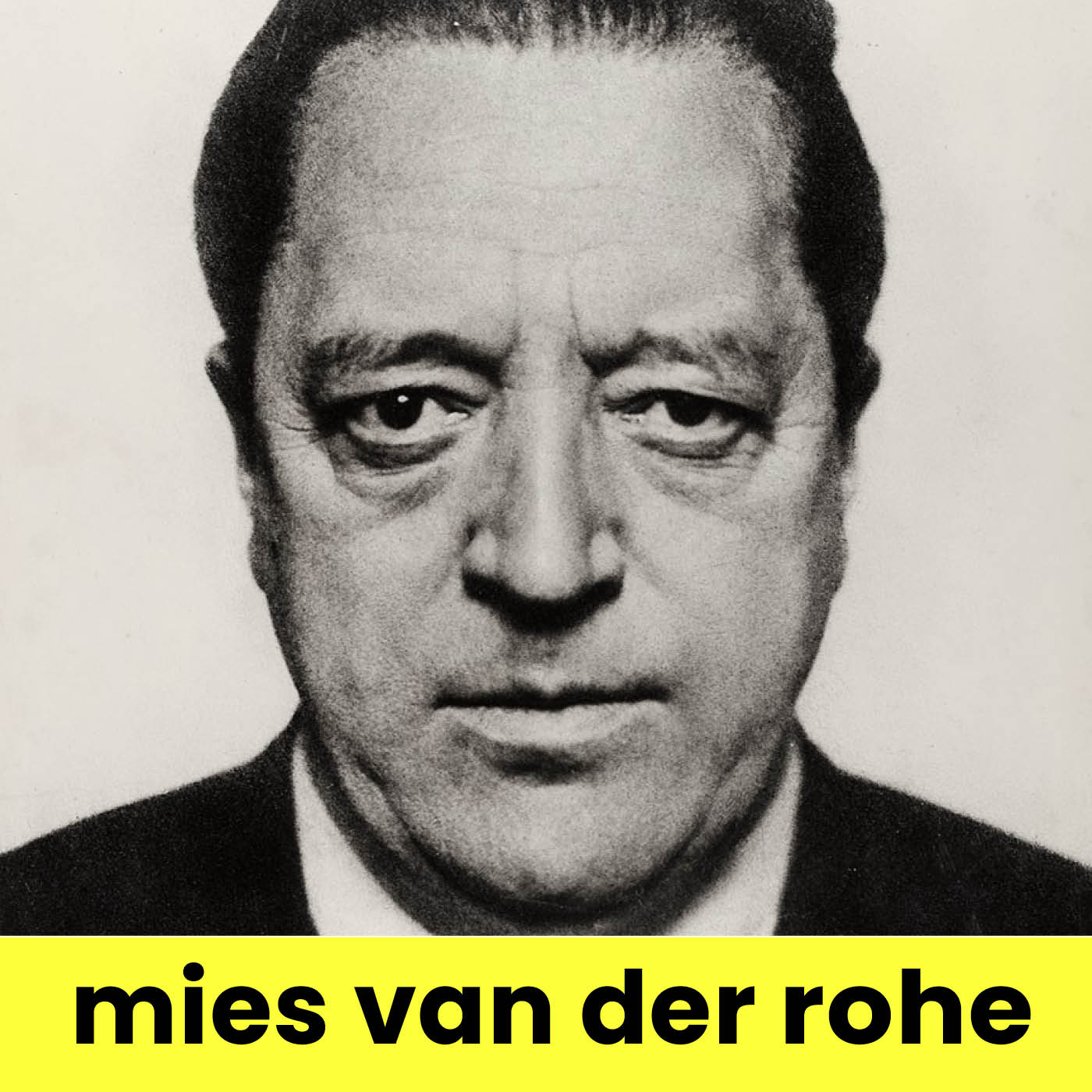
LUDWIG MIES VAN DER ROHE (1/2) | Wita Noack & Fritz Neumeyer
from bauhaus faces · host Anja Guttenberger
Ludwig Mies van der Rohe (1886–1969) was a pioneering modernist architect. Born in Aachen, he started as a bricklayer before moving to Berlin, where he worked for Bruno Paul and Peter Behrens. His first major commission, the Riehl House (1907), showed early signs of modernism. In 1921, he changed his name, marking his shift to modern architecture while maintaining classical influences. As vice president of the German Werkbund, he led the "Die Wohnung" exhibition (1927), cementing his reputation. In 1930, he became Bauhaus director, striving to protect it from Nazi repression. After the school closed in 1933, Mies attempted to continue working in Germany, even accepting Nazi commissions, a decision he later had to justify. In 1938, he emigrated to the U.S., becoming director of the Armour Institute (later IIT) in Chicago. There, he designed iconic buildings like the Farnsworth House and the Seagram Building, defining modernist architecture, only returning once to Germany to design the Neue Nationalgalerie in Berlin in the 1960s. For the first part of the Mies podcast, I invited Wita Noack, as head of the Mies van der Rohe Haus in Berlin a true expert about House Lemke where the institution is situated, and Fritz Neumeyer, THE Mies expert in Germany, who published several books about Mies van der Rohe and his work during the past 40 years. This episode has been supported by The Mies van der Rohe house.
Embed this episode
NOW PLAYING
LUDWIG MIES VAN DER ROHE (1/2) | Wita Noack & Fritz Neumeyer
No transcript for this episode yet
Similar Episodes
No similar episodes found.