
EPISODE · Jul 27, 2022 · 34 MIN
Machine Learning in Drug Development
from cc: Life Science Podcast · host Chris Conner
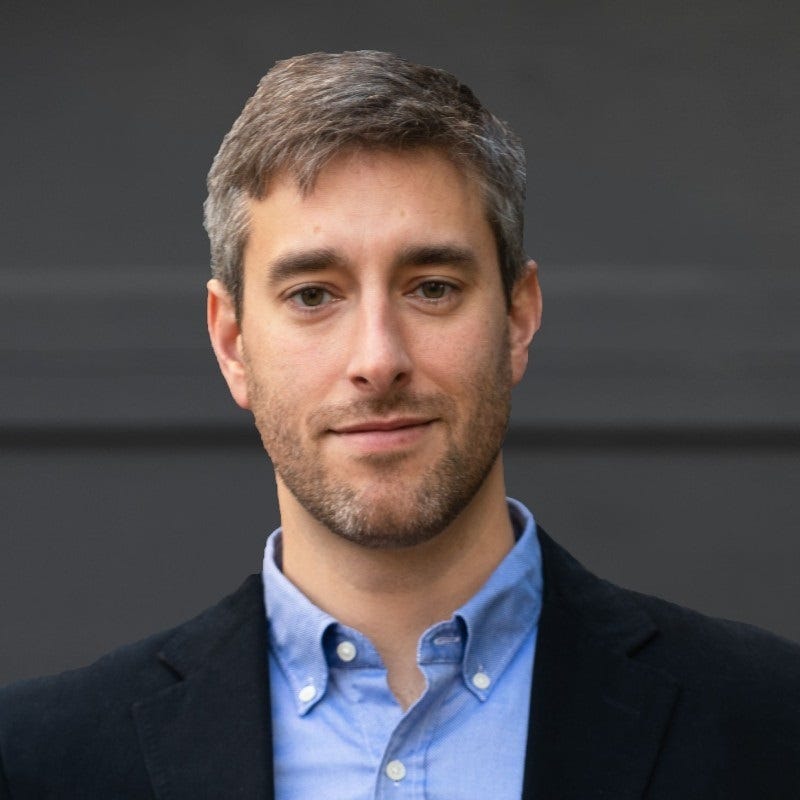
One of my goals for this podcast series is to cover the use of AI in everything from drug development to the clinic. This episode sits at the trailhead for that journey. I met Nicolas Tilmans, Founder of Anagenex on Twitter. Anagenex is “building a directed evolution platform to develop new small molecules by combining massively parallel biochemical experiments and machine learning.”Specifically, they are using DNA Encoded Libraries (DELs) to identify small molecules that will bind to targets of interest and use machine learning to refine the pool of candidates and eventually make strong predictions about what compounds to pursue.Nicolas first laid out some of the challenges in drug discovery. For example, some diseases are still poorly understood. We have identified many mutations and proteins involved in cancer formation, but the target proteins for other diseases have yet to be identified. And I just learned that years of Alzheimer’s research may be based on fraudulent data.In terms of therapeutics, antibody therapies are becoming common for certain diseases. The also have limitations. While being very specific with regard to targets, they are large, expensive, hard to make and hard to distribute (globally and internally). On the other hand small molecules can be easy to make once identified but can be less specific. The objective is to find small molecules that aren’t destroyed before they work and don’t interfere with things they shouldn’t (two very real challenges).AlgorithmsThere are two halves to the DEL approach to drug development. Algorithms and chemistry. We didn’t talk a lot about the algorithms except for this key idea. Many ML algorithms are trained on data sets containing billions of data points (like photos on the internet). Biology doesn’t have a lot of those. Anagenex is addressing the problem by building larger data sets on which to train the algorithms. Making chemicals through DELs allows the testing of billions of possible compounds. Training on larger datasets should result in the algorithms’ ability to make predictions better over time.ChemistryOn the chemistry side, what comes out of the binding experiments is a mixture of chemicals that bind their target with different affinities. Sequencing the DNA tags tells you what building blocks were used and in what order, but reactions are never complete and those “lego blocks” can assemble in many ways. What the algorithms are doing is making their best guess of the compounds that are in that mix. Those predictions are used to make the next pool to test.PeopleThe other interesting challenge that Nicolas mentioned is managing bench scientists, whose work moves slowly relative to the speed at which computational scientists can make predictions to test. This is the answer that impressed me the most.What we do is we try to have people work in the lab. So we'll have people come computational people sit side by side with one of our bench scientists and watch how it happens. I want them to know that every data point that they use was bled for like, it was a real effort to get that data point. And then it means that when you come back and you turn around and you say, here are my predictions or whatever that you understand what you're asking……One of our evaluations when we screen is can this computational person explain some of what they're doing to the biochemist, to the biologist, and vice versa? Can the biologist explain what they're doing to the computational folks? That is a thing we hire for.It’s exciting to see so many fields of science come together. I’m still learning about AI, and continue to be fascinated by how something that is mathematics at its core can be used in so many ways from chemistry to language.cc: Life Science is a production of Life Science Marketing Radio. This is a public episode. If you would like to discuss this with other subscribers or get access to bonus episodes, visit cclifescience.substack.com
NOW PLAYING
Machine Learning in Drug Development
No transcript for this episode yet
Similar Episodes
Mar 26, 2026 ·1m
Mar 19, 2026 ·34m
Feb 18, 2026 ·11m
Feb 11, 2026 ·45m