
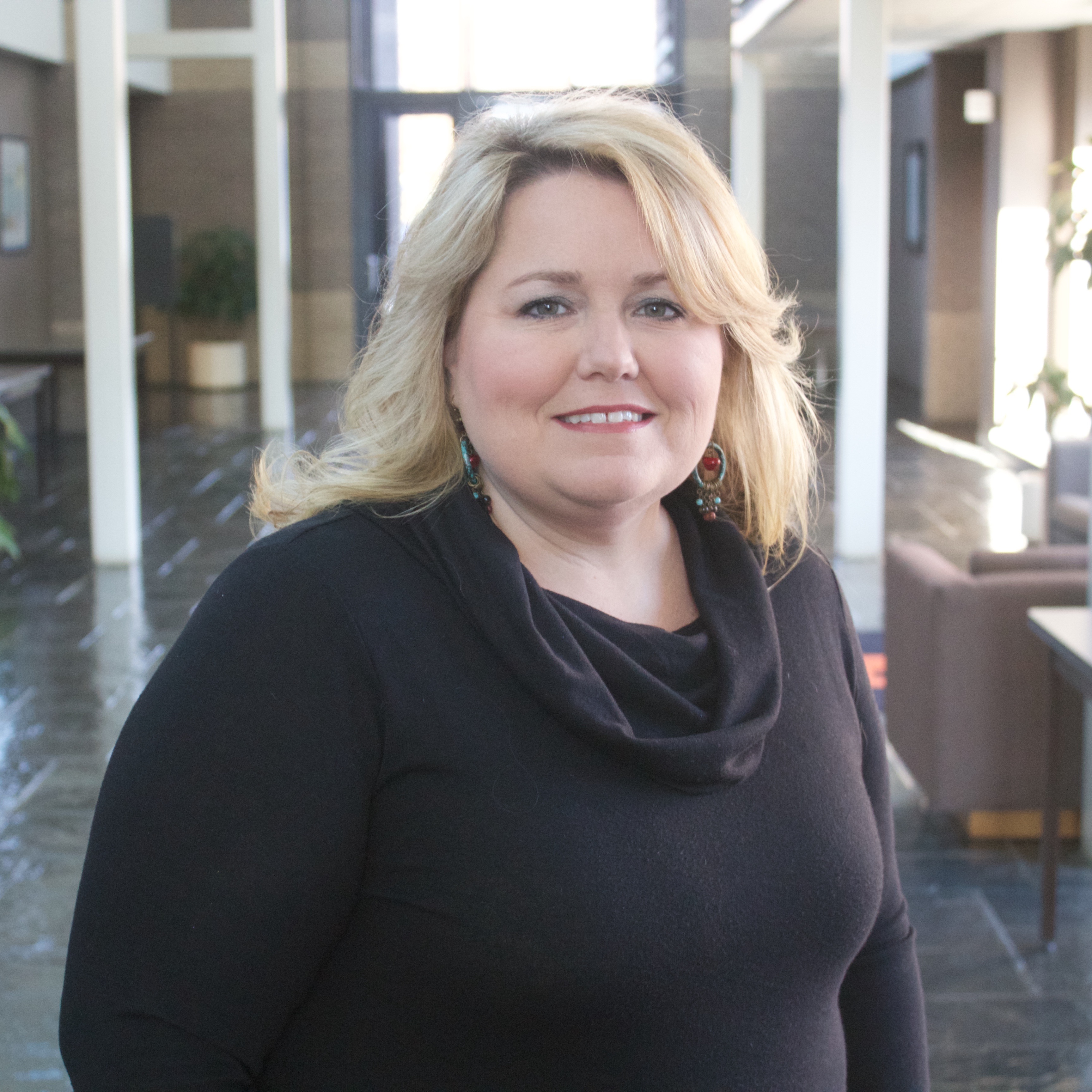
March is known as Women's History Month, and in Tennessee it's also known as UT Extension Month. Today we set down with the champion of both causes. This is Agcast, brought to you by the University of Tennessee Institute of Agriculture. I'm Ginger Rousey.
At the first of the year, Tracey Sullivan assumed the role of Western Region program leader for UT Extension. She is over Agriculture and Natural Resource Programming, as well as 4-H programming, in 31 counties. Sullivan, who says she grew up in 4-H, is a successful example of the leadership development touted by Extension. But she's also an example of a woman who has found success in a field typically dominated by men.
Tracey, thanks so much for being with us. You're about three months into your new position. How do you feel it's going? It's going really good.
Really good. I think I hit the ground running, had a lot of exposure very quickly. Our new Chancellor, Dr. Cross explained it best when he said you're drinking from a fire hose, and that's what it's felt like.
You've worked in UT Extension several years ago as an agent. You left for industry, and what made you want to come back to UT Extension? I think I've always just appreciated its mission and what it stands for, and the kind of impact that it has on all levels across the state and the local community. I've always, even when I was in industry, attended Extension functions and stayed in touch with what Extension was doing to promote agriculture especially.
Have you thought about some goals or where you'd like to take this position? Where do you like to see it going? I have actually. There was some things that I appreciated being in a county position.
I know there's some things that maybe get overlooked, like the pesticide safety education program. I wanted to kind of streamline that and make it as easy to work. We were our county agents and producers that go through the training as possible, the access. So that was a goal.
So I've kind of worked through that. That kind of a broader thing is to just stay relevant. There's so much information out there and to kind of help our county programming and state initiatives stay relevant to the producers and be the kind of the premier education function that they relate to agriculture. I don't know if this has been officially confirmed, but you're the first woman to be the Ag and Natural Resource Program leader.
I think so. Like you say, I don't know if it's officially confirmed, but I can't recall one or have encountered anyone that can recall one, but at least at least you're in the western region too. Yeah, that's gotta make you proud. It does.
You know, I didn't think about it until it was kind of brought forward, but I found myself as my career has transitioned from one thing to another. It's kind of always where you're the only woman or first woman or whatever in different positions, but it's an honor. It is an honor. Yeah.
What do you think that is? You know, I noticed in college in livestock, in like your animal classes, there was a more mixture of male and female, but with plant sciences and row crops for some reason, that still seems to be more male oriented and dominated. And I don't know if it goes back. Like I never really realized it until people would point it out or say I'm in a meeting, you know, or a conference with 80 people and you look around and think, oh yeah, I'm only here.
But you know, I worked on the farm alongside my brothers and dads and cousins. And I think it was just, you know, my workload was expected the same as theirs was. So are you the only girl in your family? Yes, yes.
So here you go. Yeah. So what made you want to go into agriculture? You know, I just felt like that was a calling and I really never considered anything else.
It was just a natural fit. I love being outside and all things living animals. I was a pre-vet major, you know, thought about that path, but then realized I would probably reside in West Tennessee and want something more stable. So took lots of upper division plant science classes and learned a lot about cotton.
So that's where I've spent most of my career. Do you grew up in the middle Tennessee? That's right. That's right.
That's right. Do you have a lot of experience with cotton? Zero. No.
Yeah. The first time I saw a cotton picker at night, I thought of some kind of spaceship. I mean, the scale and everything of the equipment here in West Tennessee compared to what I had grown up around in middle Tennessee, it was just, you know, it was all brand new. But, you know, there's a lot of similarities and things.
And one of the things being going back to being the first woman, I worked at a retail place right out of college and, you know, the old timers would see a woman there and, you know, kind of discount you already and say, we bet you've never chopped cotton. And I'm like, you're right, but I have cut tobacco. So that's, you know, can't compare. It's got to be very similar.
Hardest work I've ever known. And you've spoken out about this. I know what social media is to be in a woman, sometimes an agriculture talk about that a little bit. Well, I just, you know, some challenges, first of all, your credibility establishing it.
I've shared with, I've taught in the past, too, at a community college. And I shared with my female ag students that, you know, this is a personal opinion. I think you have to be more competent than your male counterpart. And so I feel like you have to, you know, be diligent, hardworking, and even more competent and be not afraid, you know, to step out, you know, step out of your comfort zone and show what you know.
A lot of females are going into this. I mean, of course, you worked at the community college. You probably saw a lot, the numbers are increasing across the nation and colleges and increasing for female students. Definitely.
And, you know, I'm a champion for that cause. I think it makes a very good work environment to have, you know, some diversity there. And they're more than capable. I've noticed in, you know, a lot of the graduate students and in plant sciences and agronomy and specialists are, we're seeing more and more of that.
So it's good. 4-H is another big part of your job. And you were very involved in 4-H as a student. Right.
You know, talk about that. What are your goals for the 4-H program here in West Tennessee? Well, I think one thing that appealed to me about this position was that 4-H aspect. And when you get to my age, although I don't want to give my age, but you realize what an impact, or I realize it had a, you know, pretty substantial impact on me.
And I think the goal was just to continue that tradition to keep kids, especially rural kids that may not have a lot of opportunity, or, you know, from different socioeconomic backgrounds. 4-H provides awesome opportunities to travel and meet people and experience things that kind of mold you into a productive citizen, really. So sort of the vision I have is, you know, Western Tennessee, 4-H, we just got back from Congress, we had a great delegation. They experienced, you know, things that a lot of kids won't get to experience.
So just to promote and foster those ideas that 4-H is known for. And you, of course, when we talked about you were involved. You have two children that are very involved in 4-H too. So looking at it from both angles, what are the benefits of being in 4-H, for parents that are listening?
Oh, well, I think it's, you know, leadership opportunities, you know, public speaking is something that they may not get to experience until college. And this is just a way to kind of fine tune some skills or bring them out of their shell. My kids go to school where there's, there's some, you know, opportunity, but not a lot. And so I just think it expands, opens the doors, trips to Washington's available, you know, just academic areas that may be of interest to them.
They can participate in projects that foster that. The STEM activities is a big push in 4-H. So just being exposed to those kinds of things. I think I've been most impressed before, students, with their speaking skills, like you, it's wonderful how that develops.
Yeah, and we heard the state public speaking winner, the 11th and 12th graders, they spoke at the citizenship banquet in Nashville. I mean, I would put them up against the best of the best across whatever platform or, you know, school group or really adults. I mean, they were poised and professional and you can tell that that will mean, you know, something for them as a citizen or employee or whatever path they choose. It is Extension Month, it's March and which is Extension Month in Tennessee.
So I want to give you a chance to just kind of give a plug for Extension too before we wrap up. Okay, well, thanks. We in the western region had a county campaign challenge. So we're kind of charging the counties in the western region too.
And across the state, they should be participating. Just to promote Extension and what it stands for, some of the great programs that happen and how they're impacting their local communities. Extension is the one that says, you know, we're a UT campus in every county. We have a presence in all 95 counties.
So just try to promote what programs are going on across all areas, family consumer sciences and agriculture in 4-H. But there's some interesting and the social media presence has helped spread that word. We're trying to, you know, get in that game before the game changes. It seems like it does day in day out.
But yeah, there's lots of great programming going on across our region. I know. And of course, if you're involved with Extension, which is a very time, huge time commitment for you, your mom, your wife, you and your husband form up together, what else are you going to do next year? Survive.
Yeah, I just, you know, the day to day, I don't know, I just really like West, you know, West Tennessee and having an impact on agriculture and time will tell, I guess. Alright, well, hi. Thanks so much for being with us. Thank you.
For more real life solutions provided by the UT Institute of Agriculture, go to our website at ag.tenacy.edu.