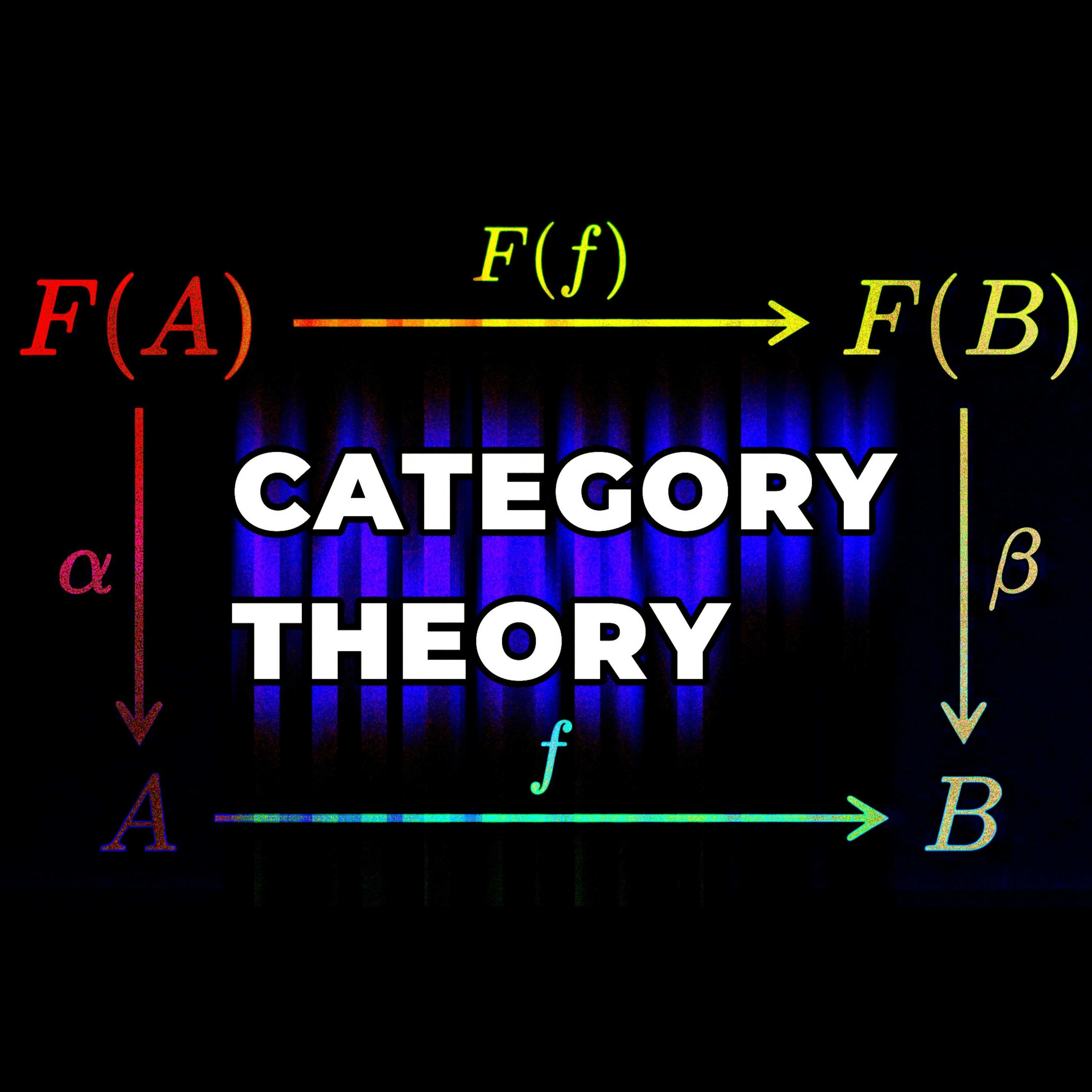
Making deep learning perform real algorithms with Category Theory (Andrew Dudzik, Petar Velichkovich, Taco Cohen, Bruno Gavranović, Paul Lessard)  episode artwork

EPISODE · Dec 22, 2025 · 43 MIN

Making deep learning perform real algorithms with Category Theory (Andrew Dudzik, Petar Velichkovich, Taco Cohen, Bruno Gavranović, Paul Lessard)

from Machine Learning Street Talk (MLST)

We often think of Large Language Models (LLMs) as all-knowing, but as the team reveals, they still struggle with the logic of a second-grader. Why can’t ChatGPT reliably add large numbers? Why does it "hallucinate" the laws of physics? The answer lies in the architecture. This episode explores how *Category Theory* —an ultra-abstract branch of mathematics—could provide the "Periodic Table" for neural networks, turning the "alchemy" of modern AI into a rigorous science.In this deep-dive exploration, *Andrew Dudzik*, *Petar Velichkovich*, *Taco Cohen*, *Bruno Gavranović*, and *Paul Lessard* join host *Tim Scarfe* to discuss the fundamental limitations of today’s AI and the radical mathematical framework that might fix them.TRANSCRIPT:https://app.rescript.info/public/share/LMreunA-BUpgP-2AkuEvxA7BAFuA-VJNAp2Ut4MkMWk---Key Insights in This Episode:* *The "Addition" Problem:* *Andrew Dudzik* explains why LLMs don't actually "know" math—they just recognize patterns. When you change a single digit in a long string of numbers, the pattern breaks because the model lacks the internal "machinery" to perform a simple carry operation.* *Beyond Alchemy:* deep learning is currently in its "alchemy" phase—we have powerful results, but we lack a unifying theory. Category Theory is proposed as the framework to move AI from trial-and-error to principled engineering. [00:13:49]* *Algebra with Colors:* To make Category Theory accessible, the guests use brilliant analogies—like thinking of matrices as *magnets with colors* that only snap together when the types match. This "partial compositionality" is the secret to building more complex internal reasoning. [00:09:17]* *Synthetic vs. Analytic Math:* *Paul Lessard* breaks down the philosophical shift needed in AI research: moving from "Analytic" math (what things are made of) to "Synthetic" math [00:23:41]---Why This Matters for AGIIf we want AI to solve the world's hardest scientific problems, it can't just be a "stochastic parrot." It needs to internalize the rules of logic and computation. By imbuing neural networks with categorical priors, researchers are attempting to build a future where AI doesn't just predict the next word—it understands the underlying structure of the universe.---TIMESTAMPS:00:00:00 The Failure of LLM Addition & Physics00:01:26 Tool Use vs Intrinsic Model Quality00:03:07 Efficiency Gains via Internalization00:04:28 Geometric Deep Learning & Equivariance00:07:05 Limitations of Group Theory00:09:17 Category Theory: Algebra with Colors00:11:25 The Systematic Guide of Lego-like Math00:13:49 The Alchemy Analogy & Unifying Theory00:15:33 Information Destruction & Reasoning00:18:00 Pathfinding & Monoids in Computation00:20:15 System 2 Reasoning & Error Awareness00:23:31 Analytic vs Synthetic Mathematics00:25:52 Morphisms & Weight Tying Basics00:26:48 2-Categories & Weight Sharing Theory00:28:55 Higher Categories & Emergence00:31:41 Compositionality & Recursive Folds00:34:05 Syntax vs Semantics in Network Design00:36:14 Homomorphisms & Multi-Sorted Syntax00:39:30 The Carrying Problem & Hopf FibrationsPetar Veličković (GDM)https://petar-v.com/Paul Lessardhttps://www.linkedin.com/in/paul-roy-lessard/Bruno Gavranovićhttps://www.brunogavranovic.com/Andrew Dudzik (GDM)https://www.linkedin.com/in/andrew-dudzik-222789142/---REFERENCES:Model:[00:01:05] Veohttps://deepmind.google/models/veo/[00:01:10] Geniehttps://deepmind.google/blog/genie-3-a-new-frontier-for-world-models/Paper:[00:04:30] Geometric Deep Learning Blueprinthttps://arxiv.org/abs/2104.13478https://www.youtube.com/watch?v=bIZB1hIJ4u8[00:16:45] AlphaGeometryhttps://arxiv.org/abs/2401.08312[00:16:55] AlphaCodehttps://arxiv.org/abs/2203.07814[00:17:05] FunSearchhttps://www.nature.com/articles/s41586-023-06924-6[00:37:00] Attention Is All You Needhttps://arxiv.org/abs/1706.03762[00:43:00] Categorical Deep Learninghttps://arxiv.org/abs/2402.15332

We often think of Large Language Models (LLMs) as all-knowing, but as the team reveals, they still struggle with the logic of a second-grader. Why can’t ChatGPT reliably add large numbers? Why does it "hallucinate" the laws of physics? The answer lies in the architecture. This episode explores how *Category Theory* —an ultra-abstract branch of mathematics—could provide the "Periodic Table" for neural networks, turning the "alchemy" of modern AI into a rigorous science.In this deep-dive exploration, *Andrew Dudzik*, *Petar Velichkovich*, *Taco Cohen*, *Bruno Gavranović*, and *Paul Lessard* join host *Tim Scarfe* to discuss the fundamental limitations of today’s AI and the radical mathematical framework that might fix them.TRANSCRIPT:https://app.rescript.info/public/share/LMreunA-BUpgP-2AkuEvxA7BAFuA-VJNAp2Ut4MkMWk---Key Insights in This Episode:* *The "Addition" Problem:* *Andrew Dudzik* explains why LLMs don't actually "know" math—they just recognize patterns. When you change a single digit in a long string of numbers, the pattern breaks because the model lacks the internal "machinery" to perform a simple carry operation.* *Beyond Alchemy:* deep learning is currently in its "alchemy" phase—we have powerful results, but we lack a unifying theory. Category Theory is proposed as the framework to move AI from trial-and-error to principled engineering. [00:13:49]* *Algebra with Colors:* To make Category Theory accessible, the guests use brilliant analogies—like thinking of matrices as *magnets with colors* that only snap together when the types match. This "partial compositionality" is the secret to building more complex internal reasoning. [00:09:17]* *Synthetic vs. Analytic Math:* *Paul Lessard* breaks down the philosophical shift needed in AI research: moving from "Analytic" math (what things are made of) to "Synthetic" math [00:23:41]---Why This Matters for AGIIf we want AI to solve the world's hardest scientific problems, it can't just be a "stochastic parrot." It needs to internalize the rules of logic and computation. By imbuing neural networks with categorical priors, researchers are attempting to build a future where AI doesn't just predict the next word—it understands the underlying structure of the universe.---TIMESTAMPS:00:00:00 The Failure of LLM Addition & Physics00:01:26 Tool Use vs Intrinsic Model Quality00:03:07 Efficiency Gains via Internalization00:04:28 Geometric Deep Learning & Equivariance00:07:05 Limitations of Group Theory00:09:17 Category Theory: Algebra with Colors00:11:25 The Systematic Guide of Lego-like Math00:13:49 The Alchemy Analogy & Unifying Theory00:15:33 Information Destruction & Reasoning00:18:00 Pathfinding & Monoids in Computation00:20:15 System 2 Reasoning & Error Awareness00:23:31 Analytic vs Synthetic Mathematics00:25:52 Morphisms & Weight Tying Basics00:26:48 2-Categories & Weight Sharing Theory00:28:55 Higher Categories & Emergence00:31:41 Compositionality & Recursive Folds00:34:05 Syntax vs Semantics in Network Design00:36:14 Homomorphisms & Multi-Sorted Syntax00:39:30 The Carrying Problem & Hopf FibrationsPetar Veličković (GDM)https://petar-v.com/Paul Lessardhttps://www.linkedin.com/in/paul-roy-lessard/Bruno Gavranovićhttps://www.brunogavranovic.com/Andrew Dudzik (GDM)https://www.linkedin.com/in/andrew-dudzik-222789142/---REFERENCES:Model:[00:01:05] Veohttps://deepmind.google/models/veo/[00:01:10] Geniehttps://deepmind.google/blog/genie-3-a-new-frontier-for-world-models/Paper:[00:04:30] Geometric Deep Learning Blueprinthttps://arxiv.org/abs/2104.13478https://www.youtube.com/watch?v=bIZB1hIJ4u8[00:16:45] AlphaGeometryhttps://arxiv.org/abs/2401.08312[00:16:55] AlphaCodehttps://arxiv.org/abs/2203.07814[00:17:05] FunSearchhttps://www.nature.com/articles/s41586-023-06924-6[00:37:00] Attention Is All You Needhttps://arxiv.org/abs/1706.03762[00:43:00] Categorical Deep Learninghttps://arxiv.org/abs/2402.15332

NOW PLAYING

Making deep learning perform real algorithms with Category Theory (Andrew Dudzik, Petar Velichkovich, Taco Cohen, Bruno Gavranović, Paul Lessard)

0:00 43:57

No transcript for this episode yet

We transcribe on demand. Request one and we'll notify you when it's ready — usually under 10 minutes.

French Your Way Jessica: Native French teacher founder of French Your Way Boost your French listening skills and test your comprehension with this one of a kind series of podcasts. Get the chance to listen to a real conversation between native speakers talking at normal speed AND customise your learning experience through carefully designed sets of questions (2 levels of difficulty) available for download at www.frenchvoicespodcast.com. All interviews also come with the transcript. French teacher Jessica interviews native speakers of French from around the world who share a bit of their life and passion. Where else would you meet in one same place a French yoga teacher based in Melbourne, a soap manufacturer from Provence, or a couple cycling around the world? Kaizen Blueprint Aldo Chandra "Kaizen" is a Japanese term for continuous improvement. This podcast provides a blueprint to learn about health, wealth, relationships and everything else in between. Through our podcast, we strive to inspire, educate, and motivate our audience to cultivate a mindset of lifelong learning, productivity, and personal development. By sharing insights, strategies, and practical tips, we aim to guide listeners on their journey towards realizing their fullest potential, fostering success, and creating lasting positive change. One Man Went To Row PepperDawesMedia Follow the journey, from training to finish line, of a man from Derby, UK who is going from having only ever rowed on a machine to rowing 3000 miles solo across the Atlantic...just after his 70th birthday! Humanizing Change Tremendousness Join us each episode as we talk with innovators in their respective fields about their unique journeys and how they humanize change in their own work, right here, on Humanizing Change.

Frequently Asked Questions

How long is this episode of Machine Learning Street Talk (MLST)?

This episode is 43 minutes long.

When was this Machine Learning Street Talk (MLST) episode published?

This episode was published on December 22, 2025.

What is this episode about?

We often think of Large Language Models (LLMs) as all-knowing, but as the team reveals, they still struggle with the logic of a second-grader. Why can’t ChatGPT reliably add large numbers? Why does it "hallucinate" the laws of physics? The answer...

Can I download this Machine Learning Street Talk (MLST) episode?

Yes, you can download this episode by clicking the download button on the episode player, or subscribe to the podcast in your preferred podcast app for automatic downloads.
URL copied to clipboard!