
EPISODE · Jun 19, 2026 · 1H 13M
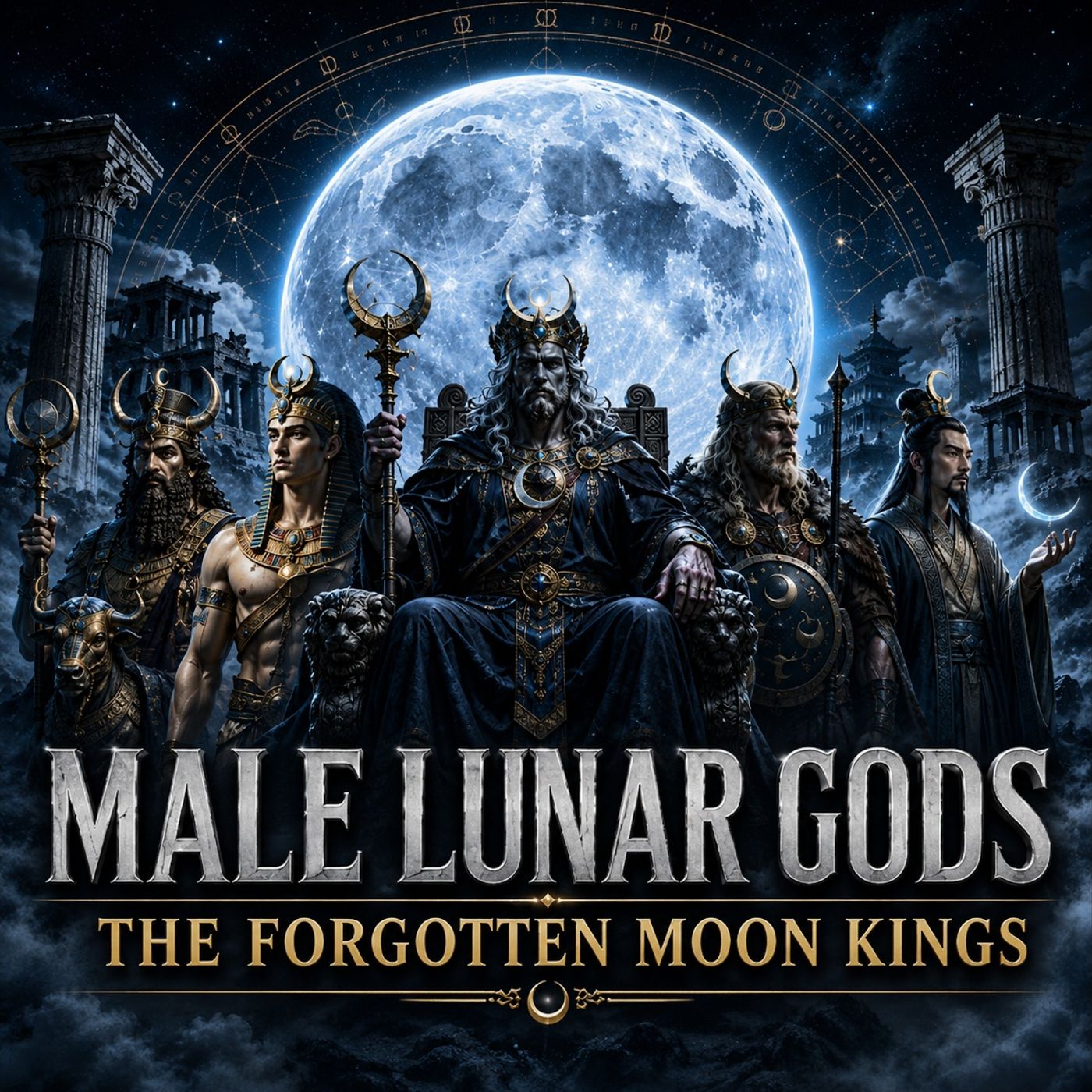
Male Lunar Gods: The Forgotten Moon Kings
from The Occult Rejects · host The Occult Rejects
If you enjoy this episode, we’re sure you will enjoy more content like this on The Occult Rejects. In fact, we have curated playlists on occult topics like grimoires, esoteric concepts and phenomena, occult history, analyzing true crime and cults with an occult lens, Para politics, and occultism in music. Whether you enjoy consuming your content visually or via audio, we’ve got you covered - and it will always be provided free of charge. So, if you enjoy what we do and want to support our work of providing accessible, free content on various platforms, please consider making a donation to the links provided below. Thank you and enjoy the episode!Links For The Occult Rejectshttps://linktr.ee/theoccultrejectsOccult Research Institutehttps://www.occultresearchinstitute.org/Cash Apphttps://cash.app/$theoccultrejectsVenmo@TheOccultRejectsBuy Me A Coffeebuymeacoffee.com/TheOccultRejectsPatreonhttps://www.patreon.com/TheOccultRejectsCore historical / comparative sourcesEncyclopaedia Britannica. “moon worship.” Good for the broad comparative frame: lunar symbolism, death-rebirth, hunting vs. agrarian patterns, and why the moon is sometimes male and sometimes female.Encyclopaedia Britannica. “The moon,” in Nature Worship: Celestial Phenomena as Objects of Worship or Veneration. Good for lunar phases, magical timing, menstruation/tides, dangerous dark days, eclipse anxiety, and symbolic variation.Encyclopaedia Britannica. “Celestial phenomena as objects of worship or veneration,” in Nature Worship. Useful for the broader claim that many hunting and gathering societies, and some pastoral and royal cultures, conceived the moon as male.MesopotamiaOracc / Ancient Mesopotamian Gods and Goddesses. “Nanna-Suen.” Best core reference for the identity, names, and cultic status of the Mesopotamian moon god.Encyclopaedia Britannica. “Sin.” Best quick reference for Nanna/Sin as moon god, his bull symbolism, Ur, fertility functions, and Nabonidus.Encyclopaedia Britannica. “Enheduanna.” Useful if you want to reference the priestly/literary world attached to the cult of Nanna at Ur.EgyptEncyclopaedia Britannica. “Khonsu.” Strong for Khonsu as youth, moon god, Pyramid Text background, and Karnak.Encyclopaedia Britannica. “Thoth.” Strong for Thoth as moon god of reckoning, learning, writing, and later Hermetic importance.The Metropolitan Museum of Art. Collections and bulletin material on Iah / Osiris-Iah and Egyptian lunar symbolism. Best for the more specialized lunar material beyond Khonsu and Thoth.Levant / Anatolia / Near EastEncyclopaedia Britannica. “Yarikh.” Best starting point for the Ugaritic / West Semitic moon god and the Nikkal marriage material.Encyclopaedia Britannica. “Kushukh.” Best for the Hurrian moon god, oath function, iconography, and Hittite adoption.Encyclopaedia Britannica. “Religions of the Hittites, Hattians, and Hurrians,” in Anatolian religion. Best broad source for Arma and the Hittite/Luwian/Hurrian lunar world.Encyclopaedia Britannica. “Men.” Best source for the later Anatolian moon god, iconography, and possible tie to Mao.ArabiaEncyclopaedia Britannica. “Arabian religion.” Good for the broad astral background of pre-Islamic Arabian religion.Encyclopaedia Britannica. “Pre-Islamic deities,” in Arabian religion. Essential for Wadd, ʿAmm, Ḥawl, and for correcting outdated claims about Almaqah and Syn.India and IranEncyclopaedia Britannica. “navagraha.” Good for Chandra/Soma in astrology and lived Hindu cosmology.Encyclopaedia Britannica. “nakshatra.” Best for lunar mansions, lunar months, and Chandra’s mythic/calendar role.Encyclopaedia Britannica. “soma.” Essential for Soma as sacred drink and later lunar identification.Encyclopaedia Iranica. “Māh Yašt.” Best specialist source for the Iranian moon, lunar phases, and the “seed of the Bull” symbolism.Northern / Eastern EuropeBritannica Kids / Students. “Sól and Máni.” Good clean source for the Norse sibling pair and the male moon.Encyclopaedia Britannica. “Mēness.” Best source for the Baltic moon god, renewal, prayer, and agricultural strength.Encyclopaedia Britannica. “Slavic religion: Folk conceptions.” Essential for the masculine Slavic moon, kinship language, and lunar veneration.JapanEncyclopaedia Britannica. “Tsukiyomi.” Best short source for Tsukuyomi as moon god.Encyclopaedia Britannica. “Izanagi.” Useful for the birth of Tsukuyomi from purification and the Shintō context.Encyclopaedia Britannica. “Ukemochi no Kami.” Best source for the separation myth involving Tsukuyomi and Amaterasu.Indigenous / circumpolar traditionsEncyclopaedia Britannica. “Oral literatures,” in Mythologies of the Indigenous Peoples of the Americas. Best broad source for the Arctic male moon pursuing his sister the sun.Encyclopedia.com. “Igaluk.” Useful specialist entry for the Inuit moon god story.MesoamericaEncyclopaedia Britannica. “Aztec religion.” Best for the Teotihuacán fire myth and Tecciztécatl becoming the moon.Susan Milbrath. “The Moon in Meso-America.” Oxford Research Encyclopedia of Planetary Science (2020). Best specialist source for masculine moon material in Central Mexico and broader lunar roles in Mesoamerica.Qabalah / Jewish mysticism / occult sourcesHistorical Jewish mysticismEncyclopaedia Britannica. “sefirot.” Best concise source for the sefirot, including Yesod as “foundation.”Encyclopaedia Britannica. “Jewish mysticism,” in Judaism. Good for the broader Kabbalistic context.My Jewish Learning. “What Are the Sefirot?” Good readable support source for explaining sefirot on air.Western esoteric / occult QabalahDion Fortune. The Mystical Qabalah. Weiser, 2000. Strongest single occult source for Yesod as astral foundation, imaginal reservoir, and “treasure house of images” current.Aleister Crowley. 777 and Other Qabalistic Writings of Aleister Crowley. Weiser, 1986. Best for formal occult correspondences, including the Yesod-Moon scheme.Aleister Crowley. Magick Without Tears. New Falcon, 1991. Useful for Crowley’s practical Qabalistic framing.Lon Milo DuQuette. The Chicken Qabalah of Rabbi Lamed Ben Clifford. Weiser, 2001. Good modern, readable summary of Yesod in Western occult terms.Israel Regardie. The Tree of Life: A Study in Magic. Weiser, 1972. Strong for Golden Dawn style Yesod/astral-plane framing.Gareth Knight. A Practical Guide to Qabalistic Symbolism. Weiser, 2001. Very useful for Yesod symbolism and the broader Tree of Life structure.Science / symbolism supportNASA Science. “Moon Phases.” Best source for the simple but important physical point that moonlight is reflected sunlight.NASA Science. “Eclipses.” Useful if you want a clean science-side reference when talking about eclipses before contrasting that with mythic fear and ritual response.Also want to remind people about the website, if you're into reading we have tons of information by multiple contributors, and we got t-shirts up on the site if you're interested. Fun fact, the art is all based on the eyeball.
Embed this episode
What this episode covers
If you enjoy this episode, we’re sure you will enjoy more content like this on The Occult Rejects. In fact, we have curated playlists on occult topics like grimoires, esoteric concepts and phenomena, occult history, analyzing true crime and cults with an occult lens, Para politics, and occultism in music. Whether you enjoy consuming your content visually or via audio, we’ve got you covered - and it will always be provided free of charge. So, if you enjoy what we do and want to support our work of providing accessible, free content on various platforms, please consider making a donation to the links provided below. Thank you and enjoy the episode! Links For The Occult Rejects https://linktr.ee/theoccultrejects Occult Research Institute https://www.occultresearchinstitute.org/ Cash App https://cash.app/$theoccultrejects Venmo @TheOccultRejects Buy Me A Coffee buymeacoffee.com/TheOccultRejects Patreon https://www.patreon.com/TheOccultRejects Core historical / comparative sources Encyclopaedia Britannica. “moon worship.” Good for the broad comparative frame: lunar symbolism, death-rebirth, hunting vs. agrarian patterns, and why the moon is sometimes male and sometimes female. Encyclopaedia Britannica. “The moon,” in Nature Worship: Celestial Phenomena as Objects of Worship or Veneration. Good for lunar phases, magical timing, menstruation/tides, dangerous dark days, eclipse anxiety, and symbolic variation. Encyclopaedia Britannica. “Celestial phenomena as objects of worship or veneration,” in Nature Worship. Useful for the broader claim that many hunting and gathering societies, and some pastoral and royal cultures, conceived the moon as male. Mesopotamia Oracc / Ancient Mesopotamian Gods and Goddesses. “Nanna-Suen.” Best core reference for the identity, names, and cultic status of the Mesopotamian moon god. Encyclopaedia Britannica. “Sin.” Best quick reference for Nanna/Sin as moon god, his bull symbolism, Ur, fertility functions, and Nabonidus. Encyclopaedia Britannica. “Enheduanna.” Useful if you want to reference the priestly/literary world attached to the cult of Nanna at Ur. Egypt Encyclopaedia Britannica. “Khonsu.” Strong for Khonsu as youth, moon god, Pyramid Text background, and Karnak. Encyclopaedia Britannica. “Thoth.” Strong for Thoth as moon god of reckoning, learning, writing, and later Hermetic importance. The Metropolitan Museum of Art. Collections and bulletin material on Iah / Osiris-Iah and Egyptian lunar symbolism. Best for the more specialized lunar material beyond Khonsu and Thoth. Levant / Anatolia / Near East Encyclopaedia Britannica. “Yarikh.” Best starting point for the Ugaritic / West Semitic moon god and the Nikkal marriage material. Encyclopaedia Britannica. “Kushukh.” Best for the Hurrian moon god, oath function, iconography, and Hittite adoption. Encyclopaedia Britannica. “Religions of the Hittites, Hattians, and Hurrians,” in Anatolian religion. Best broad source for Arma and the Hittite/Luwian/Hurrian lunar world. Encyclopaedia Britannica. “Men.” Best source for the later Anatolian moon god, iconography, and possible tie to Mao. Arabia Encyclopaedia Britannica. “Arabian religion.” Good for the broad astral background of pre-Islamic Arabian religion. Encyclopaedia Britannica. “Pre-Islamic deities,” in Arabian religion. Essential for Wadd, ʿAmm, Ḥawl, and for correcting outdated claims about Almaqah and Syn. India and Iran Encyclopaedia Britannica. “navagraha.” Good for Chandra/Soma in astrology and lived Hindu cosmology. Encyclopaedia Britannica. “nakshatra.” Best for lunar mansions, lunar months, and Chandra’s mythic/calendar...
NOW PLAYING
Male Lunar Gods: The Forgotten Moon Kings
No transcript for this episode yet
Similar Episodes
No similar episodes found.
Similar Podcasts
No similar podcasts found.