Skip to content
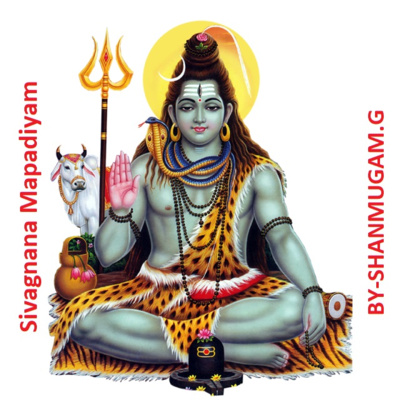
Mapadiyam - Thalaimaiyurai episode artwork

Oct 31, 2021 3 min

Mapadiyam - Thalaimaiyurai

from Saiva Siddhanta Hosted by suresh babu

Though for learned persons this may not seem a good introduction to shaiva sidhdhantha, this page is out of the wish to talk about that. This is similar to a kinder garden boy trying to explain the construction of a nuclear reactor. Still there will be persons who enjoy the efforts of a kid to act matured. In shaiva sidhdhantham God is called pathi, all the souls (creatures, all lives except pathi) which take birth and die are called pachu(pashu)s, the bondage is calledpAcham (pAsam). The pAcham can be classified into three - ANavam, kanamam, and mAyai (ego, deed and effects, illusion). Only these three things exist. Now the relation between them. It is the pAcham that brings suffering to the affiliated things. Due to the affiliation with pAcham the pachu suffers, and the affiliation is without origin. (that is by nature pachu is impure with pAcham). The pathi is never affected by pAcham. (pathi never gets affiliated to it). When pathi approaches pachu (blessing the pachu) the pAcham that binds the pachu making it suffer, is driven off. It is like a leaf loaded with snow. Due to the weight the leaf is pushed down (to suffer). When the sun, pathi comes the snow of pAcham escapes with the leaf coming up and smiling with the sigh of relief. In the presence of pathi pAcham won't stay with pachu. (like in the presence of sun snow disappears from the leaf). The thirumandhiram, which is one of the very old scripture that talks in detail about the sidhdhantham, explains further, Translation: Among the three things of pathi, pachu, pAcham, like the pathi pachu and pAcham are without origin. pAcham which affect the pachus will not affect the pathi. If pathi approaches (the pachu) then the pAcham of pachu won't stay (with pachu).

Episode details come from the podcast's RSS feed.

Embed this episode

Ready to play

Mapadiyam - Thalaimaiyurai

0:00 3:19

No transcript yet.

Requests help us decide what to transcribe next.

Guru Vachaka Kovai by Shri V. Krithivasan at Ramana Kendram : Sri Muruganar Sri Ramana Maharshi Heritage Guru Vachaka Kovai (The Garland of Guru’s Sayings) is a collection of Bhagavan Ramana Maharshi’s Teachings presented by Muruganar in 1254 Tamil verses. Bhagavan while editing and enlarging the first edition (published in 1939 by Ramana Padananda) declared, “This alone (or definitely) is the natural exposition of Sri Ramana Siddhanta (philosophy of Sri Ramana).” Recorded at Sri Ramana Kendram, Hyderabad. Decoding ancient secrets of vedic science with vedic siddhanta Rocky Jamwal Vedic Gyan Podcast is a weekly/fortnight podcast that covers a variety of topics related to Vedic science, Mundane astrology, Vedic Astrology & related to spiritual philosophy hosted by Rocky Jamwal. Episodes are typically released once a week, and the best way to follow the show is by subscribing through one of the options listed on our subscription page. தாயுமான சுவாமிகள் பாடலும் உரையும் THAYUMANA SWAMIG SARAVANAN ARUNACHALAM Thayumanavar (Tamil: தாயுமானவர் (1705–1744) was a Tamil spiritual philosopher from Tamil Nadu, India. Thayumanavar articulated the Saiva Siddhanta philosophy. He wrote several Tamil hymns of which 1454 are available. His first four songs were sung 250 years ago at the Congress of Religions in Tiruchirappalli. His poems follow his own mystical experience, but they also outline the philosophy of Hinduism, and the Tirumandiram by Saint Tirumular in its highest form, one that is at once devotional a Lama Michel Rinpoche, Lorig: la mente e i 51 fattori mentali - maggio 2013, AHMC Italia NgalSo Sound Archive Siddhanta Drub-tha Corso di Filosofia Buddista Un modo per conoscere meglio se stessi e il mondo nel quale viviamo: Conoscere la mentela divisione della mente, le coscienze corrette e sbagliate; i cognitori validi, diretti e inferenziali; i 51 fattori mentaliIl grande maestro Yongzing Yeshe Gyaltsen a detto:I difetti del samsara e le qualità del nirvana, senza eccezione,derivano dalla mente. Così è stato detto negli insegnamenti di Buddha: Coloro che hanno saggezza e discernimento,devono dare importanza al conoscere i segreti della mente.Lama Michel Rinpoche ci spiega con chiarezza questi 'segreti della nostra mente', come riconoscere la sua natura e i suoi aspetti (i tipi di menti) per poter sviluppare più saggezza e pace interiore.

Frequently asked questions

How long is this episode of Saiva Siddhanta?

This episode is 3 minutes long.

When was this Saiva Siddhanta episode published?

This episode was published on October 31, 2021.

Can I download this Saiva Siddhanta episode?

Yes. Use the download control on the episode player to save the publisher-provided media file.