
EPISODE · Jun 21, 2025 · 1H
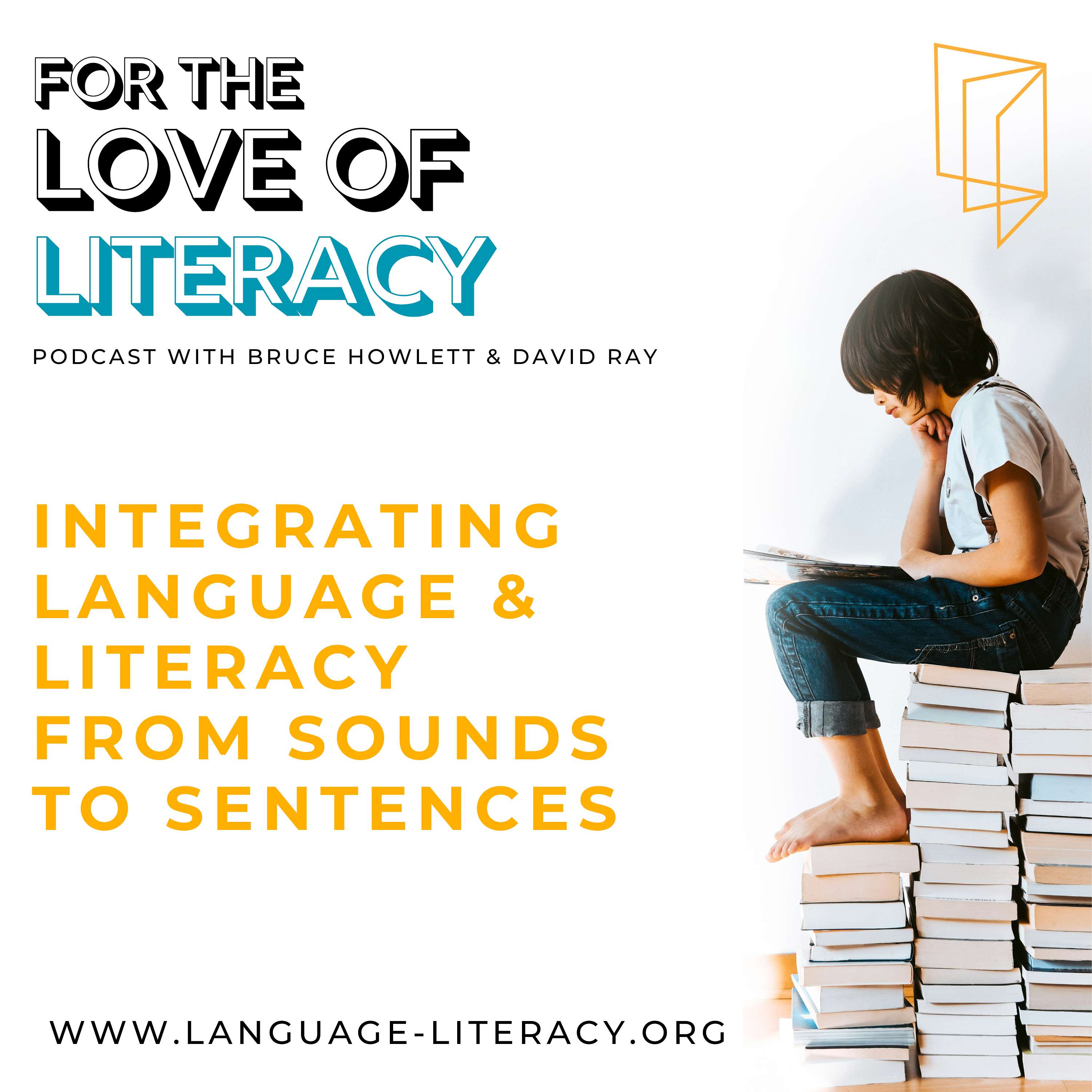
Marcia Henry and Deb Glaser - Learning to Love Language - From Words to Meaningful Sentences
from For The Love Of Literacy · host Bruce
Learn how educators can enrich lessons and develop a deep appreciation for written and spoken language for students in all grades. Learn that spelling, morphology, vocabulary development and sentence writing can be taught, not as separate subjects, but in a time-saving integrated manner. If you are looking to connect word meaning and sentence comprehension to decoding instruction then this is the podcast for you. Dr. Marcia Henry brings six decades of experience working in the fields of literacy and dyslexia. She writes for a variety of professional journals and serves on the editorial boards of Dyslexia and Annals of Dyslexia, the journals of the British Dyslexia Association, and the International Dyslexia Association. She has been a distinguished professor, researcher, and interventionist. Her books for teachers include: Unlocking literacy: Effective decoding and spelling instruction, Morphemes matter: A framework for instruction, WORDS: Integrated decoding and spelling instruction based on word origin and word structure and Patterns for success in reading and spelling (2nd Ed.).Dr. Deb Glaser is an educational consultant, author, and professional development provider with expertise in reading assessment and proven instructional methods. She was a classroom and learning disability instructor and a director of a non-profit dyslexia learning center where she developed programs to teach both teachers and students. Her books include Morpheme magic: Lessons to build morphological awareness for grades 4-12 and Morphemes for little ones: Bringing the magic of language into K-3 classrooms. Hanna, P. R., Hodges, R.E, Hanna, J. S. (1971. Spelling: Structure and strategies. Boston: Houghton Mifflin.Henry, M.K. (1986). Understanding word origin and structure: An alternative totraditional decoding instruction. In B. Prescott (Ed.), Proceedings of the Forum forResearch on Language Issues (pp. 9-28). Stanford, CA: Stanford University.Henry, M.K. (1988). Beyond phonics: Integrated decoding and spelling instructionbased on word origin and structure. Annals of Dyslexia, 38, 259-275.Henry, M.K. (2011). A short history of the English language (4th Ed.). In J. Birsh & S. Carreker (Eds.), Multisensory structured language instruction: Theory and practice (pp. 93-112). Baltimore: Paul H. Brookes Publishing.Anglin, J. M. (1993). Vocabulary development: A morphological analysis. Monographs of the Society for Research in Child Development, 58(10)[238], v–165. Apel, K., & Dieham, E. (2014). Morphological awareness intervention forkindergarteners and first and second grade students from low SES homes: A smallefficacy study. Journal of Learning Disabilities, 47, 65-75.Apel, K., Wilson-Fowler, E.B., Brimo, D., & Perrin, N.A. (2012). MetalinguisticContributions to reading and spelling in second and third grade students. Reading and Writing, 25, 1283-1305.Bowers, P.N., Kirby, J.R., Deacon, S.H. (2010). The effects of morphologicalinstruction on literacy skills: A synthesis of the literature. Review of EducationalResearch, 80, 144-179.Ehri, L.C. & Snowling, M. (2004). Developmental variation in word recognition. In A.C.Stone, E.R. Silliman, B.J. Ehren, & K.Apel (Eds.) Handbook of language and literacy:Development and disorders, 443-460. New York: Guilford Press.Berninger, V.W., Abbott, R.D., Nagy, W., &; Carlisle, J. (2010). Growth in phonological, orthographic, and morphological awareness in grades 1 to 6. Journal of Psycholinguistic Research, 39, 141-163.Carlisle, J.F. (2004). Morphological processes that influence learning to read. In A.C. Stone, E.R. Silliman, B.J. Ehren, & K.Apel (Eds.) Handbook of language and literacy:
Embed this episode
What this episode covers
Learn how educators can enrich lessons and develop a deep appreciation for written and spoken language for students in all grades. Learn that spelling, morphology, vocabulary development and sentence writing can be taught, not as separate subjects, but in a time-saving integrated manner. If you are looking to connect word meaning and sentence comprehension to decoding instruction then this is the podcast for you. Dr. Marcia Henry brings six decades of experience working in the fields of...
NOW PLAYING
Marcia Henry and Deb Glaser - Learning to Love Language - From Words to Meaningful Sentences
No transcript for this episode yet
Similar Episodes
No similar episodes found.
Similar Podcasts
No similar podcasts found.