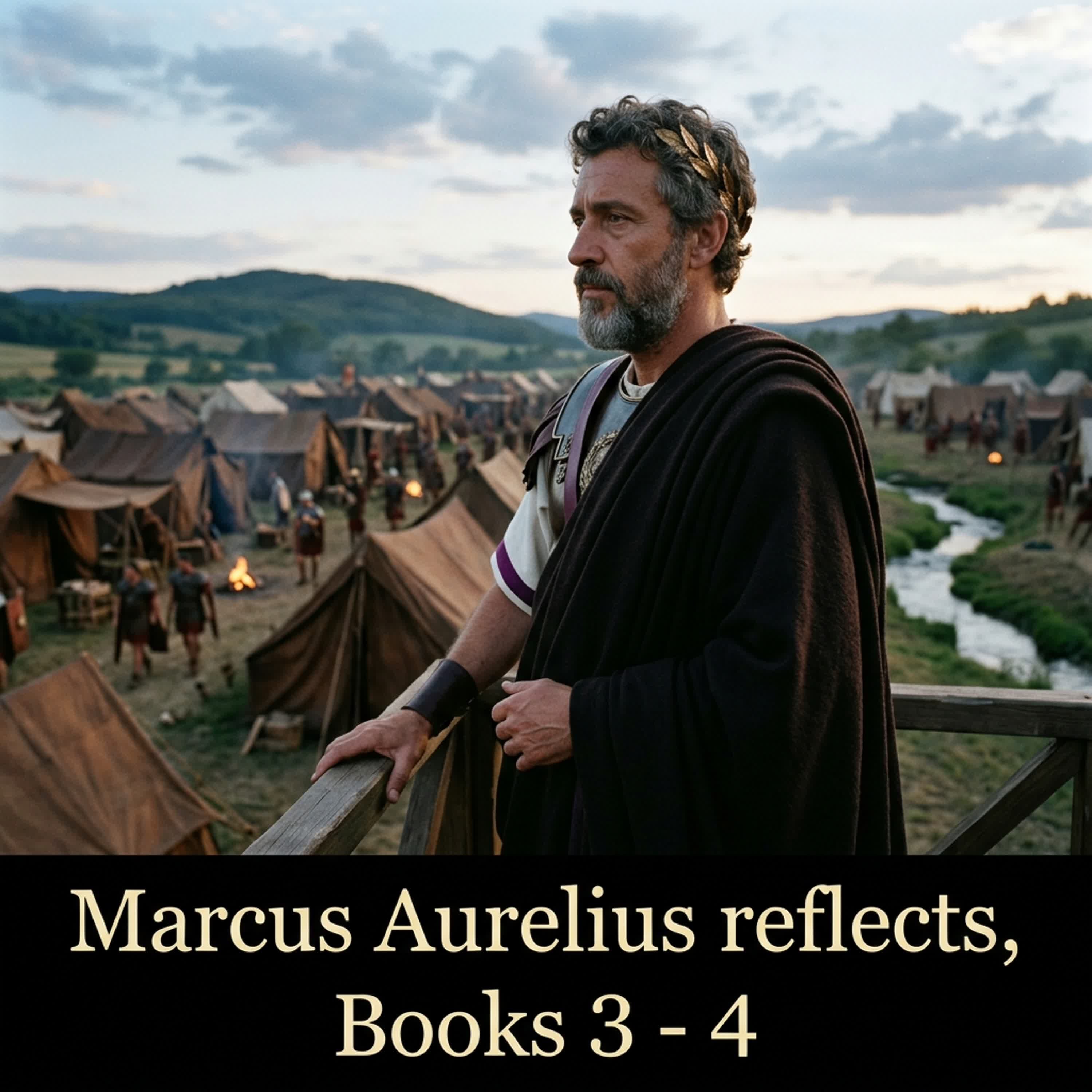
Marcus Aurelius, Meditations - 02 - Part 2
from Wisdom for the Present: Western Wisdom Literature Hosted by Kanu Emeruwa
What does it mean to build an unshakeable inner citadel in a world that feels increasingly chaotic and out of our control? While some might mistake Meditations for a theatrical play, it is actually the raw, deeply personal diary of the Roman Emperor Marcus Aurelius, penned in quiet moments inside military frontier tents. This ancient text acts not as a piece of drama, but as a visceral diagnostic manual for the exact psychological struggles we face today. Long before the advent of modern cognitive behavioral therapy, Marcus Aurelius was mapping out the human operating system, proving that while our external tools have evolved, our internal battles with anxiety, ego, and the pursuit of meaning remain completely unchanged. The text opens with a chilling and highly specific conflict: the fear of cognitive decay. Marcus Aurelius warns us that we must consider not just the inevitability of physical death, but the far more insidious threat of our intellective faculty wasting away while our physical body survives. Using a modern analogy, he is less concerned with the battery hitting zero (physical death) than with the operating system lagging and glitching while the power is still on. This realization serves as an urgent strategic call to "hasten" and align our actions with virtue immediately, dismantling the classic procrastination trap of waiting until we are "older and wiser" to finally live a meaningful life. Moving deeper, we find a profound analysis of the human ego and our endless pursuit of external approval. In an era dominated by curated feeds and digital algorithms that constantly tempt us to outsource our worth to likes, retweets, and engagement metrics, Marcus Aurelius’s insights are radically counter-cultural. He introduces the stunning metaphor of the emerald: a beautiful gem does not change its molecular structure or lose its green fire simply because no one is around to praise it. Truth, justice, and kindness terminate in themselves; they do not require the applause of an audience to hold their value, urging us to stop tying our internal worth to the fleeting, unstable opinions of others. When the inevitable chaos and "storms" of life strike, Marcus Aurelius advises us to alter our cognitive framing entirely. He argues that external events themselves stand quiet and neutral; all our turmoil and suffering proceed from the subjective opinions we construct within our own minds. To withstand these waves, we must train ourselves to be like a coastal promontory, standing firm while the swelling waters are stilled and quieted around us. More aggressively, he compares a disciplined mind to a consuming fire: while a weak candle flame is instantly smothered by debris, a great fire consumes the obstacle, converting it into fuel to grow larger and hotter. Ultimately, reclaiming our agency requires building an inner retreat—not by escaping to physical vacations, which only brings an anxious mind to a prettier location, but by withdrawing into the quiet sanctuary of our own souls. We can audit this sanctuary using the practical "this and that test": if we would blush to confess our hidden thoughts to someone who asked, our inner retreat is polluted with envy, suspicion, or gossip. By purging these distractions and recognizing our role as interconnected parts of a grand "cosmic city," we transition from being helpless victims of circumstance to being the resilient masters of our own characters. In This Episode * The Urgency of "Hastening": Why Marcus Aurelius feared cognitive decay far more than physical death, and why we must act virtuously today. * The Withered Fig and Rotting Olive: Discovering the complex beauty of natural aging, weathering, and decay over artificial perfection. * The Illusion of Geographic Escapes: Why vacations cannot cure internal anxiety, and how to build a true inner retreat in your own soul. * The "This and That" Test: A simple, powerful diagnostic tool to audit your private thoughts and eliminate toxic mental background apps. * The Mind as a Consuming Fire: How to actively transform obstacles, setbacks, and sudden adversities into fuel for growth and virtue. * Living Like an Emerald: Why true value is entirely self-contained, and how to break free from the modern anxiety of seeking likes and external validation. * The Cosmic City vs. The Tumor: Understanding our deep interconnectedness and why acting out of anger or ego makes us an "abscess" on the universe. Practical Reflection If someone were to suddenly interrupt you at a random moment today and ask what you are thinking, could you answer honestly and without blushing? When faced with an obstacle today, are you letting it smother your spirit like a weak candle, or are you converting it into fuel like a consuming fire? When you visualize yourself suspended between the infinite eternity of the past and the infinite future, how does that perspective change what you choose to do with your next 24 hours? Suggested Substack Excerpt Unpack Books 3 and 4 of Marcus Aurelius’s Meditations to discover why the personal diary of a Roman Emperor is the ultimate guide to overcoming modern anxiety, building an unshakeable inner retreat, and living like an emerald. AI Disclosure This episode was created using Google NotebookLM Audio Overview, based on human-curated source material, structured guidance, and editorial review. AI is used as a tool for clarity and delivery, not as a replacement for thoughtful study or engagement with the original texts. Copyright © 2026 Wisdom for the Present / Kamashcu Production Studios. All rights reserved. This is a public episode. If you would like to discuss this with other subscribers or get access to bonus episodes, visit wisdomforthepresent.substack.com
Embed this episode
No transcript yet.