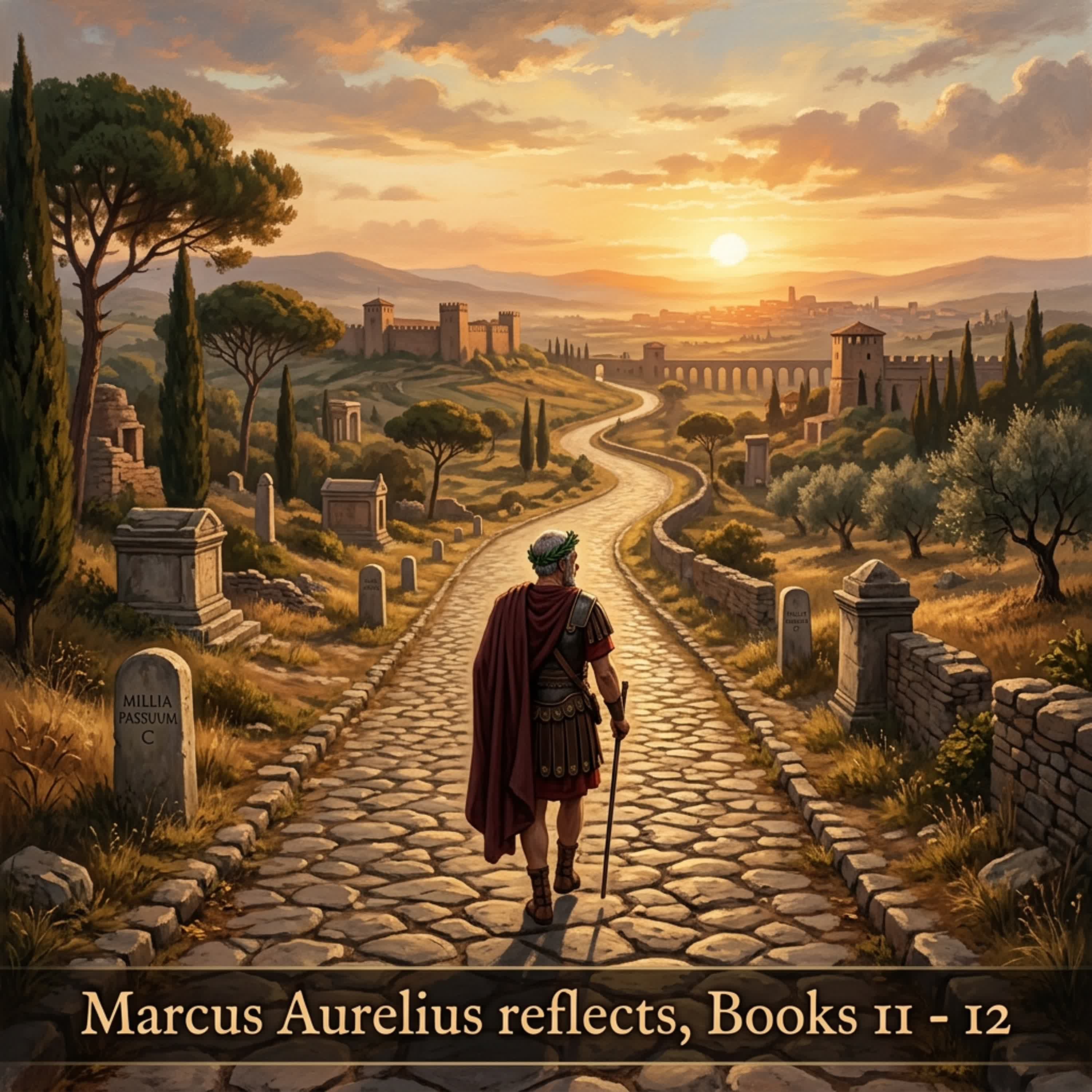
Marcus Aurelius, Meditations - 06 - Part 6
from Wisdom for the Present: Western Wisdom Literature Hosted by Kanu Emeruwa
While some might mistakenly categorize Meditations as a dramatic Shakespearean play, it is actually something far more raw and intimate: the private, real-world philosophical diary of the Roman Emperor Marcus Aurelius, written during grueling campaigns on the freezing Germania frontier. Despite its ancient origins, this text reads like a profound modern manual for cognitive psychology, offering timeless principles to navigate human anxiety and mental resilience. In this episode of Wisdom for the Present, we unpack Books 11 and 12 to discover how an absolute ruler managed his ego, maintained emotional hygiene, and built a psychological fortress against the overwhelming pressures of his time. The conflicts Marcus Aurelius struggles with are not theatrical scripts, but the high-stakes existential challenges of a leader dealing with the devastating Antonine plague, relentless warfare, and the deep personal betrayal of his trusted general, Avidius Cassius. Sitting alone in a military tent by candlelight, Marcus was not plotting conquests, but trying to conquer the only territory he could not control with an army: his own mind. He fought to establish what Stoics call the "inner citadel"—a secure bay of present calm where the storms of imperial chaos and external noise could not breach his soul. At the heart of Books 11 and 12 is a cutting analysis of the human ego and our deeply rooted tendency to outsource our self-worth. Marcus wonders at the humorous, tragic paradox of human nature: that every person loves themselves best, yet values the fleeting, irrational opinions of others more than their own. Today, we continue to act out this exact pattern on a hyper-visible global stage, constantly handing over our emotional peace to digital algorithms, performance reviews, and passing comments from coworkers. When modern chaos, work stress, and personal tempests threaten to break our logic, the Meditations provides a robust engineering tool: keeping the "submarine hatch" closed against opinion. Marcus reminds us that external events stand quiet outside of us and have no power to hurt us; we only drown when we open the hatch and let the toxic water of subjective narratives rush in. To prevent this, he teaches us morismos—the practice of deconstructing overwhelming desires and anxieties into their bare, microscopic physical components, thereby stripping away their intimidating emotional "aura". Ultimately, reclaiming our agency and mental clarity requires us to adopt an aerial "view from above," zooming out to see our immediate crises within the vast, infinite context of eternity. Rather than falling victim to modern hustle culture and obsessing over building a bloated, endless legacy, Marcus Aurelius challenges us to view life like a beautifully complete short film. Whether our play consists of three acts or five, playing our current scene with absolute integrity is all that is required to leave the stage contented, dignified, and free. In This Episode * The Inner Citadel: How to find an internal sanctuary of "present calm" in a toxic, demanding world. * The Self-Worth Paradox: Breaking the habit of prioritizing others' opinions over our own self-assessment. * The Submarine Analogy: Learning to separate raw, objective facts from the destructive narratives we spin. * The Art of Deconstruction (Morismos): Dismantling anxieties and desires by dividing them into physical components. * The Interconnected Tree: Why hating our neighbor is a form of self-mutilation that severs us from the human community. * The Sincerity Metaphor: Why true goodness and integrity should be as visceral and unmistakable as body odor. * The Three-Act Play: Embracing mortality and recognizing that a meaningful life is measured by its presence, not its duration. Practical Reflection Are you currently outsourcing your self-worth to other people's opinions or digital algorithms? When an external stressor hits, do you open the "submarine hatch" and let the subjective narrative drown you, or do you keep it closed? If you viewed your life as a beautifully crafted short film rather than a bloated three-hour epic, how would that change your relationship with time and legacy? Suggested Substack Excerpt Explore Books 11 and 12 of Marcus Aurelius’ Meditations as we unpack the "inner citadel" and discover ancient cognitive tools to stay calm, centered, and compassionate in a chaotic modern world. AI Disclosure This episode was created using Google NotebookLM Audio Overview, based on human-curated source material, structured guidance, and editorial review. AI is used as a tool for clarity and delivery, not as a replacement for thoughtful study or engagement with the original texts. Copyright © 2026 Wisdom for the Present / Kamashcu Production Studios. All rights reserved. This is a public episode. If you would like to discuss this with other subscribers or get access to bonus episodes, visit wisdomforthepresent.substack.com
Embed this episode
No transcript yet.