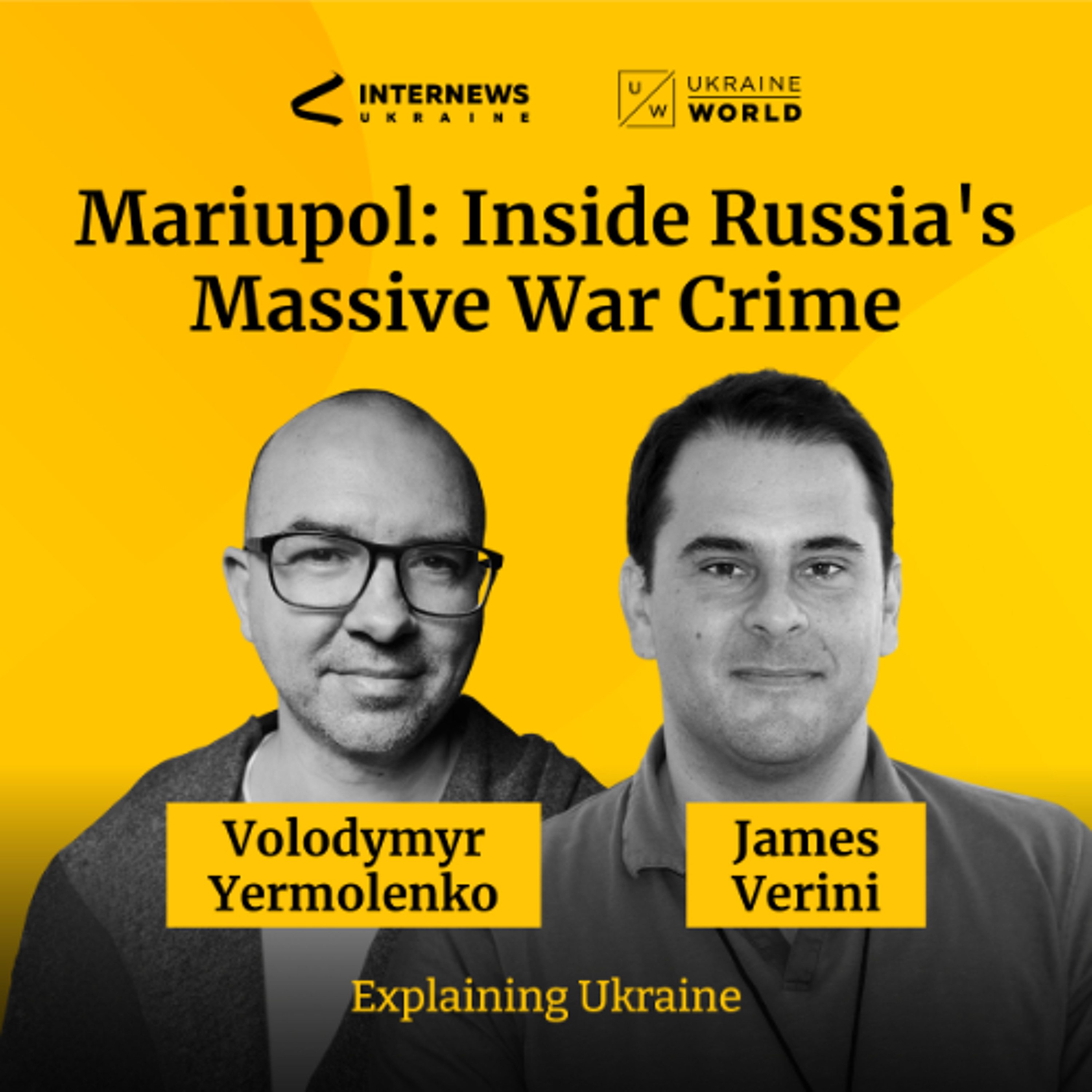
Mariupol: Inside Russia’s Massive War Crime - with James Verini episode artwork

EPISODE · May 21, 2026 · 49 MIN

Mariupol: Inside Russia’s Massive War Crime - with James Verini

from Explaining Ukraine · host UkraineWorld

On March 16, 2022, the Russian army committed one of the gravest war crimes of its invasion of Ukraine. It dropped air bombs on the Mariupol Drama Theatre, knowing that around a thousand civilians were sheltering inside, seeking refuge from Russian shelling. It did so despite the huge inscriptions reading “Children” — written in Russian on both sides of the theatre — clearly visible from the air as a warning to any potential bomber. In this episode, we analyse this crime with the help of a journalist who spent several years speaking with dozens of survivors. You are listening to the Explaining Ukraine podcast. *** Explaining Ukraine is a podcast by UkraineWorld, an English-language media outlet run by Internews Ukraine. Host: Volodymyr Yermolenko, a Ukrainian philosopher, Chief Editor of UkraineWorld, and President of PEN Ukraine. Guest: James Verini, an American journalist and book writer who wrote for The New York Times and other papers. He recently published a book, The Theater: Courage and Survival in the Defining Atrocity of the Ukraine War. The book was published this year by Simon & Schuster. Link to the book: https://www.simonandschuster.com/books/The-Theater/James-Verini/9781668062203 *** Listen on various platforms: https://li.sten.to/explaining-ukraine UkraineWorld: https://ukraineworld.org/en *** SUPPORT: You can support our work on https://www.patreon.com/c/ukraineworld Your help is crucial, as we rely heavily on crowdfunding. You can also contribute to our volunteer missions to frontline areas in Ukraine, where we deliver aid to both soldiers and civilians. Donations are welcome via PayPal at: [email protected]. *** CONTENTS: 0:00 Intro 2:40 Why does the guest call the Mariupol drama theater bombing the "defining atrocity" of the Russian war against Ukraine? 5:48 What made Mariupol particularly vulnerable to the Russian siege and bombardment? 8:51 What were the devastating living conditions for civilians in Mariupol during the siege? 9:48 Why did people consider the Mariupol drama theater a safe shelter, and how was it designated as such? 13:05 How did the theater's staff and volunteers manage to transform it into a functioning refugee shelter for thousands? 15:50 When did the bombardment of the theater occur, and why is it significant that "Children" was clearly written outside? 21:28 What were the immediate consequences of the direct bomb hits on the theater, and how did they cause such lethality? 24:49 How did the journalist connect with and interview dozens of survivors to document their experiences? 31:32 How is Russia attempting to erase the memory and culture of Ukraine in occupied Mariupol? 35:10 What is the historical context of neglecting and building over the dead in Mariupol, and how does it relate to current events? 40:10 How has the Greek heritage of Mariupol been affected by the Russian invasion and occupation? 45:37 What was the significance of the defense of Azovstal in Mariupol's story, and how did it impact civilians? 47:29 What is the final message regarding the Mariupol drama theater bombing and its implications for the war? *** Photo credit (James Verini’s portrait): Larry D. Moore, CC BY 4.0, Wikimedia Commons.

On March 16, 2022, the Russian army committed one of the gravest war crimes of its invasion of Ukraine. It dropped air bombs on the Mariupol Drama Theatre, knowing that around a thousand civilians were sheltering inside, seeking refuge from Russian shelling. It did so despite the huge inscriptions reading “Children” — written in Russian on both sides of the theatre — clearly visible from the air as a warning to any potential bomber. In this episode, we analyse this crime with the help of a journalist who spent several years speaking with dozens of survivors. You are listening to the Explaining Ukraine podcast. *** Explaining Ukraine is a podcast by UkraineWorld, an English-language media outlet run by Internews Ukraine. Host: Volodymyr Yermolenko, a Ukrainian philosopher, Chief Editor of UkraineWorld, and President of PEN Ukraine. Guest: James Verini, an American journalist and book writer who wrote for The New York Times and other papers. He recently published a book, The Theater: Courage and Survival in the Defining Atrocity of the Ukraine War. The book was published this year by Simon & Schuster. Link to the book: https://www.simonandschuster.com/books/The-Theater/James-Verini/9781668062203 *** Listen on various platforms: https://li.sten.to/explaining-ukraine UkraineWorld: https://ukraineworld.org/en *** SUPPORT: You can support our work on https://www.patreon.com/c/ukraineworld Your help is crucial, as we rely heavily on crowdfunding. You can also contribute to our volunteer missions to frontline areas in Ukraine, where we deliver aid to both soldiers and civilians. Donations are welcome via PayPal at: [email protected]. *** CONTENTS: 0:00 Intro 2:40 Why does the guest call the Mariupol drama theater bombing the "defining atrocity" of the Russian war against Ukraine? 5:48 What made Mariupol particularly vulnerable to the Russian siege and bombardment? 8:51 What were the devastating living conditions for civilians in Mariupol during the siege? 9:48 Why did people consider the Mariupol drama theater a safe shelter, and how was it designated as such? 13:05 How did the theater's staff and volunteers manage to transform it into a functioning refugee shelter for thousands? 15:50 When did the bombardment of the theater occur, and why is it significant that "Children" was clearly written outside? 21:28 What were the immediate consequences of the direct bomb hits on the theater, and how did they cause such lethality? 24:49 How did the journalist connect with and interview dozens of survivors to document their experiences? 31:32 How is Russia attempting to erase the memory and culture of Ukraine in occupied Mariupol? 35:10 What is the historical context of neglecting and building over the dead in Mariupol, and how does it relate to current events? 40:10 How has the Greek heritage of Mariupol been affected by the Russian invasion and occupation? 45:37 What was the significance of the defense of Azovstal in Mariupol's story, and how did it impact civilians? 47:29 What is the final message regarding the Mariupol drama theater bombing and its implications for the war? *** Photo credit (James Verini’s portrait): Larry D. Moore, CC BY 4.0, Wikimedia Commons.

NOW PLAYING

Mariupol: Inside Russia’s Massive War Crime - with James Verini

0:00 49:36

No transcript for this episode yet

We transcribe on demand. Request one and we'll notify you when it's ready — usually under 10 minutes.

The Cleveland Ukraine Podcast The Cleveland Ukraine Podcast Capturing the impactful stories of the Cleveland Ukrainian population at home and abroad. Sikkerhedsudvalget 24syv Siden 1946 har den amerikanske præsident hver dag modtaget den såkaldte PDB ‘The President’s Daily Brief’ om de aktuelle trusler mod verdens og USAs sikkerhed. 24syv giver nu alle lyttere - politikere, beslutningstagere og embedsmænd - et dagligt sikkerhedsbrief. I programmet ‘Sikkehedsudvalget’ vurderes alle aktuelle trusler mod rigets sikkerhed. Vid alt om terrorisme, Ukraine, Mellemøsten, cybertrusler, kritisk infrastrutur - og mød landets mest vidende eksperter og beslutningstagere. The Fight: A podcast on life & war in Ukraine. The Cipher Brief The Cipher Brief team brings you a brand new podcast that examines the war in Ukraine, and the impact it has on the world. Ukraine - History in the Making Emil Juhler When I started the conversation series ”Ukraine - History in the Making” I could have never imagined where this journey would lead me. It all started in March 2023 after I got home from an exchange stay in Chile and felt, that I had to do more for Ukraine, than what I did on my social media accounts and on the streets in the spring and summer of 2022. I think most of us remember that initial period after Ruzzia’s the full-scale invasion of Ukraine. Speaking from a European/Danish point of view it was a time of big fear, desperation and uncertainty, but also a time of high hopes, energy and big solidarity. In the very first conversation of the show with Veronika Netrebenko, she says the following about the feelings of Ukrainians during the Maidan Revolution: ”We understood we gotta fight for it, and it was something totally different, we felt different, we felt that we need to fight for it”. To a certain degree I believe you can say the same about what happened within the hearts and mi

Frequently Asked Questions

How long is this episode of Explaining Ukraine?

This episode is 49 minutes long.

When was this Explaining Ukraine episode published?

This episode was published on May 21, 2026.

What is this episode about?

On March 16, 2022, the Russian army committed one of the gravest war crimes of its invasion of Ukraine. It dropped air bombs on the Mariupol Drama Theatre, knowing that around a thousand civilians were sheltering inside, seeking refuge from Russian...

Can I download this Explaining Ukraine episode?

Yes, you can download this episode by clicking the download button on the episode player, or subscribe to the podcast in your preferred podcast app for automatic downloads.
URL copied to clipboard!