
EPISODE · May 6, 2026 · 5 MIN
Market for children's products grows as adults empty their pockets for 'gold kids'
from Korea JoongAng Daily - Daily News from Korea · host KIM KYUNG-HEE
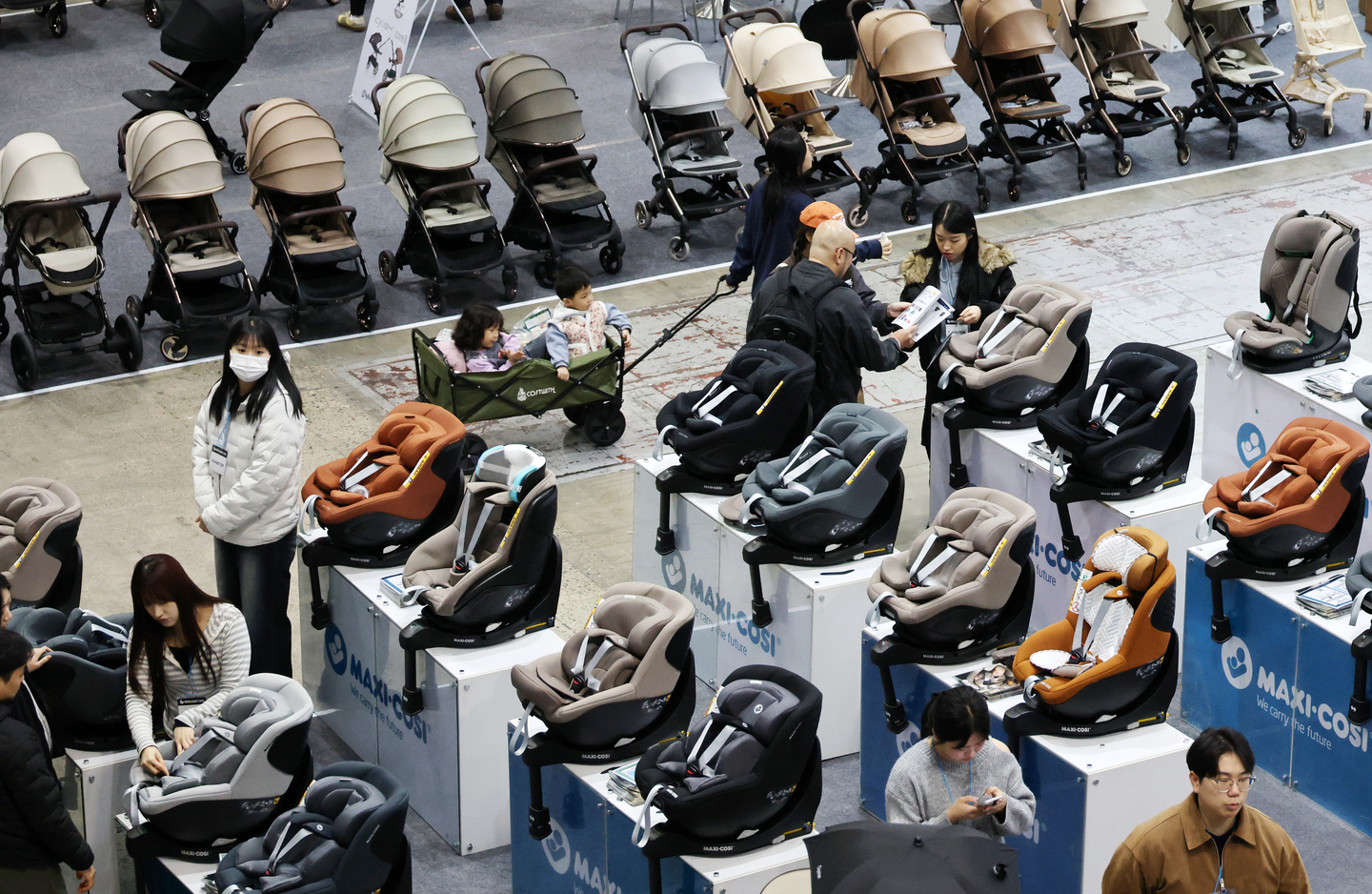
This article is by Kim Kyung-hee and read by an artificial voice. Though fewer babies are being born in Korea, the market for infant and children's products is growing as families spend more on each child, driving demand for premium goods. The numbers reflect the trend in which parents and relatives all open their wallets for a single child, often described as a "gold kid" or "10-pocket," referring to the 10 different adults who empty their pockets for them — similar to the proverb "it takes a village to raise a child." Retailers are expanding their baby and kids sections to match that demand, but the shift is also adding to concerns that the cost of raising children is becoming even harder to bear. "I chose a famous brand even though it was expensive because I wanted to give the best possible gift," said Kim, who bought a crib with a canopy from a well-known Nordic brand at a department store for a newborn niece earlier this year, spending 2 million won ($1,370). The item was so popular that Kim had to wait about a month to get it. "Since this is the first baby born in our family, it feels like everyone is willing to spend generously," Kim added. And it's not just the parents. A grandparent surnamed Pi, for instance, spent 300,000 won on gifts for two granddaughters, ages 7 and 3, for Children's Day on Tuesday. "My son and his wife give me 1 million won in allowance every month, and I spend 300,000 of that on clothes and snacks for my granddaughters," Pi said. "When I was raising my own children, life was so hard that I could not do much for them, but now that I am in a more comfortable position, I want to make sure that my grandchildren never go without." The industry is thriving thanks to this trend. Online shopping transaction value for baby and children's products, such as diapers and cribs, reached 1.4 trillion won in the first quarter, up 8.3 percent from the 1.29 trillion recorded a year earlier, according to data from the Ministry of Data and Statistics on Monday. For all of last year, the online market for baby and children's products came to 5.48 trillion won, up 3.6 percent from the previous year. Since 2017, when the ministry reorganized the statistical series, the market has grown 61.8 percent from 3.39 trillion won. After dipping slightly in 2024, transaction value rose again last year to the highest level since the series began in 2001. The figures are seen as a useful indicator of the broader market, as shopping has been steadily shifting from stores to online platforms, and dual-income families with children tend to rely even more heavily on online purchases. The annual number of births fell from around 360,000 in 2017 to the 250,000 range last year, but the premium segment of the baby and children's goods market has continued to expand. Department store sales show the same pattern. Sales of imported children's products, including luxury items, rose 21.5 percent on year in the first quarter at Shinsegae Department Store, more than double the 10 percent growth rate for general children's goods. Lotte Department Store also saw sales in its kids category rise 20 percent over the same period. Retailers are responding by expanding specialty stores and promotions for infants and children. Fashion platform Musinsa opened its first standalone kids store in Magok, western Seoul, earlier this year. After strengthening its lineup of kids' products, the company said that its offline sales of baby and children's clothing increased 6.7 times last year compared to a year earlier. The broader industry built around gold kids is expected to keep growing. Beyond the premiumization of baby products, new business opportunities are emerging across the sector, including cafes for kids, babysitting services and children's insurance. Market researcher PitchBook estimated that Korea's kids industry was worth $43.76 billion last year, more than double the $21 billion recorded in 2012. The concern is that this trend could worsen t...
What this episode covers
This article is by Kim Kyung-hee and read by an artificial voice. Though fewer babies are being born in Korea, the market for infant and children's products is growing as families spend more on each child, driving demand for premium goods. The numbers reflect the trend in which parents and relatives all open their wallets for a single child, often described as a "gold kid" or "10-pocket," referring to the 10 different adults who empty their pockets for them — similar to the proverb "it takes a village to raise a child." Retailers are expanding their baby and kids sections to match that demand, but the shift is also adding to concerns that the cost of raising children is becoming even harder to bear. "I chose a famous brand even though it was expensive because I wanted to give the best possible gift," said Kim, who bought a crib with a canopy from a well-known Nordic brand at a department store for a newborn niece earlier this year, spending 2 million won ($1,370). The item was so popular that Kim had to wait about a month to get it. "Since this is the first baby born in our family, it feels like everyone is willing to spend generously," Kim added. And it's not just the parents. A grandparent surnamed Pi, for instance, spent 300,000 won on gifts for two granddaughters, ages 7 and 3, for Children's Day on Tuesday. "My son and his wife give me 1 million won in allowance every month, and I spend 300,000 of that on clothes and snacks for my granddaughters," Pi said. "When I was raising my own children, life was so hard that I could not do much for them, but now that I am in a more comfortable position, I want to make sure that my grandchildren never go without." The industry is thriving thanks to this trend. Online shopping transaction value for baby and children's products, such as diapers and cribs, reached 1.4 trillion won in the first quarter, up 8.3 percent from the 1.29 trillion recorded a year earlier, according to data from the Ministry of Data and Statistics on Monday. For all of last year, the online market for baby and children's products came to 5.48 trillion won, up 3.6 percent from the previous year. Since 2017, when the ministry reorganized the statistical series, the market has grown 61.8 percent from 3.39 trillion won. After dipping slightly in 2024, transaction value rose again last year to the highest level since the series began in 2001. The figures are seen as a useful indicator of the broader market, as shopping has been steadily shifting from stores to online platforms, and dual-income families with children tend to rely even more heavily on online purchases. The annual number of births fell from around 360,000 in 2017 to the 250,000 range last year, but the premium segment of the baby and children's goods market has continued to expand. Department store sales show the same pattern. Sales of imported children's products, including luxury items, rose 21.5 percent on year in the first quarter at Shinsegae Department Store, more than double the 10 percent growth rate for general children's goods. Lotte Department Store also saw sales in its kids category rise 20 percent over the same period. Retailers are responding by expanding specialty stores and promotions for infants and children. Fashion platform Musinsa opened its first standalone kids store in Magok, western Seoul, earlier this year. After strengthening its lineup of kids' products, the company said that its offline sales of baby and children's clothing increased 6.7 times last year compared to a year earlier. The broader industry built around gold kids is expected to keep growing. Beyond the premiumization of baby products, new business opportunities are emerging across the sector, including cafes for kids, babysitting services and children's insurance. Market researcher PitchBook estimated that Korea's kids industry was worth $43.76 billion last year, more than double the $21 billion recorded in 2012. The concern is that this trend could worsen t...
NOW PLAYING
Market for children's products grows as adults empty their pockets for 'gold kids'
No transcript for this episode yet
Similar Episodes
No similar episodes found.
Similar Podcasts
No similar podcasts found.