
EPISODE · Jan 20, 2026 · 0 MIN
Marsy’s Law Wasn’t a Movement. It Was a Machine.
from Gracie Gato's Speakeasy Podcast · host Gracie Gato
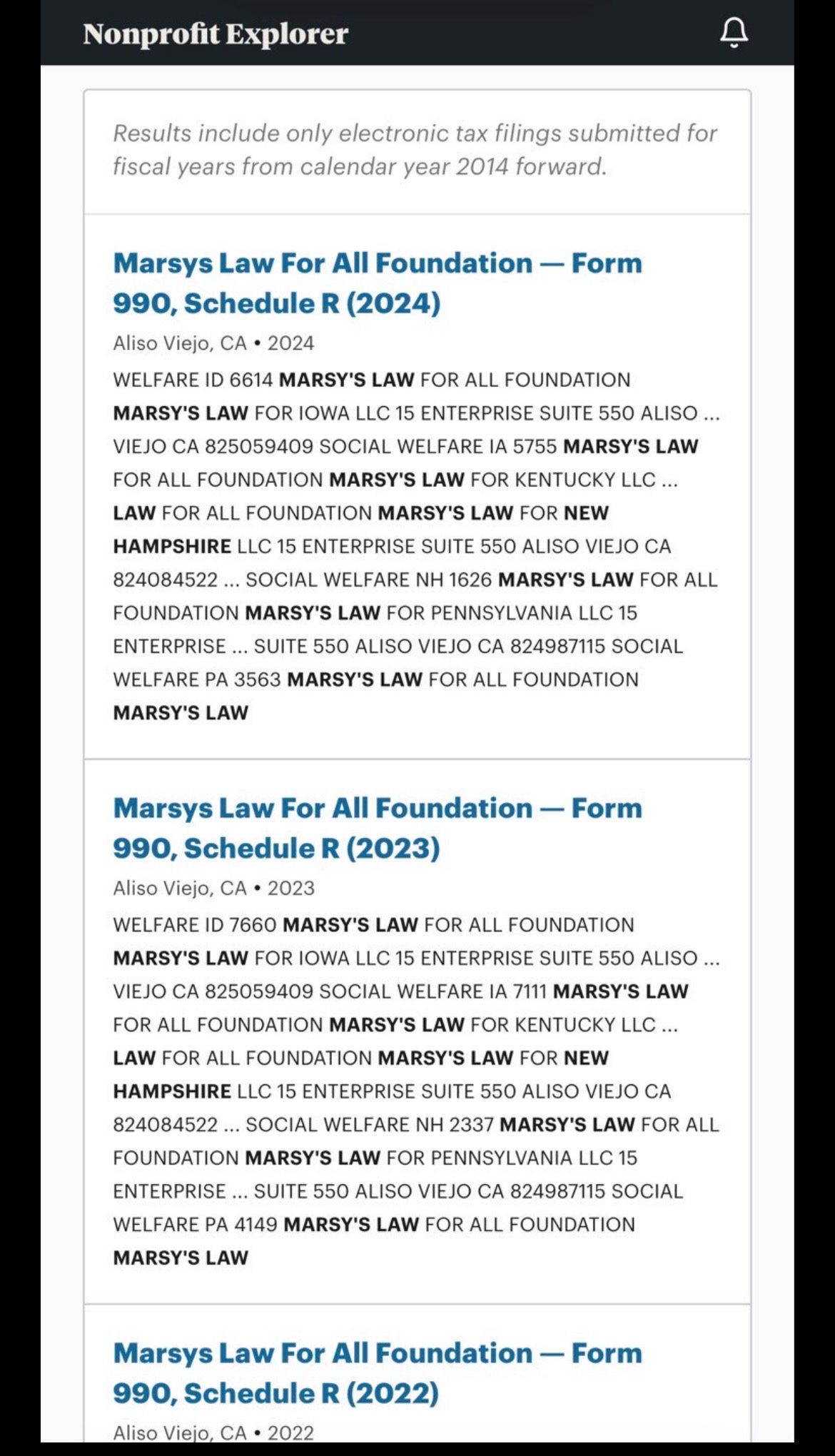
…And New Hampshire deserves the full payout list.New Hampshire was sold Marsy’s Law like it was a warm blanket.“Victims’ rights.”“Building trust.”“Finding solutions.”And let me be very clear before anyone starts clutching their pearls: every normal human being wants victims protected. No one is arguing against that.But I don’t do politics by slogan.I do it by paperwork.Because the paperwork never lies.People do.So I pulled the Marsy’s Law filings. And what they show is not a spontaneous grassroots uprising of compassion.It’s a paid operation.A national network.And a money trail that runs straight through Concord.Start with the New Hampshire filingA New Hampshire Secretary of State political committee report lists:Committee name: Marsy’s Law for New HampshireAddress: 149 Rumford Street, Concord, NH 03301Chairperson: Emilio GonzalezTreasurer: Andrew BiemerThe committee reports:* $430,000 in receipts* $367,336.40 in expendituresThat is a lot of “victims’ rights” for something marketed like a community bake sale.One donor funded the whole thingHere’s what the receipts show:The itemized receipts list Henry Nicholas III, from Aliso Viejo, CA, as the contributor — with multiple contributions totaling $430,000.Not ten thousand small donors.Not a statewide swell of civic virtue.One donor. One bankroll.And when one person funds the whole “movement,” it’s not a movement.It’s a purchase.Now flip the page: the payoutsThe filing includes itemized expenditures — meaning it includes who got paid and for what.And yes: the names show up. Repeatedly.There are payments and reimbursements for:* consulting fees* printing and copies* online services* food and travel* postage, office supplies* event tickets* media and advertising* staffing and phone operationsThis is not “awareness.”This is professional political infrastructure.Examples straight from the report:The itemized expenditure pages include payouts and reimbursements to:* Amanda Sexton — including consulting fees and reimbursements for travel, printing, online services, and more* Andrew Biemer — consulting fees* Sara Persechino — reimbursed for printing, travel, office supplies, postage, phone charges* Marina Altschiller — reimbursed for printing, travel, copies, event tickets* Brooke English-Barss — reimbursed for office supplies, travel, food* Lyn Schollett — reimbursed for collateral printing, food, and related expensesAnd then come the vendor payments — the kind that power messaging campaigns:* Elevare Communications LLC (consulting + media buys / newspaper ads)* The Strategy Group for Media / Media Placement Services (media + online advertising)* Gallagher, Callahan & Gartrell (consulting fees)* Demers, Blasdel & Prasol Inc (consulting fees)* FLS Connect LLC (media/phones)So if anyone tells you Marsy’s Law in New Hampshire was simply neighbors caring about neighbors…Ask them why it came with a payroll.“Building trust,” huh?This is where it gets interesting.Because local profiles and public relations framing around these figures often emphasize themes like leadership and trust-building and solution-oriented governance.But the filings show something else: a paid ballot-question campaign with money moving through the same local orbit.And I’m not saying that to be cute.I’m saying it because when you’re rewriting how justice functions, the public deserves to know whether advocacy is coming from lived experience and public need……or whether it’s coming from a funded political machine.Marsy’s Law wasn’t just “New Hampshire.” It’s national.Now here’s the part that changes the scale of the story.A ProPublica Nonprofit Explorer listing shows Marsy’s Law For All Foundation — Form 990, Schedule R, with connected entities across multiple states — including Marsy’s Law For New Hampshire LLC, tied to an address in Aliso Viejo, California.And ProPublica itself notes these are electronic tax filings (generally 2014 forward), meaning it’s a valuable window — but not the full universe of disclosures.Translation:New Hampshire didn’t invent Marsy’s Law.New Hampshire got a rollout.Like a franchise.Like a template.Like a product.And when something is packaged, deployed across states, and financed at scale, voters have every right to ask:Who wrote it?Who profits?Who gets shielded?And what happens to due process when it’s installed?Because “victims’ rights” is a beautiful phrase.But the Constitution is not a brand partnership.Due process is not a vibeMarsy’s Law is marketed like a moral no-brainer. A test of decency.But the mechanics matter.Critics have raised serious concerns that these frameworks can collide with due process — shifting court procedure in ways that create conflicts between:* victims’ participation rights* defense constitutional rights* prosecution obligations* evidence and discovery rules* trial fairness and timingJustice doesn’t run on intention.It runs on procedure.And when you change procedure, you change outcomes.Especially for people without money, status, or political insulation.Qualified immunity and accountability: the quiet partAnother criticism is what these frameworks can do to accountability.When the state is given more power, more procedural leverage, and more protection — especially under emotional branding — it can become harder to challenge misconduct and harder to demand transparency.New Hampshire already has enough problems with:* evidence gatekeeping* institutional self-protection* insiders controlling narrative power* the public being told “trust us” while the paperwork stays buriedThe last thing we need is more immunity and less accountability.The donor’s politics matter — especially when the state wants the death penaltyNow let’s talk about what makes this even scarier.Henry T. Nicholas III didn’t just fund a “victims’ rights” campaign.He also funds pro–death penalty politics.And that combination should terrify anyone who still believes the justice system should be:fair, restrained, constitutional, and accountable.Because Marsy’s Law + the death penalty is not “tough on crime.”It’s a system that becomes more dangerous to everyone.It’s the state gaining sharper teeth.And state power never grows evenly.It grows toward the people who already have less protection.And yes — isn’t it weird?Here’s a question I’m allowed to ask as a voter and a journalist:Isn’t it weird that the sole funder of this committee — the same committee that took in $430,000 from one donor — is a billionaire whose public record includes widely reported allegations about an underground “hideaway” built for drugs and sex parties?I’m not asking that because I’m scandal-hunting.I’m asking it because it’s a credibility test.If someone bankrolls a constitutional campaign that reshapes justice in your state, you don’t get to pretend their background is irrelevant.The public deserves context about who’s writing the checks behind “victims’ rights” branding.This is why the NHCADSV audit mattersNow here’s why I’m connecting this directly to the current legislative battlefield in New Hampshire.If an organization presents itself as “the voice of victims” while:* pushing certain bills* blocking others* shaping the narrative around evidence, procedure, and court access* and operating in proximity to a paid political network……then the public has a right to ask:Are they serving victims?Or are they serving another master?Because if the money, messaging, and policy priorities all line up in ways that reduce due process and restrict evidence access…That’s not advocacy.That’s control.So yes — I want the listThere has been discussion of $345,000 in payouts to Concord officials and community members connected to Marsy’s Law efforts.This filing alone shows $367,336.40 in expenditures for the reporting period.So the obvious question is simple:Who got paid? How much? For what? Across all reporting periods?If it’s all above board, perfect.Then the complete payout list should be easy to obtain through the Secretary of State filings and related disclosures.And if it’s not easy?That’s the story too.Because transparency isn’t optional when you’re rewriting justice.It’s the bare minimum.Final thoughtMarsy’s Law in New Hampshire was not just a feel-good civics lesson.It was a funded campaign.With professional operators.With a national structure.With a single donor bankroll.And with payout trails New Hampshire voters deserve to see in full.I’m not here to debate feelings.I’m here to read the receipts.And the receipts say:follow the money.Sources* NH Secretary of State — Marsy’s Law for New Hampshire political committee filing (receipts, expenditures, itemized payments)* Patch (Concord, NH) — “Biemer: Grady Sexton Knows Leadership Is About Building Trust, Finding Solutions”* ProPublica Nonprofit Explorer — Marsy’s Law For All Foundation filings / connected entities* The Marshall Project — “Broadcom’s Henry Nicholas is Spending Millions to Pass Marsy’s Law”* New York Post (2008) — “Rockin’ the coked-out orgy cave” (additional public reporting) https://nypost.com/2008/06/15/rockin-the-coked-out-orgy-cave/ Get full access to The Gracie Gato Podcast at gracieformermrsgato.substack.com/subscribe
Embed this episode
Ready to play
Marsy’s Law Wasn’t a Movement. It Was a Machine.
No transcript for this episode yet
Similar Episodes
No similar episodes found.
Similar Podcasts
No similar podcasts found.