
Welcome to The Daily here on Anchor. The Daily with Silstein. The Daily with Silstein here on Anchor. Happy Thursday.
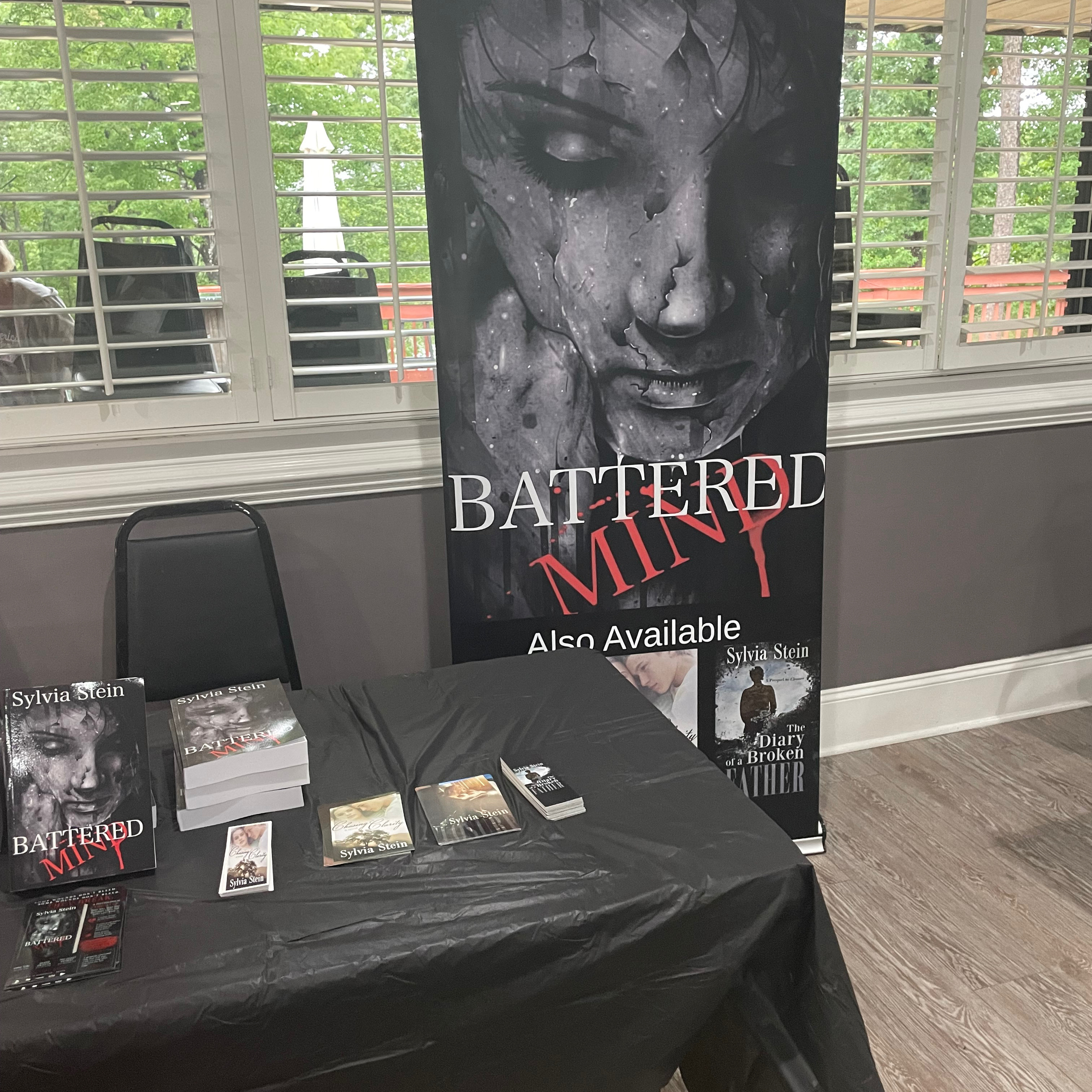
And welcome to The Daily with Silstein here on Anchor. And that was music by GarageBand, Basala Lounger Long. Welcome, welcome, welcome. I am Silstein, or Sylvia Stein, and welcome to the show.
As I was saying yesterday, we left off with a writing prompt for week 14, I believe it is. I think it was. Why is it that? And I know most of you haven't worked on yours, but I wanted to reiterate that that was, I got that one from week 14, Sunday writing prompt, why is that?
I'm going to start week 14 today with you guys. And then next week, hopefully Monday, I can go ahead and review the writing prompts and also the riddles that you have working from week 13. Try to work on those. So for today, we're going to begin week 14.
We're going to start with Monday writers on writing. So let's get some music going here. Writers on writing. Here we go.
Let's see here. The Daily with Sylstein here on Anchor. Writers on writing, using the book by author Amy Peters, The Writer's Devotional, 365 Inspirational Exercises, Ideas, Tips, and Motivations on Writing. Here we go.
Motivation, Tuesday motivation. Okay, it says Brian Tracy says, every minute that you spend planning saves 10 minutes in the execution of those plans. This gives you a return of 1000% on your investment of mental, emotional, and physical energy. So according to this, it says, according to her book, it says here, imagine a 1,000% return on a financial investment.
You'd be a fool not to invest. The same is true of author and motivational speaker Brian Tracy's equation for using your time efficiently. His formula boils down to a simple premise. By doing some nominal planning and organizing first, you will be more effective and efficient when you sit down to write.
Gather all the supplies you need to write. Leave them in the spot designated for your writing. If you write at the computer, leave any notes or other materials you'll need nearby. Make sure that when you finish writing, you leave the area tidy so it is ready for you to begin the next day.
As simple as the strategy sounds, it is very effective. If you leave yesterday's coffee cup parked by the computer, you'll be forced to bring the cup to the kitchen sink or dishwasher. You made an unnecessary distraction, sorry, give me a second. Where is it?
Where was I? Give me one second, let me put some music here. Okay, my apologies. As simple as the strategy sounds, it is very effective.
If you leave yesterday's coffee cup parked by the computer, you'll be forced to bring the cup to the kitchen sink or dishwasher. You made an unnecessary distraction for yourself. You have wasted time and kept your brain off the work at hand, writing. Likewise, keep your notes and journals at the ready near where you write.
If you have to stop midstream to fish your notes out of a jacket pocket that is hanging in the hall closet, you've delayed your writing again. And it's true, it happens a lot to me. I will start off with a cup of coffee in the morning when I don't have to go to school or I'm at work as a substitute or anything related to anything else that I have to do for school. I will get the coffee cup in the morning that the kids go, then I forget where my cup is and I'm looking for my cup and I'm getting my notes ready to write.
So he is correct in that. And how many of us can relate to that, right? If you want to go ahead and call in and let us know if that's happened to you, this is Tuesday Motivation, and we'll be right back. Here we go.
The Daily with Silstein here on Anchor. And welcome back. Now we have Wednesday writing class. Write a limerick about your favorite animal.
In the 1800s, it says, English author Edward Lear popularized the limerick in his popular book of nonsense. One of his best known limericks, though not from this book, is, There was a young lady whose eyes were unique as to color and size. When she opened them wide, people all turned aside and started away in surprise. There are some basic rules of thumb when it comes to writing limericks.
Lines 1, 2, and 5 rhyme with one another and typically contain 7 to 10 syllables. Lines 3 and 4 are shorter, 5 to 7 syllables, and also rhyme with each other. Limericks are meant to be funny, verging on bawdy. Basically, they're meant to be funny.
So I've never really worked on a limerick, so this will be interesting to do. But if you want to look that up, Edward Lear is known for them. I'm sure there's others. And if you want to go ahead and work on one for next time, if you want to call it in, I will look for one to read more samples of that.
But this one says, There was a young lady whose eyes were unique as to color and size. When she opened them wide, people all turned aside and started away in surprise. And like I said, it starts with lines 1, 2, and 5 rhyme with one another and typically contain 7 to 10 syllables. Lines 3 and 4 are shorter, 5 to 7 syllables, and also rhyme with each other.
And they're meant to be funny, verging on bawdy, or B-A-W-D-Y. I hope I didn't mispronounce that word. So if you want to go ahead and take a shot at it, like try to work on one, go ahead and call the show and share your limerick. And we'll try to do that for next week on Monday for The Daily with Silstein.
So for now, we're going to continue with Thursday editing, and we'll be right back. The Daily with Silstein here on Anchor. Now we're going to do Thursday editing, and here we go. The Daily with Silstein here on Anchor, all the music is by GarageBand.
Thursday editing. The story is not what happens. The story is who it happens to. This is taken by author named Peter Ruby, How to Tell a Story.
And it says, while plot is important, characters drive your story. If you can develop characters who evoke a strong emotional reaction, then your work will be more successful. This is true with both fiction and nonfiction. Readers need to become engaged in the lives of the people they read about in order for them to buy into the story.
Don't limit yourself to developing characters that people must fall in love with or even like. Sometimes a negative visceral reaction can be more compelling. Take, for example, the novel The Silence of the Lambs. Excuse me.
In his best-selling book, author Thomas Harris brought back one of his favorite characters who he first introduced in another novel, Red Dragon. Hannibal Lecter is certainly a monster, but he is He's a compellingly awful person, so much that his character has become part of the lexicon, existing outside of the original work. So those of you that have read and followed the books by Thomas Harris and then the movies, I think Hannibal Lecter is a monster, but he is, like you said, a lexicon, very interesting, compelling character, even though he's awful, does all these things. And then Anthony Hopkins does a fantastic job of doing that role.
And then even so, Ralph Fiennes, who does the Red Dragon later in the movie. So, but this was Thursday editing and we'll be right back. This is The Daily with Phil Stein here on Anchor. We'll be back with the Wrap Up.
Okay. And now it's time for the Wrap Up. Thank you everyone for joining us on The Daily here on Anchor. Now it's time for the Wrap Up.
So today we discussed on the show, we did week 14. We started with Monday writers on writing. We discussed Rhetoric Nietzsche. We did Tuesday motivation, the quote by Brian Tracy, author and motivational speaker, Brian Tracy.
We worked on trying to come up with a limerick, and that's an assignment for next week as well. And we discussed Edward Lear, who popularized it in the 1800s. And then we left off with Thursday editing. And we talked about the quote of what Peter Ruby says, the story is not what happens, the story is who it happens to and about characters who drive stories.
And we mentioned Thomas Harris and his most famous book, The Silence of the Lambs and his character of Hannibal Lecter. And we now are left with a wrap up of The Daily with Phil Stein here on Anchor. And all I wanted to say was thank you so much for the support of this podcast. I did create a video earlier and it's on Instagram to discuss the two podcasts that I have.
This one's on Anchor. I have another podcast and I wanted to let you all know that I would appreciate your support by calling in, leaving a message, also leaving a review of the podcast. I hope you all review the podcast. Let me know how I'm doing.
And I hope that we're able to bring you writing tips that you're interested in, that you can share and be able to get good ideas to work on. And like I said, we're discussing the writer's devotional Monday. We'll probably wrap up the writer's devotional with Amy Peters, author Amy Peters, the book by her. We'll wrap up that book and then start a new one probably for the following week.
But we will discuss the assignments and exercises. I will also share other author news of myself, hopefully set up some interviews. But I wanted to say thank you all for everything you do for supporting the podcast. Thank you for joining me here on The Daily with Phil Stein here on Anchor.
And I hope you all have a wonderful and happy, happy Thursday. We will see you again Monday. This was The Daily with Phil Stein here on Anchor. Find us again next week.