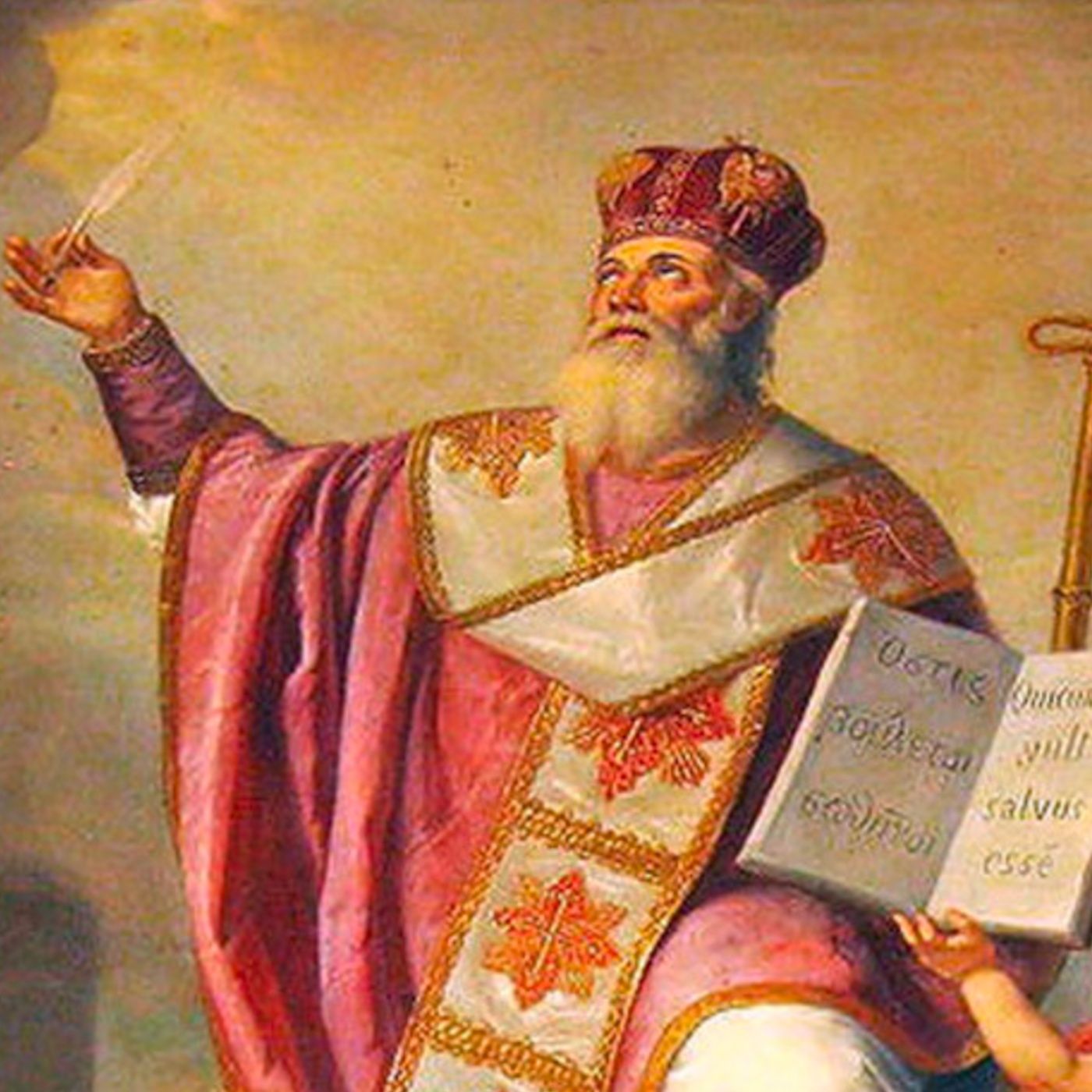
May 2: Saint Athanasius, Bishop and Doctor episode artwork

EPISODE · May 2, 2026 · 6 MIN

May 2: Saint Athanasius, Bishop and Doctor

from Catholic Saints & Feasts · host Fr. Michael Black

May 2: Saint Athanasius, Bishop & Doctor c. 295–373 Memorial; Liturgical Color: White Patron Saint of theologiansA fiery Egyptian saves the Trinity The First Sunday of Advent of 2011 introduced to the faithful a new liturgical translation of the Mass in many English-speaking countries. The new translation had been many years in the making and had gone through numerous drafts and revisions.  Of the many noticeable changes, some of the most extensive were made to the Nicene Creed. The phrase “one in being with the Father” was changed to “consubstantial with the Father.” This caused confusion and discomfort for some, as “consubstantial” was not a familiar English word and sounded more appropriate to the realm of mathematics. But “consubstantial” had a long historical and theological pedigree supporting it. Its noticeable use in the newly translated Creed, and the curiosity it provoked, was also a distant homage to today’s saint, Athanasius. He fought for, and suffered for, this one word.Saint Athanasius was the sturdiest pillar of orthodoxy in the Patristic age. He was born to Christian parents in Egypt, raised in the faith, and mentored in his youth by the Bishop of Alexandria, whom he accompanied to the Council of Nicea. He later became the Bishop of Alexandria for forty-five contentious years and was exiled five times, some of them difficult, dangerous, and prolonged absences. He lived a colorful life at the very heart of the theological controversies of the fourth century. Athanasius, while still young, played an important role at the Council of Nicea in promoting the non-biblical, Greek word, homoousion, to describe Christ’s relationship with God the Father. The Western Church then translated homoousion as consubstantialis for its Latin Creed. Hence the English word “consubstantial.”To say that Christ is “consubstantial” with the Father is to say that He is not one in person, one in mind, or one in will with the Father. He is distinct from the Father in His personhood, His mind, and His will. But Christ is entirely united to the Father in His substance, or nature. That is, Christ is God from God in the same way that light is from light or, to use the probable original analogy from that pre-electrified era, Christ is God from God and flame from flame. A wick carries a new flame away from its source, to burn the same or hotter somewhere else, without diminishing its “parent” fire. One source, two flames, generating heat and light in different places for different people.Christ did not become God sometime after He was born of the Virgin Mary. He did not develop into God as a teenager. Nor was He bestowed with divine powers in some pivotal event. He was a baby God, a teen God, and an adult God because He was always God. Nor was His God nature a mere cloak under which was hidden a human self. Jesus Christ was fully human, of course, but also fully divine, and these two natures were united in one complex person. Most of the Church’s finer Christological definitions were destined to be clarified at later Councils. The first two Councils, Nicea (325 A.D) and Constantinople (381 A.D.) were concerned with understanding and defining the Trinity first. Once Trinitarian definitions were worked out, later fifth-century Councils would address more fully the nature of Christ Himself.Before delving into what Christ did, it was necessary to establish who He was. His being preceded His doing. Saint Athanasius’ theological contributions to defining, for ever and all time, the metaphysical significance of the Incarnation is now taken for granted. But without this correct understanding, Christmas would be just a historic anniversary of an important birth, like that of Julius Caesar or other greats of history. But Christmas is Christmas because Christ was God from the start. Theology is not just a pillow on which the Church rests, of course, so the theology of the Trinity and of Christ has been greatly enriched since the Patristic age, most notably by an emphasis on the Cross as the fullness of the self-emptying that began with the Incarnation. Saint Athanasius was without equal in defining and defending the Church’s dogma on the true nature of the Trinity. And for that immeasurable contribution he is owed an immense debt of gratitude by all the Church.Saint Athanasius, your perseverance in combating false teaching cost you comfort and security. May your example and intercession assist all teachers to lead others to reflect more fruitfully on the truths and mysteries of our Faith.

May 2: Saint Athanasius, Bishop & Doctor c. 295–373 Memorial; Liturgical Color: White Patron Saint of theologiansA fiery Egyptian saves the Trinity The First Sunday of Advent of 2011 introduced to the faithful a new liturgical translation of the Mass in many English-speaking countries. The new translation had been many years in the making and had gone through numerous drafts and revisions.  Of the many noticeable changes, some of the most extensive were made to the Nicene Creed. The phrase “one in being with the Father” was changed to “consubstantial with the Father.” This caused confusion and discomfort for some, as “consubstantial” was not a familiar English word and sounded more appropriate to the realm of mathematics. But “consubstantial” had a long historical and theological pedigree supporting it. Its noticeable use in the newly translated Creed, and the curiosity it provoked, was also a distant homage to today’s saint, Athanasius. He fought for, and suffered for, this one word.Saint Athanasius was the sturdiest pillar of orthodoxy in the Patristic age. He was born to Christian parents in Egypt, raised in the faith, and mentored in his youth by the Bishop of Alexandria, whom he accompanied to the Council of Nicea. He later became the Bishop of Alexandria for forty-five contentious years and was exiled five times, some of them difficult, dangerous, and prolonged absences. He lived a colorful life at the very heart of the theological controversies of the fourth century. Athanasius, while still young, played an important role at the Council of Nicea in promoting the non-biblical, Greek word, homoousion, to describe Christ’s relationship with God the Father. The Western Church then translated homoousion as consubstantialis for its Latin Creed. Hence the English word “consubstantial.”To say that Christ is “consubstantial” with the Father is to say that He is not one in person, one in mind, or one in will with the Father. He is distinct from the Father in His personhood, His mind, and His will. But Christ is entirely united to the Father in His substance, or nature. That is, Christ is God from God in the same way that light is from light or, to use the probable original analogy from that pre-electrified era, Christ is God from God and flame from flame. A wick carries a new flame away from its source, to burn the same or hotter somewhere else, without diminishing its “parent” fire. One source, two flames, generating heat and light in different places for different people.Christ did not become God sometime after He was born of the Virgin Mary. He did not develop into God as a teenager. Nor was He bestowed with divine powers in some pivotal event. He was a baby God, a teen God, and an adult God because He was always God. Nor was His God nature a mere cloak under which was hidden a human self. Jesus Christ was fully human, of course, but also fully divine, and these two natures were united in one complex person. Most of the Church’s finer Christological definitions were destined to be clarified at later Councils. The first two Councils, Nicea (325 A.D) and Constantinople (381 A.D.) were concerned with understanding and defining the Trinity first. Once Trinitarian definitions were worked out, later fifth-century Councils would address more fully the nature of Christ Himself.Before delving into what Christ did, it was necessary to establish who He was. His being preceded His doing. Saint Athanasius’ theological contributions to defining, for ever and all time, the metaphysical significance of the Incarnation is now taken for granted. But without this correct understanding, Christmas would be just a historic anniversary of an important birth, like that of Julius Caesar or other greats of history. But Christmas is Christmas because Christ was God from the start. Theology is not just a pillow on which the Church rests, of course, so the...

NOW PLAYING

May 2: Saint Athanasius, Bishop and Doctor

0:00 6:10

No transcript for this episode yet

We transcribe on demand. Request one and we'll notify you when it's ready — usually under 10 minutes.

PDF feed of Interpreter: A Journal of Latter-day Saint Faith and Scholarship PDF feed of Interpreter: A Journal of Latter-day Saint Faith and Scholarship The Interpreter Foundation is a nonprofit educational organization focused on the scriptures of The Church of Jesus Christ of Latter-day Saints (the Book of Mormon, the Pearl of Great Price, the Bible, and the Doctrine and Covenants), early LDS history, and related subjects. All publications in its journal, Interpreter: A Journal of Latter-day Saint Faith and Scholarship, are peer-reviewed and made available as free internet downloads or through at-cost print-on-demand services. Other posts on the website are not necessarily peer-reviewed, but are approved by Interpreter’s Executive Board.Our goal is to increase understanding of scripture through careful scholarly investigation and analysis of the insights provided by a wide range of ancillary disciplines, including language, history, archaeology, literature, culture, ethnohistory, art, geography, law, politics, philosophy, statistics, etc. Interpreter will also publish articles advocating the authenticity and historicity Verax Patria Verax Patria Restoring The Contemplative Soul & Cultivating Catholic Land Holy and Healthy Saints Laura Pickard The Holy and Healthy Saints podcast is to help Latter-day Saints embrace the power of Jesus Christ as they strive for better health and body image. We explore how and why this faith-filled approach may be the answer to peace and freedom around food. Wild Olive Jeanne Petrolle and Jennifer Bird The Wild Olive Podcast brings you game-changing conversations about literature, culture, and the Bible. With co-hosts Jeanne Petrolle and Jennifer Bird, Wild Olive serves up idea-feasts: tasty insights about biblical texts and contemporary (or classic!) literature, with generous side-portions of cultural commentary and hearty laughter. One literature professor + one biblical studies professor = uncontrolled, out-of-bounds, untamed conversation: ideal listening for the post-evangelical, the spiritual-but-not-religious, the Bible-curious secularist, the free-thinking religionist, and the literary-but-not-stodgy! New episodes every other Friday!

Frequently Asked Questions

How long is this episode of Catholic Saints & Feasts?

This episode is 6 minutes long.

When was this Catholic Saints & Feasts episode published?

This episode was published on May 2, 2026.

What is this episode about?

May 2: Saint Athanasius, Bishop & Doctor c. 295–373 Memorial; Liturgical Color: White Patron Saint of theologiansA fiery Egyptian saves the Trinity The First Sunday of Advent of 2011 introduced to the faithful a new liturgical translation of the...

Can I download this Catholic Saints & Feasts episode?

Yes, you can download this episode by clicking the download button on the episode player, or subscribe to the podcast in your preferred podcast app for automatic downloads.
URL copied to clipboard!