
EPISODE · May 19, 2026 · 32 MIN
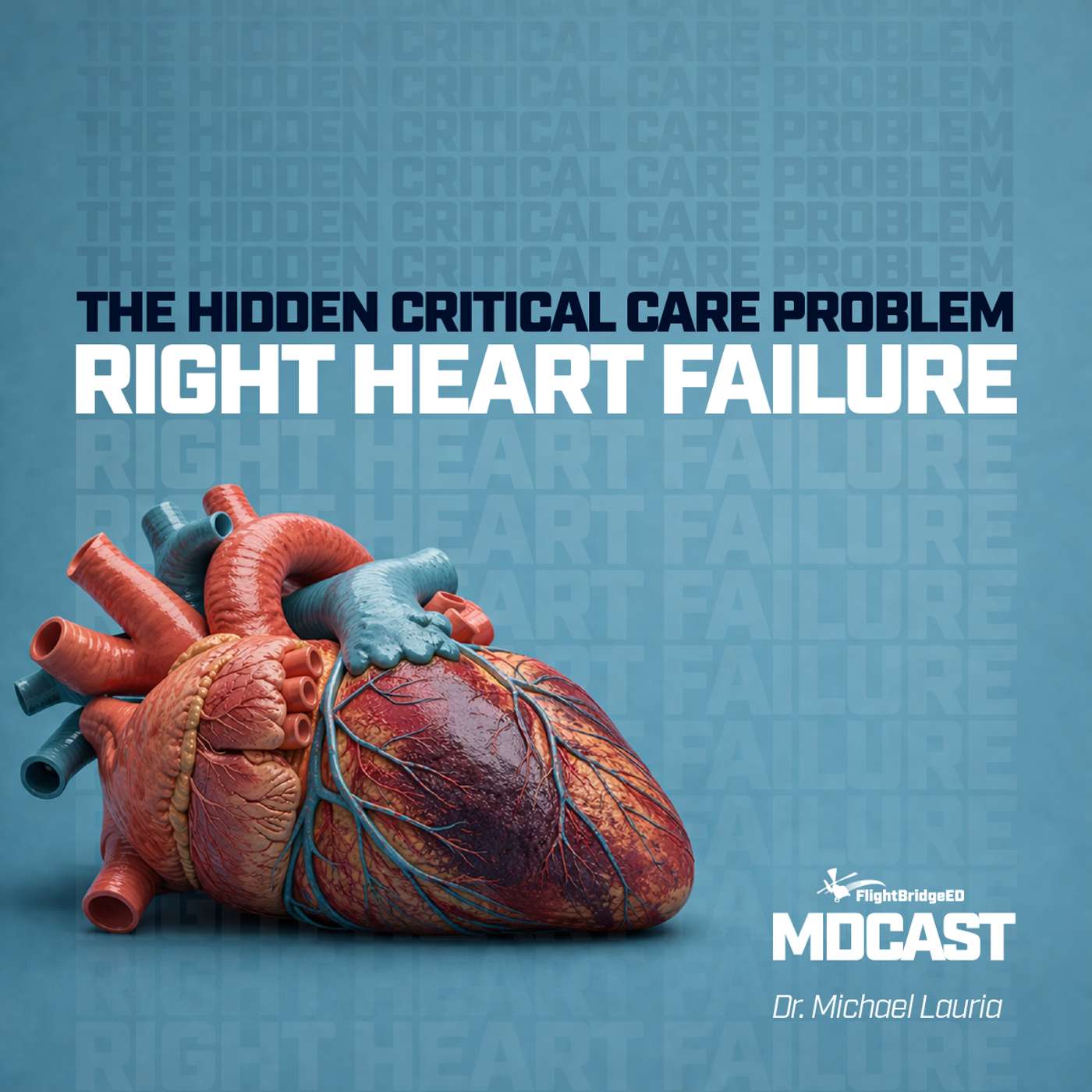
MDCAST: Right Heart Failure: The Hidden Critical Care Problem
from The FlightBridgeED Podcast · host Long Pause Media | FlightBridgeED
This episode is an overview of acute right heart failure, with a strong emphasis on why the right ventricle is so vulnerable and why clinicians often miss its role in critically ill patients. Dr. Mike Lauria explains that, unlike the left ventricle, the RV is designed to pump against a low-pressure, high-compliance pulmonary circulation. That makes it especially sensitive to sudden increases in afterload, whether from pulmonary embolism, pulmonary hypertension, ARDS, sepsis, or other cardiopulmonary stressors. The result is that RV dysfunction can develop quickly and become a major driver of shock in transport, emergency, and ICU patients. A major theme of the episode is the “RV spiral of death”: as RV afterload rises, the right ventricle dilates, pumps less effectively, and begins to impair left ventricular filling by bowing into the septum. This lowers cardiac output, worsens systemic perfusion, and reduces blood flow to the RV itself, which further weakens the ventricle and accelerates hemodynamic collapse. The transcript also reviews practical clues that can help identify RV failure, especially in transport, including CT evidence of an enlarged RV, bedside echo findings such as septal flattening, an increased RV:LV ratio, reduced TAPSE, tricuspid regurgitation, and a dilated vena cava. Management is organized around a practical resuscitation framework: maintain systemic blood pressure, optimize preload, reduce RV afterload, improve contractility, and address the underlying cause. Dr. Lauria discusses norepinephrine as a first-line vasopressor, warns that extra fluid is often not helpful and may make things worse, and stresses the importance of correcting hypoxia and hypercapnia to reduce pulmonary vascular resistance. Inhaled pulmonary vasodilators, low-dose inotropes such as epinephrine or dobutamine, and avoiding unnecessary positive-pressure ventilation are all highlighted as useful strategies, while definitive therapy depends on the cause, such as thrombolysis for PE or disease-specific treatment for pulmonary hypertension. Key points The right ventricle is built for a low-pressure system and does not tolerate sudden increases in afterload well. Acute RV failure is commonly triggered by PE, pulmonary hypertension, ARDS, sepsis, and other causes of increased pulmonary vascular resistance. The RV spiral of death occurs when RV dilation, reduced LV filling, and worsening RV perfusion compound each other and drive shock. Useful bedside clues include RV enlargement, septal flattening, abnormal RV:LV ratio, reduced TAPSE, tricuspid regurgitation, and a dilated IVC. Management focuses on supporting MAP, being cautious with fluids, reducing RV afterload, adding inotropy when needed, and treating the underlying cause.
Embed this episode
NOW PLAYING
MDCAST: Right Heart Failure: The Hidden Critical Care Problem
No transcript for this episode yet
Similar Episodes
No similar episodes found.
Similar Podcasts
No similar podcasts found.