PodParley PodParley

Meet the author - Robert Wellington

Robert Wellington was in conversation with Mathew…

An episode of the Experience ANU podcast, hosted by Experience ANU, titled "Meet the author - Robert Wellington" was published on November 18, 2025 and runs 54 minutes.

November 18, 2025 ·54m · Experience ANU

0:00 / 0:00

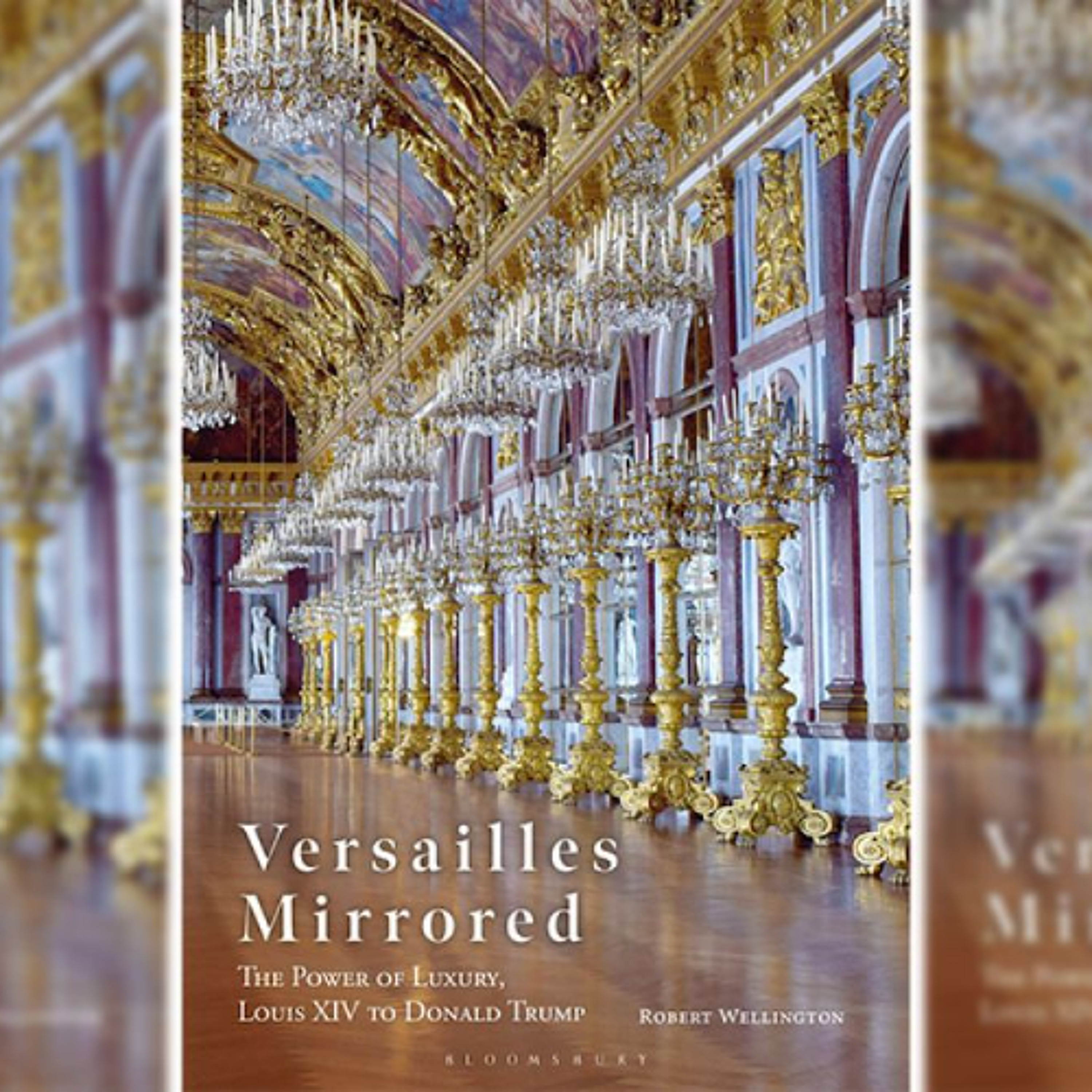
Robert Wellington was in conversation with Mathew Trinca on Roberts new book Versailles Mirrored. The Power of Luxury,Louis XIV to Donald Trump. Why has Louis XIV's Palace of Versailles, defining symbol of hedonistic opulence in 17th-century France and synonymous with the notion of the divine right of kings, continued to shape the aesthetics of cultural capital in the centuries since his death? In Versailles Mirrored, Robert Wellington tracks this enduring fascination with the Sun King's palace through eight case studies spanning the 17th to 21st centuries. The book demonstrates how the extravagant palace style began as a symbol of the state in the 17th century; how it was adopted by the nouveau riche to show off their financial success in the 19th century; and, remarkably, how that palace look returned to play a role in statecraft in the hands of US President Donald Trump. Wellington links the aristocratic architectural traditions of France, England, and Germany to North America through the lens of Versailles, French architecture, and the decorative arts. Opening with a brief overview of the history of Versailles and the political and cultural motivations of its creation, subsequent chapters address aristocratic buildings in France and Germany built by the Sun King's contemporaries; historicism in the 19th century in Britain, Germany, and America; and the present day, with Trump's buildings and Château Louis XIV, known as the 'world's most expensive home', purchased by the Crown Prince of Saudi Arabia.In uncovering the motivations of those patrons, the book ultimately reveals why Versailles remains a powerful point of reference for those who wish to flaunt their social, cultural, and political capital. Robert Wellington FSA is Associate Professor of Art History in the Centre for Art History and Art Theory, the Australian National University. He is an art historian with a special interest in the role of material culture in history making and cross-cultural exchange on one of the world's leading experts on the Palace of Versailles. He is a Fellow of the Society of Antiquaries, London and an expert judge on the ABCs upcoming Portrait Artist of the Year. Dr Mathew Trinca Talalin AM FAHA is Professor of Museum Practice at the Australian National University. He is Chair of the Cultural Facilities Corporation in Canberra and sits on several arts and cultural sector boards and advisory bodies. Matthew was formerly Director of the National Museum of Australia between 2014 to 2024, and worked in senior roles in the Museum from 2003. The vote of thanks was given by Helen Musa, arts editor of Canberra City news and convener of the Canberra Critics’ Circle.

Robert Wellington was in conversation with Mathew Trinca on Roberts new book Versailles Mirrored. The Power of Luxury,Louis XIV to Donald Trump. Why has Louis XIV's Palace of Versailles, defining symbol of hedonistic opulence in 17th-century France and synonymous with the notion of the divine right of kings, continued to shape the aesthetics of cultural capital in the centuries since his death? In Versailles Mirrored, Robert Wellington tracks this enduring fascination with the Sun King's palace through eight case studies spanning the 17th to 21st centuries. The book demonstrates how the extravagant palace style began as a symbol of the state in the 17th century; how it was adopted by the nouveau riche to show off their financial success in the 19th century; and, remarkably, how that palace look returned to play a role in statecraft in the hands of US President Donald Trump. Wellington links the aristocratic architectural traditions of France, England, and Germany to North America through the lens of Versailles, French architecture, and the decorative arts. Opening with a brief overview of the history of Versailles and the political and cultural motivations of its creation, subsequent chapters address aristocratic buildings in France and Germany built by the Sun King's contemporaries; historicism in the 19th century in Britain, Germany, and America; and the present day, with Trump's buildings and Château Louis XIV, known as the 'world's most expensive home', purchased by the Crown Prince of Saudi Arabia.In uncovering the motivations of those patrons, the book ultimately reveals why Versailles remains a powerful point of reference for those who wish to flaunt their social, cultural, and political capital. Robert Wellington FSA is Associate Professor of Art History in the Centre for Art History and Art Theory, the Australian National University. He is an art historian with a special interest in the role of material culture in history making and cross-cultural exchange on one of the world's leading experts on the Palace of Versailles. He is a Fellow of the Society of Antiquaries, London and an expert judge on the ABCs upcoming Portrait Artist of the Year. Dr Mathew Trinca Talalin AM FAHA is Professor of Museum Practice at the Australian National University. He is Chair of the Cultural Facilities Corporation in Canberra and sits on several arts and cultural sector boards and advisory bodies. Matthew was formerly Director of the National Museum of Australia between 2014 to 2024, and worked in senior roles in the Museum from 2003. The vote of thanks was given by Helen Musa, arts editor of Canberra City news and convener of the Canberra Critics’ Circle.
Interviews with Anupama Chopra Film Companion Anupama Chopra is a film critic, television anchor and book author. She has been writing about Bollywood since 1993. Her work has appeared in publications such as The New York Times, Hindustan Times, The Los Angeles Times and Vogue (India). Here you can find all of her interviews and conversations with Bollywood and Hollywood's leading actors and filmmakers. In short, everything you need to enhance your cinematic experience.Millions of listeners seek out Bingepods (Ideabrew Studios Network content) every day. Get in touch with us to advertise, join the network or click listen to  enjoy content by some of India's top audio [email protected] | Apple LJ Audio Yoga lawrence jay Experience transformative yoga with international instructor Lawrence 'LJ' Jay, now on Spotify. Trained in Vinyasa and Anusara, LJ also offers 'Cranial Yoga' and 'Somatic Slow', unique styles enhancing parasympathetic connectivity and emotional awareness. From Canada to Bali, his teachings span continents and styles. Tune in for a blend of traditional and innovative yoga, designed to guide you towards improLawrence stands as one of the most diverse yoga teachers on the planet, proficient in the dynamic sequences of Vinyasa Flow, and a certified Anusara teacher. Beyond these traditional styles Taittriyaka Upanishad by Unknown Loyal Books The word Upanishad (upa-ni-shad) consists of, "Upa" means "near;" "ni" means "down;" "shad" means "to sit." Thus, Upanishad is to sit down near the teacher to discuss, learn, practice, and experience. There are some 200 or more Upanishads. Some are lost and are only known about because of being referenced in other Upanishads. Most of the Upanishads were kept secret for centuries, only passed on to others orally in the form of Shloka (a category of verse line developed from the Vedic Anustubh meter).Taittiriya is a Sanskrit word that means "from Tittiri". The root of this name has been interpreted in two ways: "from Vedic sage Tittiri" or a collection of verses from mythical students who became Tittiris (birds, partridges) in order to gain knowledge.This Upanishad is divided into three sections called Vallis: Siksha (Pronunciation /Instruction) Valli , Ananda (bliss of Brahman) Valli , and Bhrigu (son of Varuna, the god of all water elements) Valli.The chronology of Taittriyaka Upanish Katha Upanishad by Unknown Loyal Books The word Upanishad (upa-ni-shad) consists of, "Upa" means "near;" "ni" means "down;" "shad" means "to sit." Thus, Upanishad is to sit down near the teacher to discuss, learn, practice, and experience. There are some 200 or more Upanishads. Some are lost and are only known about because of being referenced in other Upanishads.Most of the Upanishads were kept secret for centuries, only passed on to others orally in the form of Shloka (a category of verse line developed from the Vedic Anustubh meter).Katha-Upanishad is one the 11 principal Upanishads. Its chronology is contested as being between fifth century BCE and 1st millennium BCE.Katha (Sanskrit: कठ) literally means "distress". Katha Upanishad uses words that symbolically embed and creatively have multiple meanings. For example, a closely pronounced word Katha (Sanskrit: कथा) literally means "story, legend, conversation, speech, tale". All of these related meanings are relevant to the Katha Upanishad.The text presents Death as the T
URL copied to clipboard!