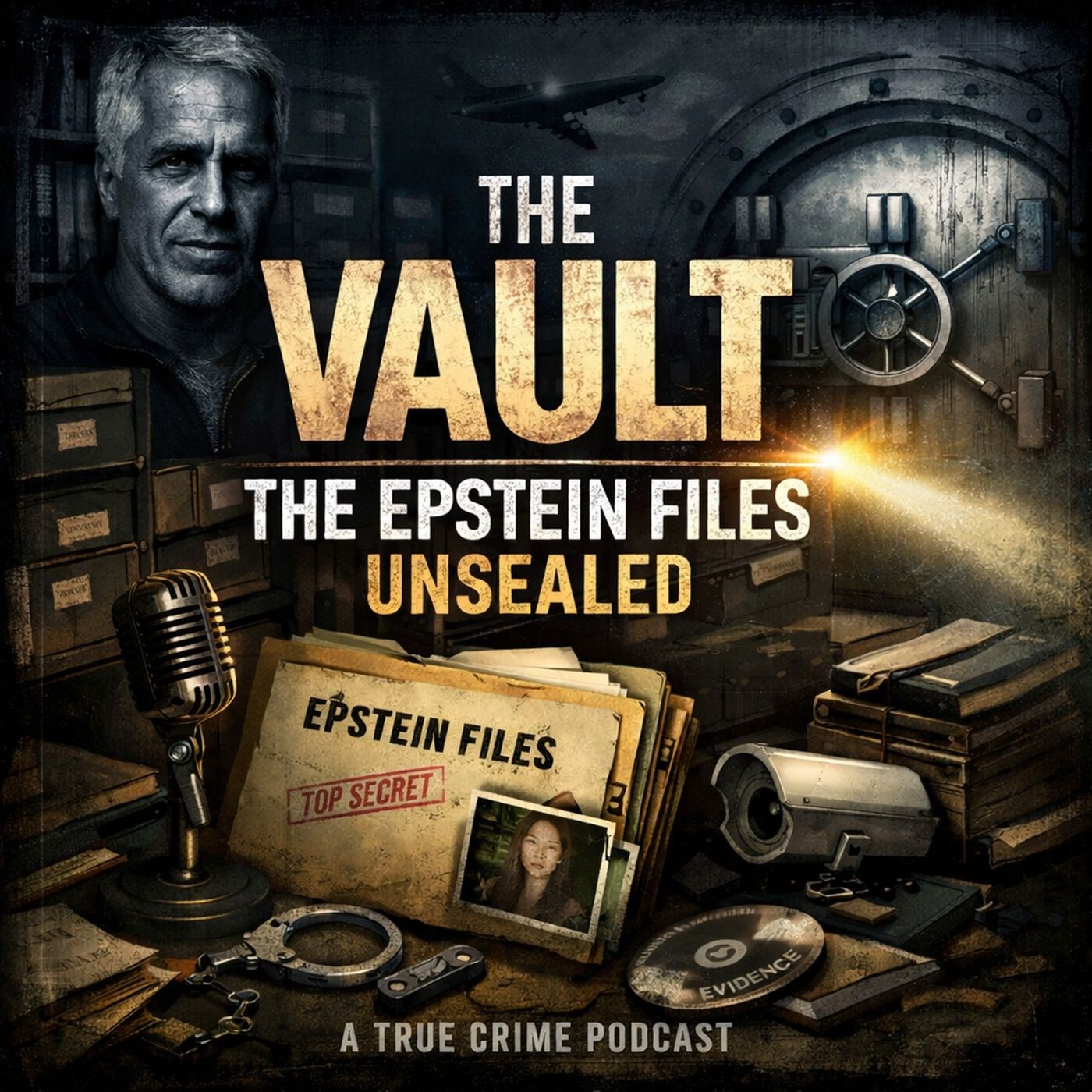
Mega Edition:  How Academia Not Only Welcomed Epstein But Protected Him (6/12/26) episode artwork

EPISODE · Jun 12, 2026 · 58 MIN

Mega Edition: How Academia Not Only Welcomed Epstein But Protected Him (6/12/26)

from The Vault: The Epstein Files · host Bobby Capucci

Jeffrey Epstein bought his way into higher education the same way he bought his way into so many elite spaces: with money, proximity, and the promise of access to even bigger money. At Harvard, he donated about $9.1 million between 1998 and 2008, including a $6.5 million gift that helped create the Program for Evolutionary Dynamics under Martin Nowak, giving Epstein a foothold inside one of the most prestigious universities in the world despite having no real academic credentials of his own. At MIT, the Media Lab accepted Epstein-connected donations totaling about $850,000 between 2002 and 2017, including money received after his 2008 conviction, while Epstein also served as a connector to other wealthy donors. The pattern was not complicated: Epstein used philanthropy as a laundering device for reputation, turning checks into offices, meetings, dinners, campus visits, faculty relationships, and the aura of intellectual legitimacy. Harvard’s own review confirmed the scale of his giving and his access, while MIT’s investigation showed that officials knew his status created problems and still allowed the relationship to continue.Once Epstein got inside those institutions, the protection came less through some formal public defense and more through silence, compartmentalization, prestige, and the willingness of important people to treat his money as separate from his crimes. Harvard said it did not accept gifts from Epstein after his 2008 conviction, but its review still found that Epstein continued visiting the Program for Evolutionary Dynamics dozens of times after that conviction, with access to campus space and faculty circles. MIT’s own report found that Epstein’s donations continued after his conviction and that the Media Lab tried to keep his name from public association with the money, which is exactly how reputational laundering works: take the cash, preserve the relationship, hide the stink. The result was that higher education gave Epstein what he craved—status, brainpower, proximity to Nobel-level scientists, and a way to present himself as a patron of big ideas instead of a convicted sex offender. In plain terms, Epstein did not sneak into academia; he paid his admission, and once he was inside, too many people decided the money, connections, and prestige were worth more than asking the obvious questions.to contact me:[email protected]

Jeffrey Epstein bought his way into higher education the same way he bought his way into so many elite spaces: with money, proximity, and the promise of access to even bigger money. At Harvard, he donated about $9.1 million between 1998 and 2008, including a $6.5 million gift that helped create the Program for Evolutionary Dynamics under Martin Nowak, giving Epstein a foothold inside one of the most prestigious universities in the world despite having no real academic credentials of his own. At MIT, the Media Lab accepted Epstein-connected donations totaling about $850,000 between 2002 and 2017, including money received after his 2008 conviction, while Epstein also served as a connector to other wealthy donors. The pattern was not complicated: Epstein used philanthropy as a laundering device for reputation, turning checks into offices, meetings, dinners, campus visits, faculty relationships, and the aura of intellectual legitimacy. Harvard’s own review confirmed the scale of his giving and his access, while MIT’s investigation showed that officials knew his status created problems and still allowed the relationship to continue.Once Epstein got inside those institutions, the protection came less through some formal public defense and more through silence, compartmentalization, prestige, and the willingness of important people to treat his money as separate from his crimes. Harvard said it did not accept gifts from Epstein after his 2008 conviction, but its review still found that Epstein continued visiting the Program for Evolutionary Dynamics dozens of times after that conviction, with access to campus space and faculty circles. MIT’s own report found that Epstein’s donations continued after his conviction and that the Media Lab tried to keep his name from public association with the money, which is exactly how reputational laundering works: take the cash, preserve the relationship, hide the stink. The result was that higher education gave Epstein what he craved—status, brainpower, proximity to Nobel-level scientists, and a way to present himself as a patron of big ideas instead of a convicted sex offender. In plain terms, Epstein did not sneak into academia; he paid his admission, and once he was inside, too many people decided the money, connections, and prestige were worth more than asking the obvious questions.to contact me:[email protected]

NOW PLAYING

Mega Edition: How Academia Not Only Welcomed Epstein But Protected Him (6/12/26)

0:00 58:56

No transcript for this episode yet

We transcribe on demand. Request one and we'll notify you when it's ready — usually under 10 minutes.

Big Old Life: Heather Blackbird interviews people on planet earth. Heather Blackbird loves asking questions. This podcast is a learning experience. Join me, Heather Blackbird, as I talk to people about their lives. Frequency of new episodes is a little all over the place and I'm learning as I go. Big Old Life is a small way of talking about the vastness of life, one person at a time. If you are reading this or found this podcast it's probably because someone you know gave you a link to it. :) Explicit Tales Of A Superstar DJ The Insomniac Spun seemingly out of nowhere from her complacent life in the corporate world, turned seemingly overnight from 16-Hour shift work and into the life of a literally starving artist and working musician, The Protagonist navigates her supposed rise to fame and superstardom on a journey through spiritual awakening, coming-of-age, and intimate self-realization--guided by an omnipresent force and equipped with the power of love, magic, and music. {Enter The Multiverse.} [The Festival Project] The Festival Project, Inc.™ is a multidimensional multimedia platform which encompasses exploratory and artistic social personifications and expressions on cosmic theory, spirituality, growth, health & wellness, philosophy and theoretic dynamics in entertainment such as music, design, film, television, radio, dance and festival culture, art, fashion, literature, and science. The Festival Project™ and its subsidiary Non-Profit, The Collective Complex © aims to challenge modern artistic and philosop Explicit Bitcoin Is Dead Trey Carson Welcome to Bitcoin is Dead, the ultimate Bitcoin variety show where host Trey takes you on a journey through the ever-evolving world of Bitcoin. Each episode brings new personalities, fascinating locations, and insightful conversations with politicians, educators, and innovators shaping the future of Bitcoin. Whether you're a seasoned Bitcoiner or just starting your journey, tune in for thought-provoking discussions, unique perspectives, and a deep dive into the ideas and people driving the Bitcoin revolution. Explicit The Sacred +Profane Podcast nephtaragrace The Sacred + Profane Podcast is a provocative conversation dedicated to cementing a better future for all. We specialize in unpacking the nuances of what is considered sacred and profane, particularly focusing on sex, death, and all that pertains to the circle of life. Our aim in focusing on such ”taboo” subject matter is to demystify what is unconscious, bring to light what has been known for centuries as ”the occult,” and empower the rapid transformation that is occurring on the Planet. Explicit

Frequently Asked Questions

How long is this episode of The Vault: The Epstein Files?

This episode is 58 minutes long.

When was this The Vault: The Epstein Files episode published?

This episode was published on June 12, 2026.

What is this episode about?

Jeffrey Epstein bought his way into higher education the same way he bought his way into so many elite spaces: with money, proximity, and the promise of access to even bigger money. At Harvard, he donated about $9.1 million between 1998 and 2008,...

Can I download this The Vault: The Epstein Files episode?

Yes, you can download this episode by clicking the download button on the episode player, or subscribe to the podcast in your preferred podcast app for automatic downloads.
URL copied to clipboard!