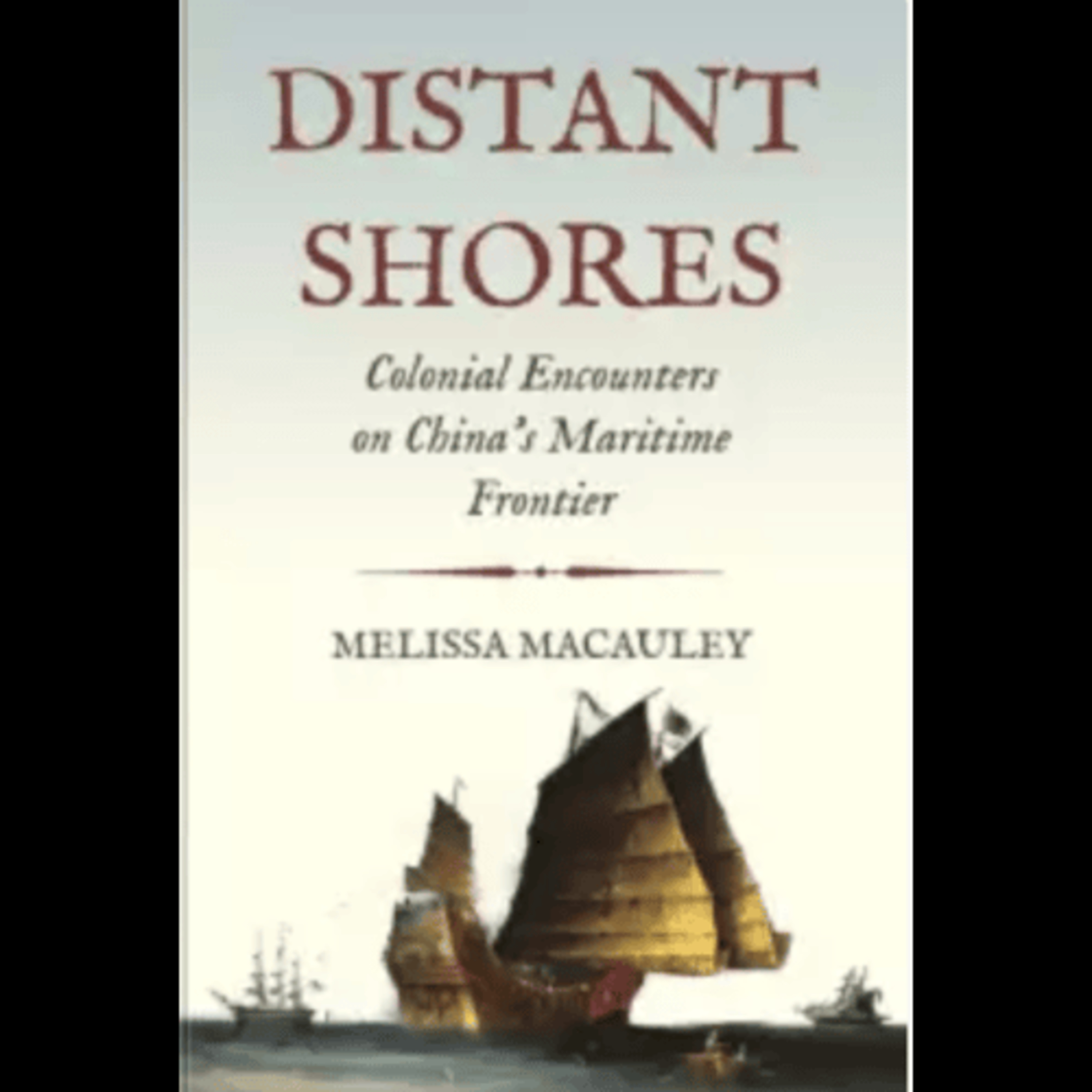
Melissa Macauley, "Distant Shores: Colonial Encounters on China’s Maritime Frontier," (Princeton University Press, 2021) episode artwork

EPISODE · Dec 24, 2024 · 12 MIN

Melissa Macauley, "Distant Shores: Colonial Encounters on China’s Maritime Frontier," (Princeton University Press, 2021)

from The New East Asian Studies Podcasts in the Age of AI · host Barton Qian

A pioneering history that transforms our understanding of the colonial era and China's place in itChina has conventionally been considered a land empire whose lack of maritime and colonial reach contributed to its economic decline after the mid-eighteenth century. Distant Shores challenges this view, showing that the economic expansion of southeastern Chinese rivaled the colonial ambitions of Europeans overseas.In a story that dawns with the Industrial Revolution and culminates in the Great Depression, Melissa Macauley explains how sojourners from an ungovernable corner of China emerged among the commercial masters of the South China Sea. She focuses on Chaozhou, a region in the great maritime province of Guangdong, whose people shared a repertoire of ritual, cultural, and economic practices. Macauley traces how Chaozhouese at home and abroad reaped many of the benefits of an overseas colonial system without establishing formal governing authority. Their power was sustained instead through a mosaic of familial, fraternal, and commercial relationships spread across the ports of Bangkok, Singapore, Saigon, Hong Kong, Shanghai, and Swatow. The picture that emerges is not one of Chinese divergence from European modernity but rather of a convergence in colonial sites that were critical to modern development and accelerating levels of capital accumulation.A magisterial work of scholarship, Distant Shores reveals how the transoceanic migration of Chaozhouese laborers and merchants across a far-flung maritime world linked the Chinese homeland to an ever-expanding frontier of settlement and economic extraction. Chinese maritime history Distant Shores book analysis Chaozhou economic expansion Melissa Macauley author Chinese colonial ambitions South China Sea trade networks Chaozhouese overseas migration Guangdong maritime province China's colonial era history Southeast Asia Chinese merchants Chinese economic influence abroad Chinese diaspora in Bangkok, Singapore, Saigon 19th-century Chinese trade routes Chinese commercial power Capital accumulation in colonial Asia Chinese convergence with European modernity Chaozhouese cultural practices Maritime commerce in colonial Asia Chinese labor migration history Transoceanic Chinese networks East Asian Studies Podcast Global History Podcast Global History

A pioneering history that transforms our understanding of the colonial era and China's place in itChina has conventionally been considered a land empire whose lack of maritime and colonial reach contributed to its economic decline after the mid-eighteenth century. Distant Shores challenges this view, showing that the economic expansion of southeastern Chinese rivaled the colonial ambitions of Europeans overseas.In a story that dawns with the Industrial Revolution and culminates in the Great Depression, Melissa Macauley explains how sojourners from an ungovernable corner of China emerged among the commercial masters of the South China Sea. She focuses on Chaozhou, a region in the great maritime province of Guangdong, whose people shared a repertoire of ritual, cultural, and economic practices. Macauley traces how Chaozhouese at home and abroad reaped many of the benefits of an overseas colonial system without establishing formal governing authority. Their power was sustained instead through a mosaic of familial, fraternal, and commercial relationships spread across the ports of Bangkok, Singapore, Saigon, Hong Kong, Shanghai, and Swatow. The picture that emerges is not one of Chinese divergence from European modernity but rather of a convergence in colonial sites that were critical to modern development and accelerating levels of capital accumulation.A magisterial work of scholarship, Distant Shores reveals how the transoceanic migration of Chaozhouese laborers and merchants across a far-flung maritime world linked the Chinese homeland to an ever-expanding frontier of settlement and economic extraction. Chinese maritime history Distant Shores book analysis Chaozhou economic expansion Melissa Macauley author Chinese colonial ambitions South China Sea trade networks Chaozhouese overseas migration Guangdong maritime province China's colonial era history Southeast Asia Chinese merchants Chinese economic influence abroad Chinese diaspora in Bangkok, Singapore, Saigon 19th-century Chinese trade routes Chinese commercial power Capital accumulation in colonial Asia Chinese convergence with European modernity Chaozhouese cultural practices Maritime commerce in colonial Asia Chinese labor migration history Transoceanic Chinese networks East Asian Studies Podcast Global History Podcast Global History

NOW PLAYING

Melissa Macauley, "Distant Shores: Colonial Encounters on China’s Maritime Frontier," (Princeton University Press, 2021)

0:00 12:19

No transcript for this episode yet

We transcribe on demand. Request one and we'll notify you when it's ready — usually under 10 minutes.

Frequently Asked Questions

How long is this episode of The New East Asian Studies Podcasts in the Age of AI?

This episode is 12 minutes long.

When was this The New East Asian Studies Podcasts in the Age of AI episode published?

This episode was published on December 24, 2024.

What is this episode about?

A pioneering history that transforms our understanding of the colonial era and China's place in itChina has conventionally been considered a land empire whose lack of maritime and colonial reach contributed to its economic decline after the...

Can I download this The New East Asian Studies Podcasts in the Age of AI episode?

Yes, you can download this episode by clicking the download button on the episode player, or subscribe to the podcast in your preferred podcast app for automatic downloads.
URL copied to clipboard!