
EPISODE · Jan 13, 2022 · 6 MIN
Melody Range Rule
from Ray Harmony · host Hack Music Theory
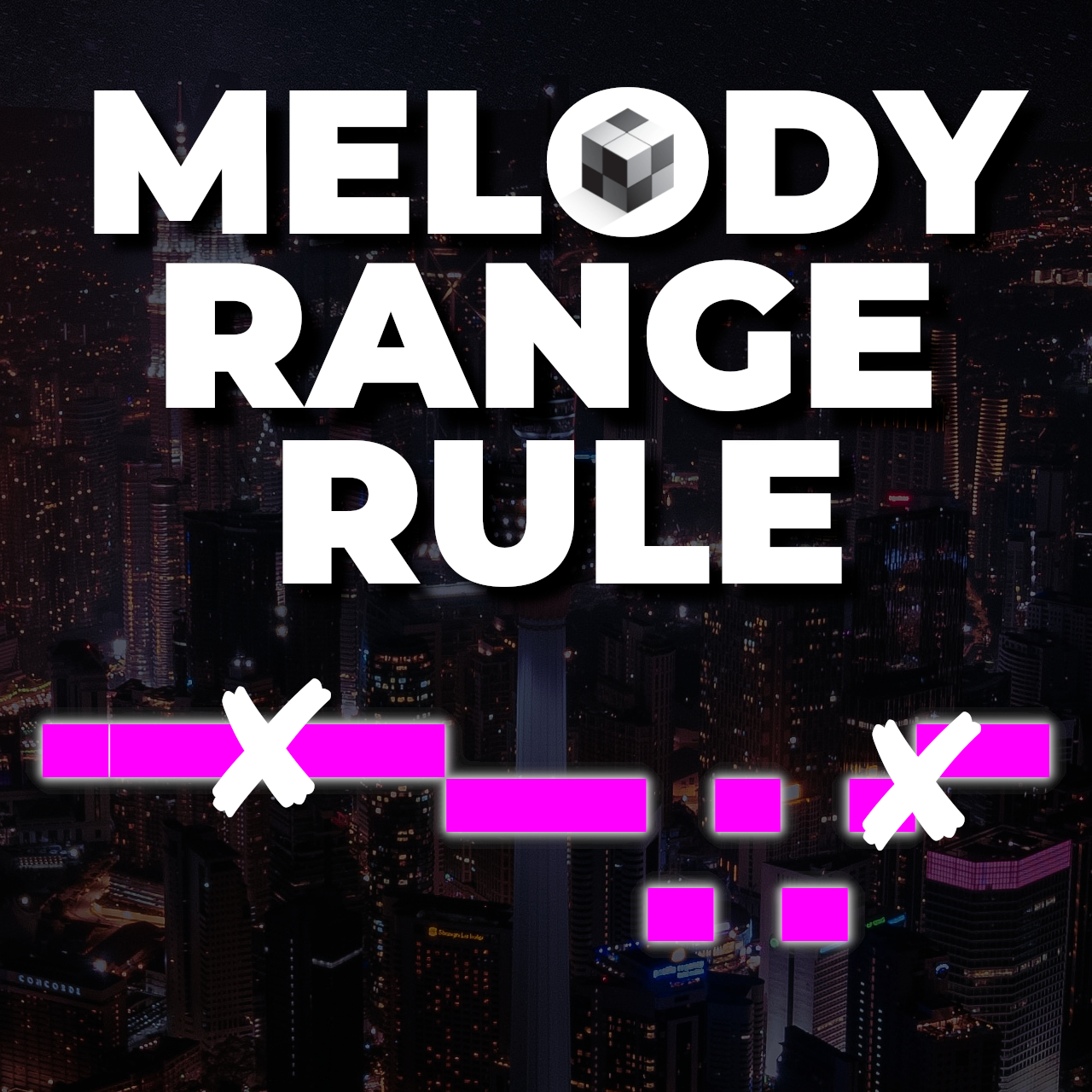
Melody Range Rule In this lesson you’ll learn a common fault that many songwriters and producers make when writing melodies. More importantly, though, you’ll learn our theory hack for quickly and easily fixing this fault. But first… Tea! Hello revolutionary music makers, we are Kate and Ray Harmony (AKA Revolution Harmony), and welcome to Hack Music Theory, the fast, easy and fun way to make music! If you’re new to theory, or if you just want a refresher, then read our free book "12 Music Theory Hacks to Learn Scales & Chords". It’ll give you a super solid music theory foundation in just 30 minutes. The free download is below. Enjoy! THE FAULT Firstly, just to clarify. A fault is not a mistake! Music is an art, so if you’re making music from your heart, then there cannot be any mistakes. But, when songwriters and producers don’t understand theory, which is the grammar of music, they’re not able to fully express themselves. Just like if someone was trying to write a poem in a language they didn’t speak. The resulting work of art will undoubtedly have weaknesses. And a fault is defined as a weakness. So, what’s the fault in this melody? Well, the melody’s range is too small. The range of a melody is the interval from its lowest note (C) to its highest note (F). In this melody, that distance is only five semitones. That’s small! Listening to a melody with a small range is like listening to a person talking who doesn’t vary their pitch. It’s monotonous, which gets boring! So, just like in speech, a big range will bring interest and life into your melodies. And by the way, our example is in the key of F Lydian, which is all the white notes from F to F, and the tempo is 90 BPM. And if you’re not familiar with the Lydian mode, you can use the Mode Hack in our Songwriting & Producing PDF. THE FIX Okay, so now that you can identify the fault, how do you fix it? Well, it’s shockingly easy to fix, as you simply need to move the MIDI notes up and down to extend your melody’s range. In practice, however, it’s a little more tricky than that. So, here’s our step-by-step method for creating a big range in your melodies: STEP 1. CLIMAX Start by deciding where the climax of your melody will happen (i.e. the highest note). Using the concept of counterpoint, we suggest playing your melody’s highest note over your bass line’s lowest note, or at least one of its lowest notes. We chose to play our highest note over the first chord, Fmaj. STEP 2. HIGHEST Once you know where your highest note is going, you need to decide on what that note will actually be. A good place to start is with the 3 of your chord below, because the 3 is the most powerful note*. For example, over an Fmaj chord, the 3 is the note A. And obviously you don’t have to use the 3 as your highest note, it’s just a good note to get your creative juices flowing. We actually used the 2 as our highest note. So over the Fmaj chord, that’s G. *To learn why the 3 is the most powerful note, read Hack 9 in our free book (link below). STEP 3. LOWEST Next, do the opposite: Decide on where the lowest note of your melody is going, and what it will be. We suggest playing your melody’s lowest note over your bass line’s highest note, or at least one of its highest notes. STEP 4. CONTOUR Now that you’ve got your highest and lowest notes in place, you can create a flowing contour to join them up. If you want a big jump in your contour, that’s awesome, but use those large intervals very sparingly, as they can be overwhelming. For most of your melody, you’ll want to use smaller intervals. IDEAL RANGE Right, now you’re probably wondering: What’s the ideal range for a melody? Well, just like every person in the world is different, every melody is different too. So while there’s no one-size-fits-all range that’s ideal, you’ll know when your melody’s range is too small, because it will be boring and lifeless. And you’ll know when your melody’s range is too big, because it will be really difficult to sing. Somewhere between those two guidelines is where you’ll find the ideal range for each melody. And yes, your melody should be singable even if you’re writing it for synth, or guitar, or some other instrument. Great melodies are singable melodies! Always. THE RULE So to conclude. Our Melody Range Rule is that your melody must have a big enough range to keep it interesting and full of life, but not too big so that it’s hard to sing. Lastly, if you need more help writing melodies, then simply use our Melody Checklist, which tells you exactly what to do and what not to do in your melodies. The Melody Checklist can be found in our Songwriting & Producing PDF. Thanks for being here in the Hack Music Theory community, you are truly valued, and we're excited to hang out with you again soon! Free Book Wooohooo!!! You’re a mere 30 minutes away from being even smarter than you already are. Just head on over to your inbox now for your free download. There was an error submitting your subscription. Please try again. “The most brilliant, fast, easy & fun music theory book I’ve ever seen!” DEREK SIVERS, CD Baby founder We use this field to detect spam bots. If you fill this in, you will be marked as a spammer. DOWNLOAD FREE BOOK /* Layout */ .ck_form { /* divider image */ background: #EAE9EA url(data:image/gif;base64,R0lGODlhAQADAIABAMzMzP///yH/C1hNUCBEYXRhWE1QPD94cGFja2V0IGJlZ2luPSLvu78iIGlkPSJXNU0wTXBDZWhpSHpyZVN6TlRjemtjOWQiPz4gPHg6eG1wbWV0YSB4bWxuczp4PSJhZG9iZTpuczptZXRhLyIgeDp4bXB0az0iQWRvYmUgWE1QIENvcmUgNS41LWMwMTQgNzkuMTUxNDgxLCAyMDEzLzAzLzEzLTEyOjA5OjE1ICAgICAgICAiPiA8cmRmOlJERiB4bWxuczpyZGY9Imh0dHA6Ly93d3cudzMub3JnLzE5OTkvMDIvMjItcmRmLXN5bnRheC1ucyMiPiA8cmRmOkRlc2NyaXB0aW9uIHJkZjphYm91dD0iIiB4bWxuczp4bXA9Imh0dHA6Ly9ucy5hZG9iZS5jb20veGFwLzEuMC8iIHhtbG5zOnhtcE1NPSJodHRwOi8vbnMuYWRvYmUuY29tL3hhcC8xLjAvbW0vIiB4bWxuczpzdFJlZj0iaHR0cDovL25zLmFkb2JlLmNvbS94YXAvMS4wL3NUeXBlL1Jlc291cmNlUmVmIyIgeG1wOkNyZWF0b3JUb29sPSJBZG9iZSBQaG90b3Nob3AgQ0MgKE1hY2ludG9zaCkiIHhtcE1NOkluc3RhbmNlSUQ9InhtcC5paWQ6MUQ5NjM5RjgxQUVEMTFFNEJBQTdGNTQwMjc5MTZDOTciIHhtcE1NOkRvY3VtZW50SUQ9InhtcC5kaWQ6MUQ5NjM5RjkxQUVEMTFFNEJBQTdGNTQwMjc5MTZDOTciPiA8eG1wTU06RGVyaXZlZEZyb20gc3RSZWY6aW5zdGFuY2VJRD0ieG1wLmlpZDoxRDk2MzlGNjFBRUQxMUU0QkFBN0Y1NDAyNzkxNkM5NyIgc3RSZWY6ZG9jdW1lbnRJRD0ieG1wLmRpZDoxRDk2MzlGNzFBRUQxMUU0QkFBN0Y1NDAyNzkxNkM5NyIvPiA8L3JkZjpEZXNjcmlwdGlvbj4gPC9yZGY6UkRGPiA8L3g6eG1wbWV0YT4gPD94cGFja2V0IGVuZD0iciI/PgH//v38+/r5+Pf29fTz8vHw7+7t7Ovq6ejn5uXk4+Lh4N/e3dzb2tnY19bV1NPS0dDPzs3My8rJyMfGxcTDwsHAv769vLu6ubi3trW0s7KxsK+urayrqqmop6alpKOioaCfnp2cm5qZmJeWlZSTkpGQj46NjIuKiYiHhoWEg4KBgH9+fXx7enl4d3Z1dHNycXBvbm1sa2ppaGdmZWRjYmFgX15dXFtaWVhXVlVUU1JRUE9OTUxLSklIR0ZFRENCQUA/Pj08Ozo5ODc2NTQzMjEwLy4tLCsqKSgnJiUkIyIhIB8eHRwbGhkYFxYVFBMSERAPDg0MCwoJCAcGBQQDAgEAACH5BAEAAAEALAAAAAABAAMAAAICRFIAOw==) repeat-y center top; font-family: 'Montserrat'; line-height: 1.5em; overflow: hidden; color: #000000; font-size: 16px; border-top: none; border-top-color: #666666; border-bottom: none; border-bottom-color: #3d3d3d; -webkit-box-shadow: none; -moz-box-shadow: none; box-shadow: none; clear: both; margin: 0px 0px; } .ck_form, .ck_form * { -webkit-box-sizing: border-box; -moz-box-sizing: border-box; box-sizing: border-box; } #ck_subscribe_form { clear: both; } /* Element Queries — uses JS */ .ck_form_content, .ck_form_fields { width: 50%; float: left; padding: 5%; } .ck_form.ck_horizontal { } .ck_form_content { border-bottom: none; } .ck_form.ck_vertical { background: #fff; } .ck_vertical .ck_form_content, .ck_vertical .ck_form_fields { padding: 10%; width: 100%; float: none; } .ck_vertical .ck_form_content { border-bottom: 1px dotted #aaa; overflow: hidden; } /* Trigger the vertical layout with media queries as well */ @media all and (max-width: 499px) { .ck_form { background: #fff; } .ck_form_content, .ck_form_fields { padding: 10%; width: 100%; float: none; } .ck_form_content { border-bottom: 1px dotted #aaa; } } /* Content */ .ck_form_content h3 { margin: 0px 0px 0px; font-size: 0px; padding: 0px; } .ck_form_content p { font-size: 14px; } .ck_image { float: left; margin-right: 5px; } /* Form fields */ .ck_errorArea { display: none; } #ck_success_msg { padding: 10px 10px 0px; border: solid 1px #ddd; background: #eee; } .ck_label { font-size: 14px; font-weight: bold; } .ck_form input[type="text"] { font-size: 16px; text-align: center; margin-top: 20px; margin-bottom: 0px; padding: 8px 8px; width: 100%; border: 1px solid #d6d6d6; /* stroke */ -moz-border-radius: 4px; -webkit-border-radius: 4px; border-radius: 30px; /* border radius */ background-color: #fff; /* layer fill content */ height: auto; } .ck_form input[type="email"] { font-size: 16px; text-align: center; margin-top: 0px; margin-bottom: 15px; padding: 8px 8px; width: 100%; border: 1px solid #d6d6d6; /* stroke */ -moz-border-radius: 4px; -webkit-border-radius: 4px; border-radius: 30px; /* border radius */ background-color: #fff; /* layer fill content */ height: auto; } .ck_form input[type="text"]:focus, .ck_form input[type="email"]:focus { outline: none; border-color: #aaa; } .ck_checkbox { padding: 10px 0px 10px 20px; display: block; clear: both; } .ck_checkbox input.optIn { margin-left: -20px; margin-top: 0; } .ck_form .ck_opt_in_prompt { margin-left: 4px; } .ck_form .ck_opt_in_prompt p { display: inline; } .ck_form .ck_subscribe_button { width: 100%; color: #fff; margin: 0px 0px 0px; padding: 8px 8px; font-size: 18px; background: #c83232; -moz-border-radius: 4px; -webkit-border-radius: 4px; border-radius: 30px; /* border radius */ cursor: pointer; border: none; text-shadow: none; } .ck_form .ck_guarantee { color: #626262; font-size: 12px; text-align: center; padding: 5px 0px; display: block; } .ck_form .ck_powered_by { display: block; color: #aaa; } .ck_form .ck_powered_by:hover { display: block; color: #444; } .ck_converted_content { display: none; padding: 5%; background: #fff; } /* v6 */ .ck_form_v6 #ck_success_msg { padding: 0px 10px; } @media all and (max-width: 403px) { .ck_form_v6.ck_modal .ck_close_link { top: 30px; } } @media all and (min-width: 404px) and (max-width: 499px) { .ck_form_v6.ck_modal .ck_close_link { top: 57px; } } Podcast Listen below, or on any podcast app.
Embed this episode
Ready to play
Melody Range Rule
No transcript for this episode yet
Similar Episodes
No similar episodes found.