
EPISODE · Aug 9, 2026 · 3 MIN
Mental Health
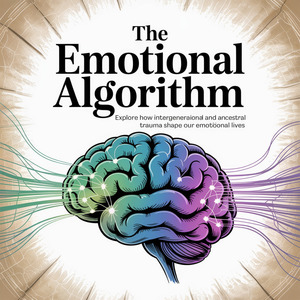
Mental health is often discussed as something personal, something that lives entirely inside our own minds. But when we look more closely, we begin to see that our emotional lives are shaped not only by our individual experiences, but also by the stories, stresses, and survival strategies passed down through generations. In this episode, we explore how intergenerational trauma and ancestral trauma can influence mental health, why the body and brain hold onto emotional patterns, and what healing can look like when we understand that some of our struggles may not have started with us. One of the most important ideas in emotional psychology is that trauma does not only live in memory. It also lives in the nervous system. When a person experiences chronic stress, fear, neglect, or instability, the brain learns to stay alert. Over time, that state can become the default. For many people, this is not just a response to their own childhood or adult experiences. It can also reflect patterns inherited from parents and grandparents who lived through hardship, displacement, violence, poverty, or silence. Mental health is deeply affected by these learned survival responses, even when we do not fully understand where they came from. Neuroscience helps explain why inherited emotional patterns can feel so powerful. The brain is constantly scanning for safety, and the emotional centers of the brain are closely connected to the body’s stress response. If earlier generations had to suppress emotions to survive, avoid conflict to stay safe, or remain hypervigilant in dangerous environments, those behaviors can be modeled, reinforced, and passed down in families. Children learn not only from what is said, but from what is felt in the home. A family system shaped by fear may teach a child to expect danger. A family system shaped by grief may teach emotional shutdown. These patterns can become part of a person’s mental health landscape long before they have words for it. Another key piece of healing is recognizing that inherited pain often shows up as self-blame. People may think, “Why am I like this?” or “Why do I react so strongly?” But many emotional responses are not signs of weakness. They are signs that the nervous system has learned to protect itself. When we approach mental health with compassion instead of judgment, we create room for change. Therapy, mindfulness, somatic practices, and supportive relationships can help the brain and body relearn safety. Naming the pattern is often the first step in loosening its grip. Once we understand that a reaction may be protective rather than personal failure, healing becomes more possible. Healing inherited patterns does not mean erasing the past. It means making space for choice where there once was only survival. It means noticing what we carry, honoring where it came from, and asking what we want to pass forward instead. Mental health improves when we can hold both truth and tenderness: the truth that trauma can echo across generations, and the tenderness that says those echoes can soften with awareness, support, and care. We may not be able to change what was handed down, but we can change how it lives in us. And that, in itself, is a powerful form of healing. Next step: Rewrite Your Emotional Legacy With The Generational Algorithm — https://www.poddyhost.com/go/5038?src=rss
Embed this episode
Ready to play
Mental Health
No transcript for this episode yet
Similar Episodes
No similar episodes found.
Similar Podcasts
No similar podcasts found.