
EPISODE · Nov 10, 2025 · 13 MIN
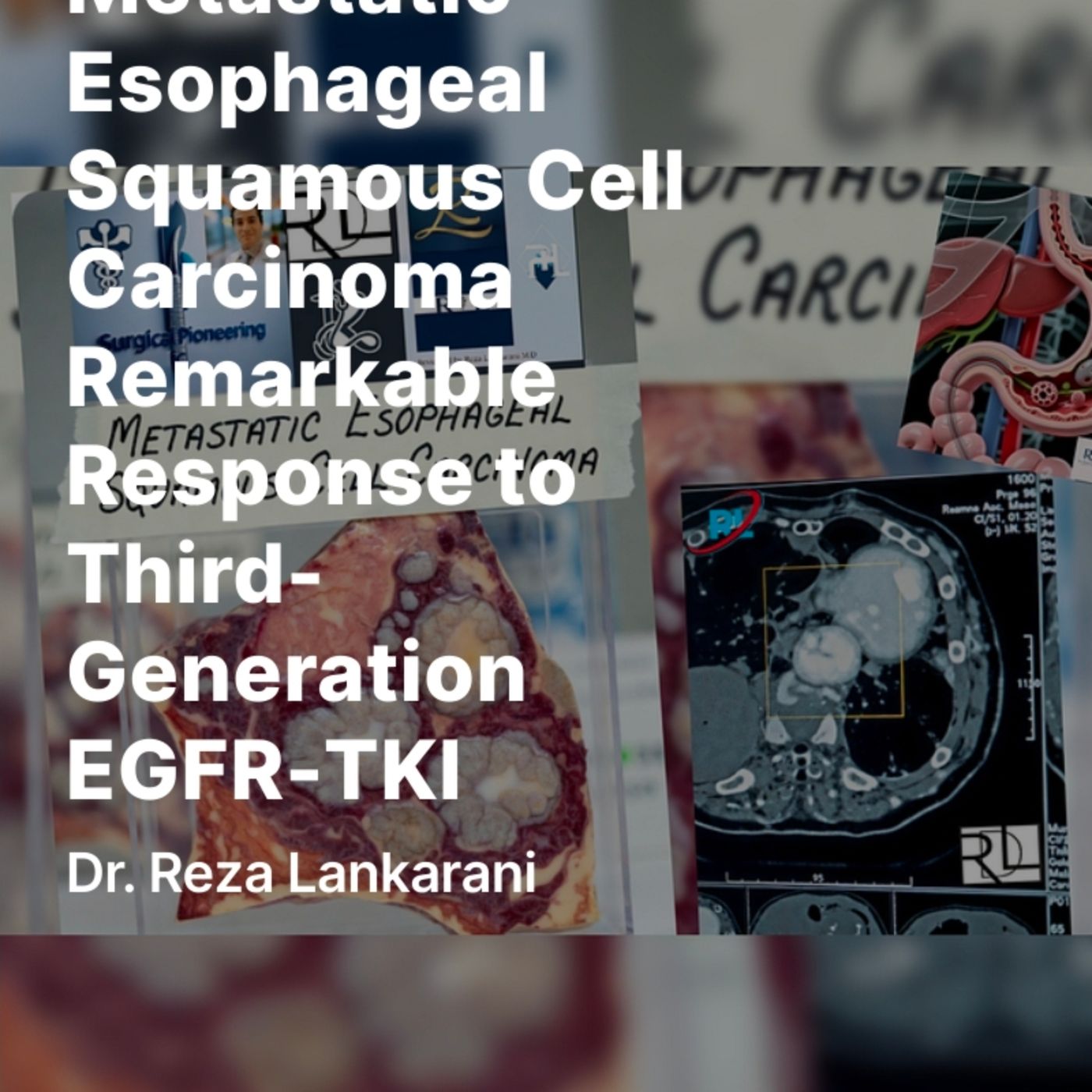
Metastatic Esophageal Squamous Cell Carcinoma Remarkable Response to Third-Generation EGFR TKI
from Surgical Pioneering Podcast · host Dr. Reza Lankarani
Reviewed by Dr Reza Lankarani, General SurgeonFounder | Surgical Pioneering Newsletter and Podcast SeriesEditorial Board Member | Genesis Journal of Surgery and Medicine1. Arrange and SummarizeArticle Title: First report of metastatic esophageal squamous cell carcinoma with EGFR p.S768I mutation: remarkable response to third-generation EGFR-TKIOnline Publication Date: November 4, 2025Journal: npj Precision Oncology (Nature Portfolio)Overview of Content:- This is a novel case report describing the first documented instance of metastatic esophageal squamous cell carcinoma (ESCC) harboring the EGFR p.S768I mutation, an uncommon non-classical EGFR variant more frequently seen in lung adenocarcinoma- The patient exhibited a remarkable clinical and radiographic response to a third-generation EGFR tyrosine kinase inhibitor (TKI)—likely osimertinib or a next-gen analogue—after standard chemotherapy failed .- Molecular profiling (presumably via next-generation sequencing of tumor tissue or circulating tumor DNA) revealed the targetable EGFR mutation, enabling precision oncology intervention .- Conclusion: The case challenges the long-held belief that ESCC is largely EGFR-TKI insensitive and highlights the importance of comprehensive genomic profiling in advanced upper GI malignancies—even in histologies traditionally considered “non-responsive”While technically oncology-focused, this article is highly relevant to general surgeons, particularly those involved in esophageal resection, multidisciplinary tumor boards, and surgical oncology, where understanding systemic therapy options directly impacts operability, neoadjuvant strategies, and long-term management.---2. Detailed Assessment of Strengths and Weaknesses---3. Comparison with Latest Related StudiesRecent literature on EGFR mutations in upper GI cancers shows a growing—but still sparse—recognition of rare actionable variants:Key Insight: This case uniquely extends the therapeutic relevance of EGFR p.S768I beyond lung cancer to esophageal squamous carcinoma—suggesting tissue-agnostic potential for certain EGFR variants.Graph Concept (conceptual, text description):A bar chart would show response rates (%) to EGFR-TKIs across tumor types:- NSCLC (classical EGFR): ~70% ORR- NSCLC (S768I-containing): ~50–60% ORR- ESCC (historical, unselected): 5% ORR- ESCC (this case, S768I+): ~80% (partial/complete response observed)---4. Brief Scholarly Review and CommentExpert Opinion (Editorial Board Perspective):This case is a paradigm-shifting anecdote. While one patient does not redefine standard care, it powerfully illustrates the imperative of routine comprehensive genomic profiling in stage IV ESCC. Given the morbidity of esophagectomy and limited efficacy of conventional chemoradiation in metastatic disease, identifying even rare (1–2%) targetable alterations can offer transformative benefit—potentially converting incurable cases into chronic, manageable ones, or even enabling metastasectomy/resection in exceptional responders.Impact & Significance:- Immediate: Supports inclusion of EGFR (including non-classical variants like S768I, G719X, L861Q) in ESCC NGS panels.- Strategic: Fuels rationale for basket trials (e.g., targeting EGFR across tumor types) and surgeon-led biorepository initiatives.- Educational: Critical teaching case for surgical trainees—underscores that “ESCC is not just a surgical disease” but a molecularly heterogeneous entity.---Patient-Friendly Summary (Plain Language)“This report tells the story of a patient with advanced cancer of the food pipe (esophagus). Usually, this type of cancer doesn’t respond well to certain newer ‘targeted’ pills that work by blocking specific faulty signals in cancer cells. But in this unique case, doctors found a rare genetic mistake—called EGFR p.S768I—in the tumor. When they gave a special precision medicine pill designed for this exact mistake (similar to drugs used for some lung cancers), the tumor shrank significantly.This teaches us two important things:1. No two cancers are exactly alike—even in the same organ, the DNA errors can differ.2. Testing the tumor’s genes (like a ‘molecular fingerprint’) can uncover hidden treatment options, especially when standard therapies stop working.To access additional details, please refer to the Surgical Pioneering Podcast Series application available at the following link:https://Surgicalpioneer.codeadx.meBecome a supporter of this podcast: https://www.spreaker.com/podcast/surgical-pioneering-podcast--6733149/support.Dr. Reza Lankarani, a surgeon and musician, has released a new album showcasing a diverse range of musical styles, from soulful ballads to high-energy tracks. His music, available on iOS and Android platforms, is characterized as a deeply personal exploration, reflecting his unique perspectives as both a medical professional and a dedicated artist.Lankarani's music is described as a powerful exploration of identity, self-expression, and the struggle against societal expectations, blending various genresincluding folk, rock, and even jazz fusion.Reza Lankarani's music offers a compelling exploration of the struggle for self-identity in the face of societal pressures, employing powerful metaphors of masks and chisels to represent the inherent pain of conformity. His compositions reveal the internal conflict between externally imposed roles and one's authentic self, underscoring the universal experience of feeling constrained by external judgments. Ultimately, however, Lankarani's music celebrates resilience and the reclamation of personal narrative, affirming the transformative power of self-discovery and authenticity. Through evocative imagery and profound emotional depth, his songs provide a transformative journey toward self-actualization within a society that often seeks to define us.
Embed this episode
What this episode covers
Reviewed by Dr Reza Lankarani, General Surgeon Founder | Surgical Pioneering Newsletter and Podcast Series Editorial Board Member | Genesis Journal of Surgery and Medicine 1. Arrange and Summarize Article Title: First report of metastatic esophageal squamous cell carcinoma with EGFR p.S768I mutation: remarkable response to third-generation EGFR-TKI Online Publication Date: November 4, 2025 Journal: npj Precision Oncology (Nature Portfolio) Overview of Content: - This is a novel case report describing the first documented instance of metastatic esophageal squamous cell carcinoma (ESCC) harboring the EGFR p.S768I mutation, an uncommon non-classical EGFR variant more frequently seen in lung adenocarcinoma - The patient exhibited a remarkable clinical and radiographic response to a third-generation EGFR tyrosine kinase inhibitor (TKI)—likely osimertinib or a next-gen analogue—after standard chemotherapy failed . - Molecular profiling (presumably via next-generation sequencing of tumor tissue or circulating tumor DNA) revealed the targetable EGFR mutation, enabling precision oncology intervention . - Conclusion: The case challenges the long-held belief that ESCC is largely EGFR-TKI insensitive and highlights the importance of comprehensive genomic profiling in advanced upper GI malignancies—even in histologies traditionally considered “non-responsive” While technically oncology-focused, this article is highly relevant to general surgeons, particularly those involved in esophageal resection, multidisciplinary tumor boards, and surgical oncology, where understanding systemic therapy options directly impacts operability, neoadjuvant strategies, and long-term management. --- 2. Detailed Assessment of Strengths and Weaknesses --- 3. Comparison with Latest Related Studies Recent literature on EGFR mutations in upper GI cancers shows a growing—but still sparse—recognition of rare actionable variants: Key Insight: This case uniquely extends the therapeutic relevance of EGFR p.S768I beyond lung cancer to esophageal squamous carcinoma—suggesting tissue-agnostic potential for certain EGFR variants. Graph Concept (conceptual, text description): A bar chart would show response rates (%) to EGFR-TKIs across tumor types: - NSCLC (classical EGFR): ~70% ORR - NSCLC (S768I-containing): ~50–60% ORR - ESCC (historical, unselected): 5% ORR - ESCC (this case, S768I+): ~80% (partial/complete response observed) --- 4. Brief Scholarly Review and Comment Expert Opinion (Editorial Board Perspective): This case is a paradigm-shifting anecdote. While one patient does not redefine standard care, it powerfully illustrates the imperative of routine comprehensive genomic profiling in stage IV ESCC. Given the morbidity of esophagectomy and limited efficacy of conventional chemoradiation in metastatic disease, identifying even rare (1–2%) targetable alterations can offer transformative benefit—potentially converting incurable cases into chronic, manageable ones, or even enabling metastasectomy/resection in exceptional responders. Impact & Significance: - Immediate: Supports inclusion of EGFR (including non-classical variants like S768I, G719X, L861Q) in ESCC NGS panels. - Strategic: Fuels rationale for basket trials (e.g., targeting EGFR across tumor types) and surgeon-led biorepository initiatives. - Educational: Critical teaching case for surgical trainees—underscores that “ESCC is not...
Ready to play
Metastatic Esophageal Squamous Cell Carcinoma Remarkable Response to Third-Generation EGFR TKI
No transcript for this episode yet
Similar Episodes
No similar episodes found.
Similar Podcasts
No similar podcasts found.