
EPISODE · Feb 17, 2026 · 44 MIN
Micro 21: Listeria and Related Gram-Positive Bacteria
from Clinical Deep Dives · host Dr Manaan Kar Ray
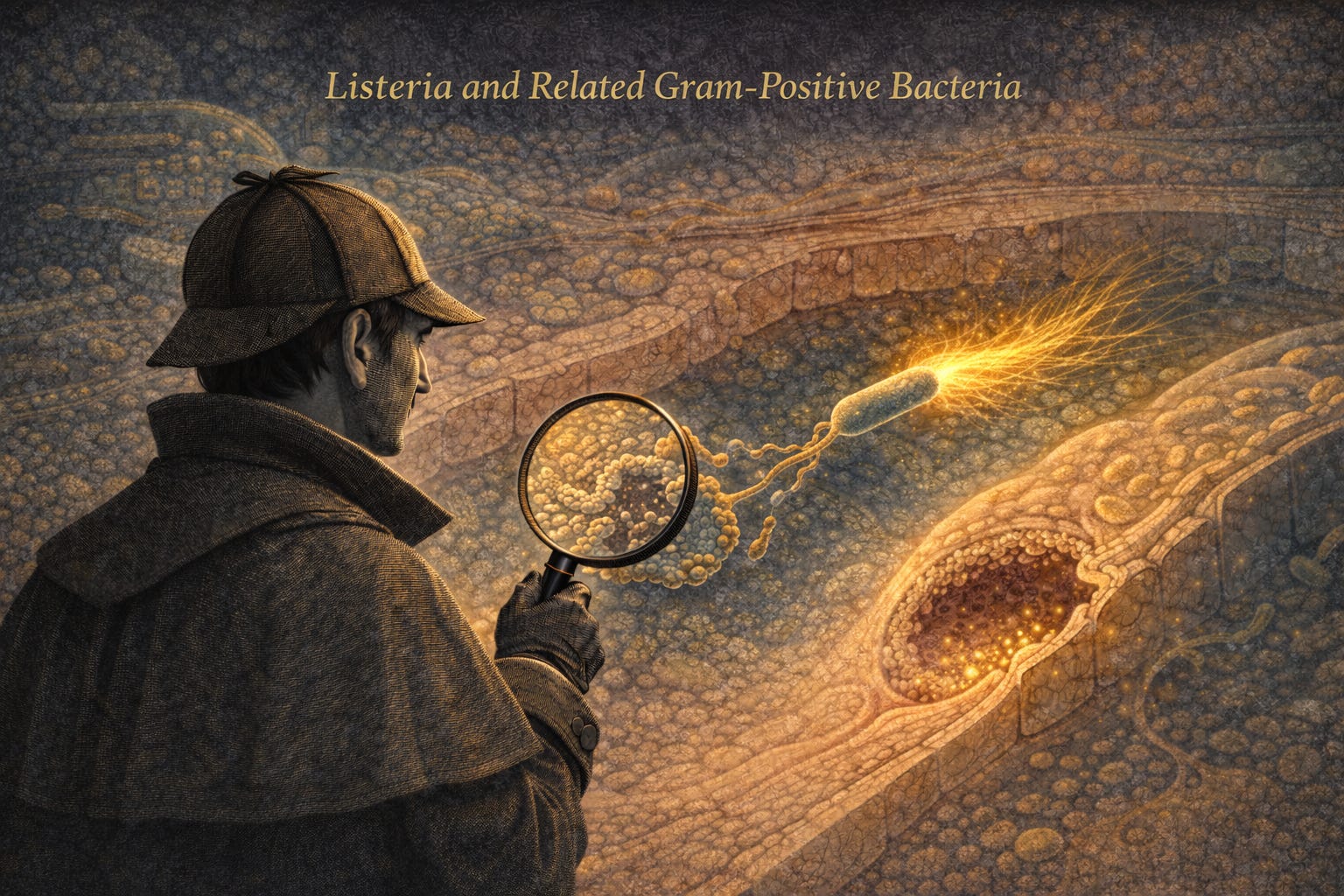
This episode explores Listeria monocytogenes and related aerobic, non–spore-forming Gram-positive bacilli. Drawing from Murray’s chapter, the focus is on Listeria’s distinctive ability to survive and replicate within host cells.The narrative centres on its pathogenesis: ingestion via contaminated food, intestinal invasion, survival within macrophages, escape from the phagolysosome via listeriolysin O, and actin-based intracellular motility that allows cell-to-cell spread without extracellular exposure. This strategy explains its predilection for vulnerable populations - neonates, pregnant individuals, the elderly, and the immunocompromised.Clinical patterns include meningitis, sepsis, and transplacental infection. The episode reinforces the principle that intracellular pathogens demand cell-mediated immune responses, linking back to earlier immunology chapters.Other related Gram-positive rods are acknowledged, but Listeria remains the central teaching organism - subtle, adaptable, and capable of breaching both intestinal and placental barriers.Key Takeaways* Listeria monocytogenes is a Gram-positive intracellular bacillus* Infection often follows ingestion of contaminated food* Listeriolysin O enables escape from phagosomes* Actin-based motility permits cell-to-cell spread* Vulnerable populations are at highest risk for invasive disease This is a public episode. If you'd like to discuss this with other subscribers or get access to bonus episodes, visit drmanaankarray.substack.com/subscribe
Embed this episode
Ready to play
Micro 21: Listeria and Related Gram-Positive Bacteria
No transcript for this episode yet
Similar Episodes
No similar episodes found.
Similar Podcasts
No similar podcasts found.