
EPISODE · Feb 21, 2026 · 33 MIN
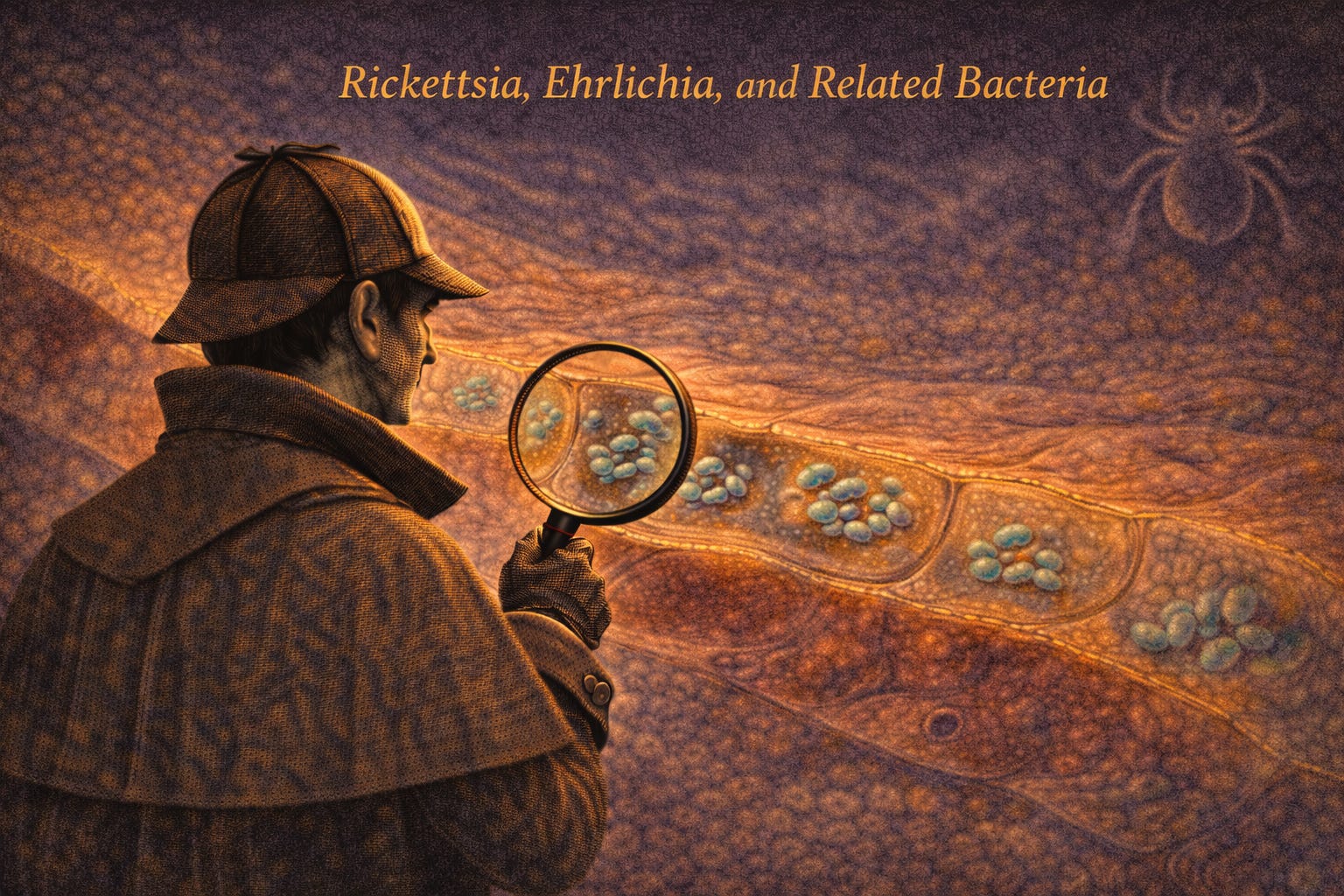
Micro 34: Rickettsia, Ehrlichia, and Related Bacteria
from Clinical Deep Dives · host Dr Manaan Kar Ray
This episode explores obligate intracellular Gram-negative bacteria transmitted by arthropod vectors. Drawing from Murray’s Chapter 34, it centres on Rickettsia, Ehrlichia, and related genera whose pathogenicity depends on intracellular replication within host cells.The narrative begins with Rickettsia rickettsii, the cause of Rocky Mountain spotted fever, where infection of endothelial cells leads to vasculitis, capillary leakage, and the characteristic centripetal rash. Vascular injury - rather than toxin production - defines disease severity.It then examines Ehrlichia and Anaplasma, which infect leukocytes, forming intracellular inclusions (morulae) and disrupting immune function.Key themes include:* Arthropod transmission (ticks, lice, mites)* Obligate intracellular growth* Vascular or hematologic targeting* Host immune response driving pathologyClinically, this chapter emphasises urgency. Early doxycycline therapy can be life-saving, and delayed recognition increases mortality. Epidemiology - exposure history, seasonality, geography - becomes central to diagnosis.Conceptually, these organisms illustrate that intracellular localisation can redirect pathology toward vascular instability rather than focal tissue invasion.Key Takeaways* Rickettsial organisms are obligate intracellular bacteria* Transmission occurs via arthropod vectors* Endothelial infection leads to vasculitis and rash* Leukocyte infection alters immune function* Early treatment significantly improves outcomes This is a public episode. If you'd like to discuss this with other subscribers or get access to bonus episodes, visit drmanaankarray.substack.com/subscribe
Embed this episode
Ready to play
Micro 34: Rickettsia, Ehrlichia, and Related Bacteria
No transcript for this episode yet
Similar Episodes
No similar episodes found.
Similar Podcasts
No similar podcasts found.