
EPISODE · Oct 24, 2024 · 11 MIN
Microquasar V4641 Sgr: A New Cosmic Ray Source?
from Multi-messenger astrophysics · host Astro-COLIBRI
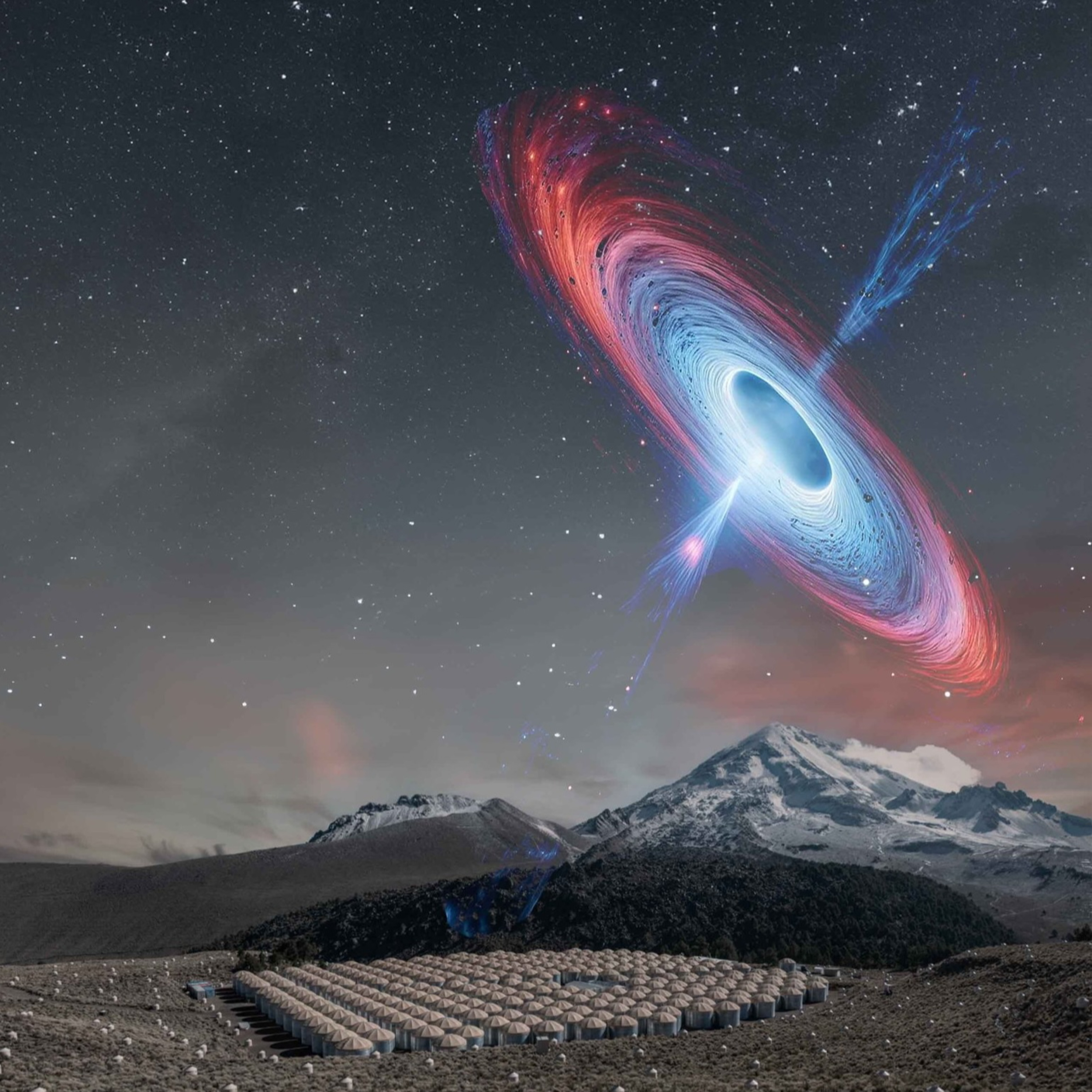
Microquasars, like V4641 Sgr, are binary star systems with a black hole that pulls material from a companion star. They are fascinating objects for astronomers because they can produce jets of relativistic particles. The High-Altitude Water Cherenkov (HAWC) Observatory observed TeV gamma-ray emissions from V4641 Sgr. These observations suggest that the microquasar is accelerating particles far from the black hole, in a region much larger than the binary system itself. It supports the idea that microquasars may be more common sources of galactic cosmic rays than previously thought. Future observations, particularly with neutrino detectors, could provide further evidence for the hadronic scenario and confirm the role of microquasars as cosmic ray accelerators. Publication: HAWC collaboration, "Very high energy particle acceleration powered by the jets of the microquasar SS 433", Nature 562 (2018), 82-85 (arXiv:1810.01892) Acknowledgements: The podcast has been prepared using Google/NotebookLM. Image credits: HAWC Collaboration
Embed this episode
Ready to play
Microquasar V4641 Sgr: A New Cosmic Ray Source?
No transcript for this episode yet
Similar Episodes
No similar episodes found.
Similar Podcasts
No similar podcasts found.