
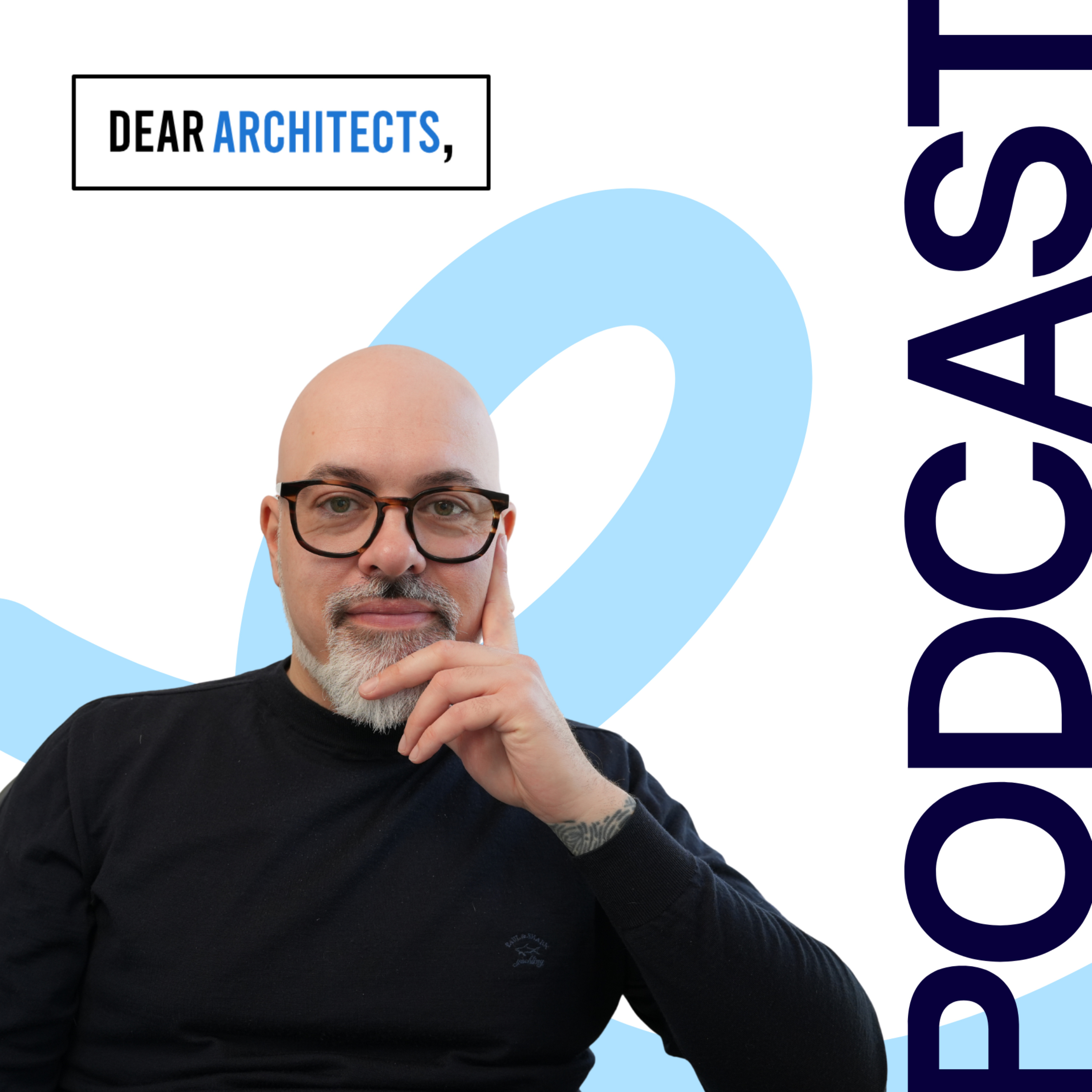
EPISODE · Jul 8, 2026 · 1H 8M
Microservices, AI and.... Chris Richardson
from Dear Architects podcast · host Luca Mezzalira
This episode is brought to you by IcePanel, a collaborative diagramming and modeling tool for architects. Model your system from business context down to components, keep diagrams in sync automatically, and connect your architecture to your favorite LLM via their MCP server. Try it free: icepanel.io/lucaIn this episode of Dear Architects, Luca sits down with Chris Richardson, author of Microservices Patterns and the creator of microservices.io, for a wide-ranging, no-hype conversation about where microservices actually stand in 2026, and what Gen AI does (and doesn't) change about how we design systems. Chris and Luca dig into why so many organizations still end up with a "distributed monolith," the real warning signs of bad service boundaries (hint: watch your services-to-developer ratio), and Chris's own framework for deciding what belongs together and what should be pulled apart — the Dark Energy and Dark Matter forces. They also get into the social-technical side of architecture: why team topologies, DevOps, and org structure matter as much as the diagrams, and why "the architecture is bad" is often just a symptom of deeper organizational issues.The second half turns to AI: the guardrails that actually make coding agents useful (tests, pre-commit hooks, code scanning), why brownfield modernization is nowhere near as simple as greenfield demos suggest, why Chris still prefers the Strangler Fig pattern over "big bang" AI rewrites, and a healthy dose of skepticism about the claims flooding your LinkedIn feed.If you're an architect, tech lead, or engineer trying to figure out what's signal and what's noise in the current AI moment — this one's for you.Chapters00:00 Intro01:36 Welcome, Chris Richardson03:15 Chris's career: testing, Spring/Hibernate, the cloud, Cloud Foundry06:01 State of microservices in 202607:30 "Living systems" — why boundaries need constant reassessment09:47 Software serves two constituencies: users and the organization10:19 Team topologies, DevOps, and the success triangle12:53 Holistic engineering13:36 The "red flag law" anti-pattern14:51 Warning signs: the services-to-developer ratio16:41 System releases and the distributed monolith trap17:41 Service boundaries in practice18:18 Default to monolith unless there's a clear problem to solve19:03 Dark Energy & Dark Matter: the forces behind service boundaries23:00 Dark Matter forces: runtime coupling, ACID vs. BASE24:44 Collocating code isn't a weakness signalr26:25 Ten forces, weighted by your own context28:16 Architecture serves the organization, not just the customer29:20 Latency-sensitive endpoints and selective distribution31:31 AI hype: "we rebuilt it in 48 hours"33:43 Best practices matter more, not less, in the Gen AI era36:05 Multi-agent architectures and inter-service communication37:33 The "agents for everything" trap39:29 "SaaS is dead"? Big tech hype and bubble skepticism40:26 Brownfield vs. greenfield: the AI modernization gap42:02 Guardrails that work: tests, pre-commit hooks, code scanning43:14 Legacy code without tests meets a probabilistic system44:24 Human accountability for AI-generated code45:22 Where architecture fits in the AI era47:21 What AI-driven modernization gains — and loses50:04 Strangler Fig over the "big bang" rewrite53:36 Spec-driven development: waterfall in disguise?54:16 Why well-documented systems are easier to AI-rewrite56:02 "We are all juniors again"57:55 Fundamentals over hype: modularity and loose coupling59:47 AI burnout and the "slot machine" effect1:01:26 Juniors, hiring, and whether Gen AI is even a profitable business1:05:04 Final advice: the architectural mindset1:07:21 Wrap-up and thanks
Embed this episode
NOW PLAYING
Microservices, AI and.... Chris Richardson
No transcript for this episode yet
Similar Episodes
No similar episodes found.
Similar Podcasts
No similar podcasts found.