
EPISODE · Jan 19, 2026 · 58 MIN
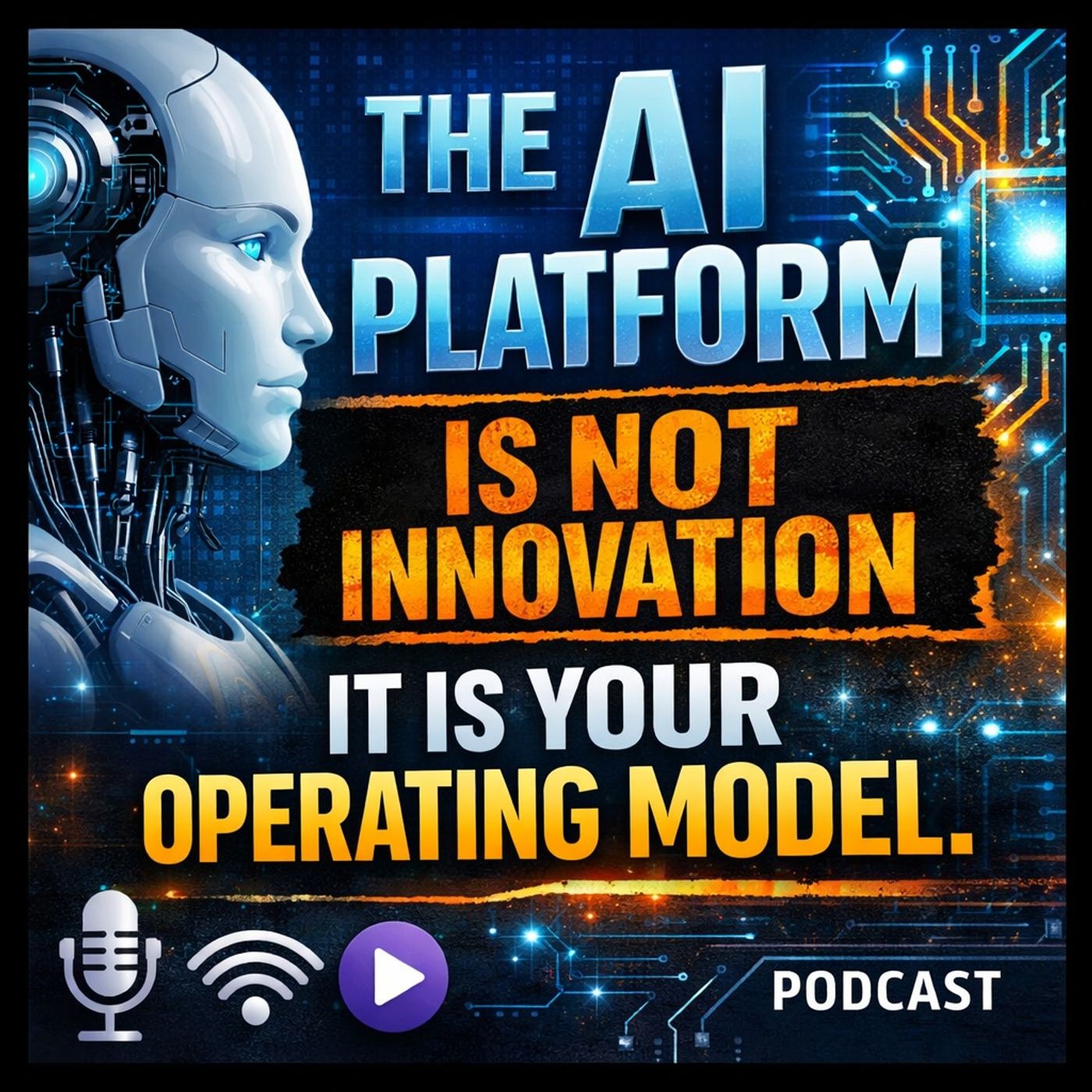
Microsoft 365 & AI Strategy: Why AI Is Not an Innovation Initiative — It Is Your New Operating Model
from M365.FM - Modern work, security, and productivity with Microsoft 365 · host Mirko Peters - Founder of m365.fm, m365.show and m365con.net
(00:00:00) The AI Adoption Dilemma (00:00:12) The Pitfalls of AI Implementation (00:00:30) AI as an Accelerator, Not a Transformer (00:01:18) The Pilot Paradox (00:02:30) The Operating System vs. Innovation Stack (00:04:42) Decision Transformation: The True Target (00:05:47) The Four Pillars of AI Decision-Making (00:07:34) The Data Platform as a Product (00:10:31) Organizational Challenges in Data Governance (00:17:01) The Four Non-Negotiable Guardrails Every enterprise AI initiative begins with the same promise: innovation. New capabilities, faster processes, smarter decisions, competitive advantage. And AI delivers on that promise — but only for the organizations that understand what they are actually building when they deploy Microsoft Copilot, Copilot Studio agents, or Fabric-powered AI pipelines across their operations. They are not building an innovation layer on top of their existing operating model. They are replacing the operating model itself. And that distinction changes everything about how AI must be governed, architected, integrated, and led.In this episode of M365.FM, Mirko Peters examines why the organizations that treat AI as an innovation initiative consistently underperform those that treat it as an operating model transformation — and what that means for how Microsoft 365 leaders should be thinking about Copilot deployment, Copilot Studio architecture, Power Platform automation, and Microsoft Fabric analytics at enterprise scale. This is a conversation about the structural difference between piloting AI and operating AI, between demonstrating AI value and scaling AI governance, and between using Microsoft tools and redesigning the organizational systems that those tools must now power.The organizations that will lead their industries over the next decade are not those with the most impressive AI demos. They are those that have built AI into the operating fabric of how decisions are made, how workflows execute, how data governs itself, and how people work. That is not an innovation project. It is an operating model — and it requires everything that operating models require: governance, accountability, measurement, ownership, and continuous improvement.WHAT YOU WILL LEARNWhy treating AI as an innovation initiative rather than an operating model transformation produces consistent underperformance in Microsoft 365 environmentsHow the shift from AI pilot to AI operating model changes governance, architecture, and leadership accountability requirementsWhat an AI operating model actually looks like in a Microsoft 365 environment — from Copilot deployment to Fabric pipelines and Copilot Studio agentsWhy most Microsoft Copilot deployments stall at the pilot stage and never reach operating-model scaleHow to design Microsoft 365 architecture that embeds AI into operational workflows rather than positioning it as an optional productivity enhancementWhat the governance, ownership, and measurement frameworks look like for organizations that have successfully made AI part of their operating modelHow Microsoft Fabric, Power Platform, and Copilot Studio work together as the technical foundation of an AI-native operating modelTHE CORE INSIGHTThe operating model is the architecture of how an organization actually works — not how it intends to work, not how its org chart says it works, but how decisions get made, how work gets done, how information flows, and how accountability is distributed. When AI becomes part of the operating model, it is not adding a new capability alongside existing ways of working. It is changing the underlying system of how the organization operates. Workflows that were human-driven become AI-augmented or AI-executed. Decisions that were made by individuals become informed or generated by AI models. Data that was passively stored becomes actively governed and continuously analyzed.Mirko argues that this is precisely why innovation-framing for AI is so dangerous. Innovation projects are bounded — they have start dates, end dates, success criteria, and a defined scope. Operating model transformations are continuous — they require permanent governance structures, ongoing ownership, evolving measurement frameworks, and leadership accountability that does not expire when the pilot concludes. Organizations that frame Microsoft Copilot as an innovation initiative will manage it like one. They will celebrate early wins, tolerate governance gaps as temporary, and deprioritize infrastructure investment as the initiative matures. Organizations that frame it as an operating model transformation will do the opposite — and the results, compounded over three to five years, will be structurally different.WHY AI STAYS AT PILOT STAGE IN MICROSOFT 365 ORGANIZATIONSAI initiatives are governed as projects with fixed timelines rather than as operating capabilities with permanent ownershipMicrosoft Copilot is deployed as a productivity add-on rather than integrated into the workflows where work actually happensThere is no measurement framework connecting AI usage to operational outcomes — adoption is tracked, impact is notGovernance structures for AI in Microsoft 365 are temporary — created for the pilot, not designed for ongoing operationsLeadership accountability for AI outcomes is diffuse — everyone is responsible, so no one is accountableCopilot Studio agents and Power Automate workflows are built for demos rather than designed for operational reliability and governanceMicrosoft Fabric analytics pipelines are created without the data ownership and lineage governance that operational systems requireKEY TAKEAWAYSAI in Microsoft 365 is not an innovation layer — it is the new operating model, and must be governed accordinglyThe transition from AI pilot to AI operating model requires permanent governance structures, defined ownership, and ongoing measurementMicrosoft Copilot delivers maximum value when it is embedded in operational workflows, not positioned as an optional enhancementCopilot Studio, Power Automate, and Microsoft Fabric are the technical foundation of an AI-native operating model — they must be architected as suchLeadership accountability for AI outcomes must be permanent, not project-boundThe organizations that will lead their industries are those that have made AI part of how they operate — not part of how they innovateWHO THIS EPISODE IS FORCIOs, CTOs, and digital transformation leaders building AI strategy in Microsoft 365 environmentsMicrosoft 365 architects designing Copilot, Fabric, and Power Platform operating model architectureIT leaders responsible for scaling AI from pilot to enterprise-wide operational deploymentChange management and organizational design leaders supporting AI operating model transformationMicrosoft partners and consultants advising on AI strategy, governance, and operating model designBusiness leaders evaluating the organizational impact of Microsoft Copilot and AI at scaleTOPICS COVEREDMicrosoft 365 AI operating model architecture and strategyMicrosoft Copilot deployment at scale and operating model integrationCopilot Studio and Power Automate as operational AI infrastructureMicrosoft Fabric and AI-native analytics operating model designAI governance frameworks for operating model transformation in Microsoft 365Leadership accountability and ownership models for enterprise AI at scaleMeasuring AI operating model performance in Microsoft 365 environmentsTransitioning from AI pilot to AI operating model in the Microsoft ecosystemABOUT THE HOSTMirko Peters is a Microsoft 365 architect, strategist, and the host of M365.FM — a podcast dedicated to modern work, security, and productivity in the Microsoft ecosystem. With experience spanning small businesses to large enterprises, Mirko focuses on Microsoft 365 architecture, AI integration, governance, security, and the design of scalable, context-driven systems. M365.FM is the go-to resource for IT leaders, architects, and decision-makers navigating the Microsoft platform at scale.Become a supporter of this podcast: https://www.spreaker.com/podcast/m365-fm-modern-work-security-and-productivity-with-microsoft-365--6704921/support.
Embed this episode
What this episode covers
(00:00:00) The AI Adoption Dilemma (00:00:12) The Pitfalls of AI Implementation (00:00:30) AI as an Accelerator, Not a Transformer (00:01:18) The Pilot Paradox (00:02:30) The Operating System vs. Innovation Stack (00:04:42) Decision Transformation: The True Target (00:05:47) The Four Pillars of AI Decision-Making (00:07:34) The Data Platform as a Product (00:10:31) Organizational Challenges in Data Governance (00:17:01) The Four Non-Negotiable Guardrails Every enterprise AI initiative begins with the same promise: innovation. New capabilities, faster processes, smarter decisions, competitive advantage. And AI delivers on that promise — but only for the organizations that understand what they are actually building when they deploy Microsoft Copilot, Copilot Studio agents, or Fabric-powered AI pipelines across their operations. They are not building an innovation layer on top of their existing operating model. They are replacing the operating model itself. And that distinction changes everything about how AI must be governed, architected, integrated, and led. In this episode of M365.FM, Mirko Peters examines why the organizations that treat AI as an innovation initiative consistently underperform those that treat it as an operating model transformation — and what that means for how Microsoft 365 leaders should be thinking about Copilot deployment, Copilot Studio architecture, Power Platform automation, and Microsoft Fabric analytics at enterprise scale. This is a conversation about the structural difference between piloting AI and operating AI, between demonstrating AI value and scaling AI governance, and between using Microsoft tools and redesigning the organizational systems that those tools must now power. The organizations that will lead their industries over the next decade are not those with the most impressive AI demos. They are those that have built AI into the operating fabric of how decisions are made, how workflows execute, how data governs itself, and how people work. That is not an innovation project. It is an operating model — and it requires everything that operating models require: governance, accountability, measurement, ownership, and continuous improvement. WHAT YOU WILL LEARN Why treating AI as an innovation initiative rather than an operating model transformation produces consistent underperformance in Microsoft 365 environments How the shift from AI pilot to AI operating model changes governance, architecture, and leadership accountability requirements What an AI operating model actually looks like in a Microsoft 365 environment — from Copilot deployment to Fabric pipelines and Copilot Studio agents Why most Microsoft Copilot deployments stall at the pilot stage and never reach operating-model scale How to design Microsoft 365 architecture that embeds AI into operational workflows rather than positioning it as an optional productivity enhancement What the governance, ownership, and measurement frameworks look like for organizations that have successfully made AI part of their operating model How Microsoft Fabric, Power Platform, and Copilot Studio work together as the technical foundation of an AI-native operating model THE CORE INSIGHT The operating model is the architecture of how an organization actually works — not how it intends to work, not how its org chart says it works, but how decisions get made, how work gets done, how information flows, and how accountability is distributed. When AI becomes part of the operating model, it is not adding a new capability alongside existing ways of working. It is changing the underlying system of how the organization operates. Workflows that were human-driven become AI-augmented or AI-executed. Decisions that were made by individuals become informed or generated by AI models....
NOW PLAYING
Microsoft 365 & AI Strategy: Why AI Is Not an Innovation Initiative — It Is Your New Operating Model
No transcript for this episode yet
Similar Episodes
No similar episodes found.
Similar Podcasts
No similar podcasts found.