
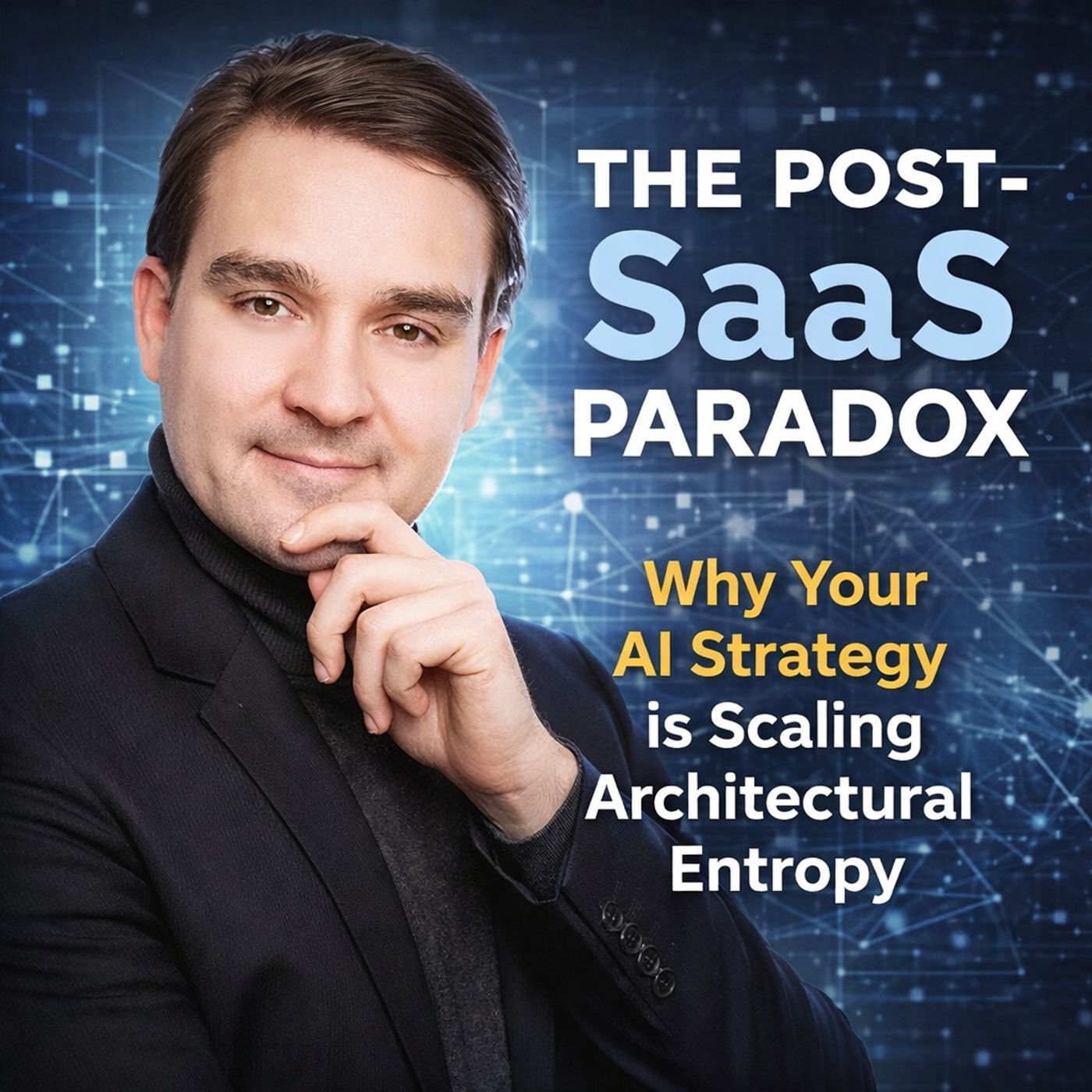
EPISODE · Feb 14, 2026 · 1H 21M
Microsoft 365 & AI Strategy: Why Your Copilot Rollout Is Scaling Architectural Entropy
from M365.FM - Modern work, security, and productivity with Microsoft 365 · host Mirko Peters - Founder of m365.fm, m365.show and m365con.net
In this episode of m365.fm, Mirko Peters introduces a concept that most enterprise leaders have not yet named but are already experiencing: the Post-SaaS Paradox. The moment you shift from deterministic SaaS systems to probabilistic AI runtimes like Microsoft Copilot, you are no longer operating software — you are operating a distributed decision engine that behaves differently every time it runs.Most organizations believe they are rolling out Copilot. They are not. They are quietly replacing auditable, predictable processes with AI-generated outputs that emerge at execution time, drift without notice, and cannot be explained after the fact. This episode unpacks exactly what that shift means for Microsoft 365 architecture, governance, and enterprise risk.WHAT YOU WILL LEARNWhat the Post-SaaS Paradox means for Microsoft 365 and Copilot deploymentsWhy shifting to AI in Microsoft 365 changes your architectural risk model completelyHow probabilistic AI runtimes like Copilot behave differently from deterministic SaaS systemsWhat Mean Time To Explain (MTTE) is and why it is the critical AI risk metric for Microsoft 365How to recognize when your Microsoft 365 AI strategy is scaling entropy instead of performanceWhat enterprise architecture must look like in a post-SaaS Microsoft 365 environmentTHE CORE INSIGHTThe Post-SaaS era does not begin when you buy AI. It begins when AI starts making decisions that your organization cannot explain. In a traditional Microsoft 365 SaaS environment, every action has a traceable cause. A flow ran. A rule triggered. A user clicked. In a Copilot-driven environment, outputs emerge from context, inference, and model behavior — and the audit trail is a reconstruction, not a record.This is not a failure of technology. It is a failure of architectural design. Most organizations deploy Microsoft Copilot into environments built for deterministic tools, then wonder why governance breaks down. The answer is not better prompts or more training. The answer is redesigning your Microsoft 365 architecture to absorb probabilistic behavior — with observability, ownership, and explicit boundaries around what AI is and is not allowed to decide.WHY AI STRATEGY SCALES ENTROPY IN MICROSOFT 365Copilot is deployed into Microsoft 365 environments designed for deterministic, rule-based systemsThere is no observability layer to detect when AI outputs drift from expected behaviorGovernance models assume human decision-making, not AI-generated recommendations at scaleMicrosoft 365 data quality is insufficient for AI to reason accurately over enterprise contentNobody owns the audit trail when Copilot makes a decision that cannot be explainedKEY TAKEAWAYSThe shift to AI in Microsoft 365 is not an upgrade — it is a fundamental change in your risk modelMean Time To Explain (MTTE) is the most important metric for AI governance in Microsoft 365Microsoft Copilot cannot be governed with the same tools and models used for SaaS workflowsPost-SaaS architecture requires explicit observability, ownership, and AI decision boundariesOrganizations that do not redesign their Microsoft 365 architecture for AI will scale entropy, not performanceWHO THIS EPISODE IS FOREnterprise architects and IT leaders responsible for Microsoft 365 and Copilot strategyCIOs and CTOs evaluating the governance implications of AI in Microsoft 365Microsoft 365 governance teams designing compliance frameworks for Copilot deploymentsAnyone responsible for AI risk, auditability, or accountability inside Microsoft 365TOPICS COVEREDPost-SaaS Architecture & Microsoft 365 AI StrategyMicrosoft Copilot Governance & Enterprise RiskAI Observability & Mean Time To Explain (MTTE)Microsoft 365 Architecture for Probabilistic AI SystemsEnterprise AI Decision Boundaries & AccountabilityABOUT THE HOSTMirko Peters is a Microsoft 365 expert, architect, and host of m365.fm. He works with organizations from small businesses to large enterprise environments, focusing on Microsoft 365 architecture, security, AI integration, governance design, and system architecture. His work centers on designing context-driven systems that reduce complexity, enable autonomous execution, and create scalable performance across modern enterprises.Become a supporter of this podcast: https://www.spreaker.com/podcast/m365-fm-modern-work-security-and-productivity-with-microsoft-365--6704921/support.
Embed this episode
NOW PLAYING
Microsoft 365 & AI Strategy: Why Your Copilot Rollout Is Scaling Architectural Entropy
No transcript for this episode yet
Similar Episodes
No similar episodes found.
Similar Podcasts
No similar podcasts found.