
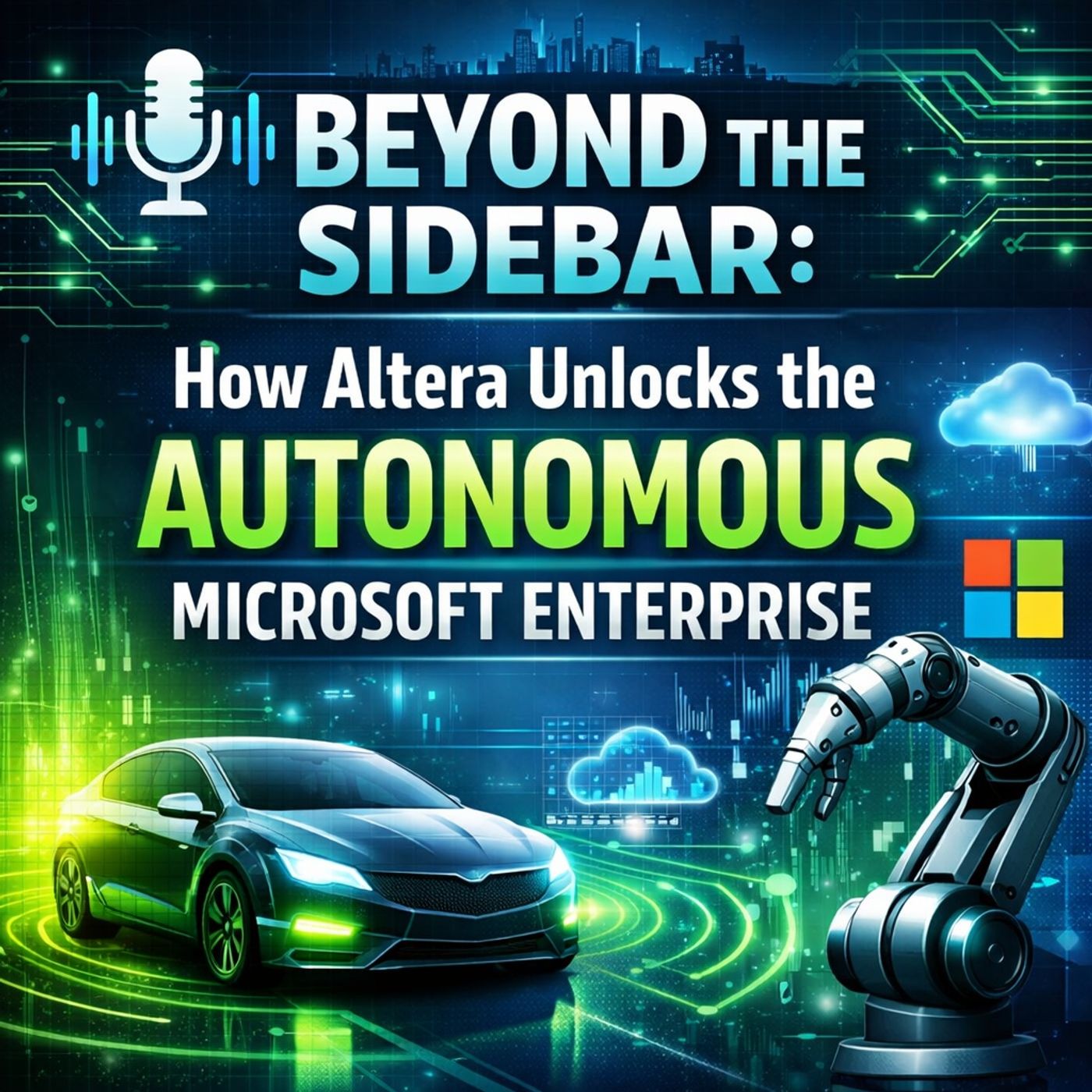
EPISODE · Feb 8, 2026 · 1H 24M
Microsoft 365 Autonomous AI: How Altera and Copilot Unlock the Self-Executing Enterprise
from M365.FM - Modern work, security, and productivity with Microsoft 365 · host Mirko Peters - Founder of m365.fm, m365.show and m365con.net
In this episode of m365.fm, Mirko Peters explains why most organizations are still thinking about Microsoft Copilot as a smarter chat box — and why that understanding is already obsolete. Altera and the broader shift toward autonomous AI inside Microsoft 365 do not just accelerate human tasks. They replace the human step entirely: planning, acting, verifying, and documenting without waiting for approval. That shift changes everything about how you design, govern, and secure your Microsoft 365 environment.Autonomy in Microsoft 365 is not a feature upgrade. It is an architectural transition. The moment a system can act — access Microsoft Graph data, trigger Power Automate flows, modify SharePoint content, send communications through Microsoft Teams, or make decisions inside your Entra ID governed tenant — every missing policy, every sloppy permission, and every undocumented process becomes a live risk. This episode breaks down what that transition means in practice and what enterprise architects, IT leaders, and Microsoft 365 platform owners need to design before autonomy arrives — not after.WHAT YOU WILL LEARNWhat Altera is and how it represents the next evolution of autonomous AI beyond Microsoft CopilotWhy the shift from AI assistance to AI autonomy inside Microsoft 365 changes your entire governance modelHow autonomous agents in Microsoft 365 interact with Microsoft Graph, SharePoint, Power Automate, and Entra IDWhat architectural safeguards must exist before autonomous AI can operate safely inside a Microsoft 365 tenantWhy every undocumented process and ungoverned permission in Microsoft 365 becomes a liability under autonomous AIHow to design your Microsoft 365 environment to absorb autonomous AI without losing control or auditabilityWhat the difference is between Copilot-assisted workflows and fully autonomous execution inside Microsoft 365How Microsoft 365 security, compliance, and data governance frameworks must evolve for the autonomous enterpriseTHE CORE INSIGHTAutonomy does not create new problems in your Microsoft 365 environment. It reveals the ones you already have — faster, at higher volume, and with less opportunity for human intervention before the damage is done. Every permission that is too broad, every SharePoint site without clear ownership, every Power Automate flow without error handling, and every Microsoft Graph API scope that was never properly reviewed becomes a vector for unintended autonomous behavior the moment your AI system can act without waiting for approval.The autonomous Microsoft enterprise is not built by deploying more capable AI. It is built by designing the Microsoft 365 environment that AI can operate within responsibly. That means structured, governed data that autonomous agents can reason over accurately. It means Entra ID permissions that define precisely what each agent is allowed to reach and modify. It means Power Automate workflows that have explicit failure modes and human escalation paths. And it means a Microsoft 365 governance model that was designed for machine actors, not just human users.WHY AUTONOMY EXPOSES MICROSOFT 365 ARCHITECTURE GAPSMicrosoft 365 permissions were designed for human workflows, not for autonomous agents operating at machine speedMicrosoft Graph API access is often over-permissioned, giving autonomous agents broader reach than intendedSharePoint content lacks the structure and ownership definitions that autonomous AI needs to reason accuratelyPower Automate flows have no error handling or escalation model, creating silent failure at scaleEntra ID governance policies do not account for non-human actors making decisions inside the Microsoft 365 tenantThere is no observability layer to detect when autonomous AI in Microsoft 365 is producing incorrect or harmful outputsMicrosoft 365 compliance frameworks were built for human accountability, not autonomous machine executionKEY TAKEAWAYSAutonomous AI in Microsoft 365 reveals architectural gaps that already exist — it does not create new onesMicrosoft 365 must be redesigned for machine actors before autonomous agents are deployed at scaleEntra ID, Microsoft Graph, SharePoint, and Power Platform are the control surfaces that govern autonomous behaviorEvery ungoverned permission and undocumented process in Microsoft 365 becomes a risk under autonomous AI executionThe autonomous Microsoft enterprise is a design achievement, not a product rollout — it requires architectural disciplineMicrosoft 365 governance, security, and compliance frameworks must explicitly account for non-human decision-makingWHO THIS EPISODE IS FOREnterprise architects and Microsoft 365 platform owners evaluating autonomous AI and next-generation Copilot capabilitiesIT security and compliance leaders responsible for Microsoft 365 governance in the era of autonomous AICIOs and CTOs building long-term AI strategy on top of Microsoft 365, Entra ID, and Power Platform infrastructureMicrosoft 365 developers and Copilot Studio practitioners designing systems that will eventually operate autonomouslyAnyone responsible for Microsoft 365 data governance, SharePoint architecture, or Power Platform security at enterprise scaleIT leaders and architects who want to understand what Altera, autonomous agents, and self-executing AI mean for Microsoft 365TOPICS COVEREDAltera & Autonomous AI Architecture in Microsoft 365Microsoft Copilot Evolution: From Assistance to Autonomous ExecutionMicrosoft Graph API Governance for Autonomous AI AgentsEntra ID Identity & Permission Design for Non-Human Actors in Microsoft 365SharePoint Content Architecture & Data Governance for Autonomous Microsoft 365 AIPower Automate Resilience & Escalation Design for Autonomous WorkflowsMicrosoft 365 Security & Compliance in the Autonomous EnterpriseDesigning Microsoft 365 for Machine Actors, Not Just Human UsersABOUT THE HOSTMirko Peters is a Microsoft 365 expert, architect, and host of m365.fm. He works with organizations from small businesses to large enterprise environments, focusing on Microsoft 365 architecture, security, AI integration, Copilot Studio deployment, Power Platform governance, Entra ID design, and enterprise system architecture. His work centers on designing context-driven systems that reduce complexity, enable autonomous execution, and create scalable AI performance across modern enterprises.Become a supporter of this podcast: https://www.spreaker.com/podcast/m365-fm-modern-work-security-and-productivity-with-microsoft-365--6704921/support.
Embed this episode
NOW PLAYING
Microsoft 365 Autonomous AI: How Altera and Copilot Unlock the Self-Executing Enterprise
No transcript for this episode yet
Similar Episodes
No similar episodes found.
Similar Podcasts
No similar podcasts found.