
EPISODE · Jan 25, 2026 · 58 MIN
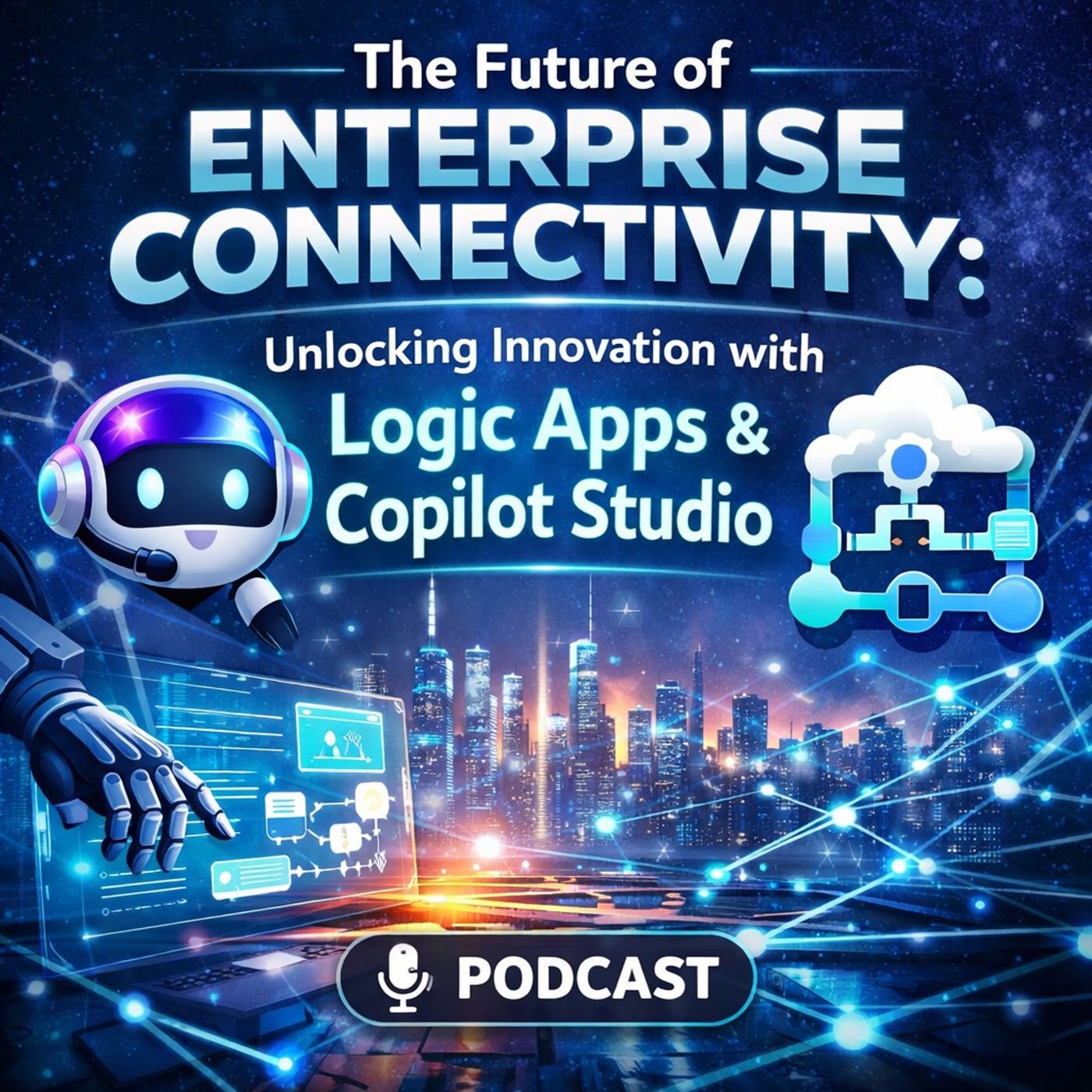
Microsoft Azure Logic Apps & Copilot Studio: How to Build the Future of Enterprise Connectivity
from M365.FM - Modern work, security, and productivity with Microsoft 365 · host Mirko Peters - Founder of m365.fm, m365.show and m365con.net
Enterprise connectivity has always been one of the most underestimated disciplines in IT architecture. The ability to reliably move data, trigger workflows, synchronize systems, and orchestrate processes across organizational boundaries is what determines whether digital transformation delivers on its promises — or simply creates a more complicated version of the same fragmented infrastructure. For decades, integration was treated as plumbing: unglamorous, expensive, and perpetually underfunded. That era is ending. With Microsoft Azure Logic Apps, Copilot Studio, the Model Context Protocol, and AI-driven orchestration, enterprise connectivity is being reimagined as a strategic capability — one that determines how fast an organization can move, how intelligently it can respond, and how effectively it can scale.In this episode of M365.FM, Mirko Peters explores the future of enterprise connectivity through the lens of the Microsoft ecosystem — examining how Azure Logic Apps, Microsoft Copilot Studio, Power Automate, and Azure API Management are converging into a unified integration architecture that is more capable, more governable, and more intelligent than anything the integration middleware market has previously offered. From connecting Microsoft 365 and Dynamics 365 to bridging SAP, Salesforce, and legacy on-premises systems, Mirko maps the architectural patterns that define the next generation of enterprise connectivity on the Microsoft Cloud.This is not a product walkthrough. It is a strategic architecture conversation for IT leaders, integration architects, and enterprise developers who need to understand how connectivity is being redefined in the AI era — and what that means for the Microsoft 365 and Azure investments their organizations are making today.WHAT YOU WILL LEARNWhy enterprise connectivity is being redefined as a strategic capability in the Microsoft AI eraHow Azure Logic Apps and Power Automate work together to cover both enterprise-grade and citizen-built integration scenariosWhat Microsoft Copilot Studio adds to enterprise connectivity when deployed as an AI-driven orchestration layerHow the Model Context Protocol changes the way AI agents connect to enterprise data and systemsWhy Azure API Management is the governance layer that makes scalable Microsoft integration architecture possibleHow to design a connectivity architecture that bridges Microsoft 365, Azure, Dynamics 365, and non-Microsoft systemsWhat the integration patterns look like for connecting Microsoft environments to SAP, Salesforce, and legacy on-premises infrastructureHow AI-driven connectivity reduces manual integration maintenance and improves system resilience over timeTHE CORE INSIGHTThe fundamental problem with enterprise connectivity has never been a shortage of tools. It has been a shortage of architectural coherence. Organizations build point-to-point integrations because they are fast to deploy. They use different tools for different teams — Power Automate for business users, custom Azure Functions for developers, Logic Apps for IT teams — without a unified governance model that makes the full integration estate visible, manageable, and secure.Microsoft is addressing this with a converging architecture that positions Azure Logic Apps as the enterprise integration backbone, Power Automate as the citizen integration layer, Copilot Studio as the AI orchestration interface, and Azure API Management as the governance and security surface that unifies them all. When this architecture is designed deliberately, it produces an integration estate that scales with the organization, adapts to new systems without requiring custom code for every connection, and provides the audit trail and governance visibility that compliance and security teams require.Mirko argues that the organizations that will unlock the full innovation potential of this architecture are those that stop treating integration as a project-by-project concern and start treating it as a platform capability — one that is owned, governed, and continuously improved with the same discipline applied to any other critical enterprise infrastructure.WHY ENTERPRISE CONNECTIVITY FAILS IN MICROSOFT ENVIRONMENTSPoint-to-point integrations are built for speed but create unmaintainable technical debt at scalePower Automate and Logic Apps are used in parallel without a governance model that defines which tool applies to which scenarioAzure API Management is deployed but not configured as the central governance surface for all enterprise connectionsCopilot Studio agents are built without connectivity to the enterprise data sources that would make them genuinely usefulIntegration estates grow without documentation, making it impossible to assess the impact of changes to connected systemsSecurity and access controls are applied inconsistently across integration layers, creating gaps that Entra ID governance cannot closeThere is no enterprise integration architecture owner — connectivity decisions are made locally by individual teams with no system-wide viewKEY TAKEAWAYSEnterprise connectivity in the Microsoft ecosystem is converging around Logic Apps, Power Automate, Copilot Studio, and Azure API Management as complementary layersAzure Logic Apps is the enterprise-grade backbone for high-volume, high-reliability integration scenarios in Microsoft environmentsCopilot Studio transforms connectivity from a plumbing concern into an AI-driven orchestration capabilityAzure API Management must be the governance surface for all enterprise API connections — not just a developer toolThe Model Context Protocol provides the standard interface that AI agents need to connect to enterprise systems without custom integration codeOrganizations that treat connectivity as a platform capability rather than a project concern will build faster, more resilient Microsoft environmentsIntegration architecture ownership is a strategic requirement — without it, Microsoft connectivity investments produce fragmentation, not leverageWHO THIS EPISODE IS FOREnterprise architects and integration specialists designing Microsoft 365 and Azure connectivity strategiesIT leaders responsible for application integration, API management, and workflow orchestrationCopilot Studio and Power Platform developers building AI-driven connected workflowsCIOs and CTOs evaluating enterprise integration platform consolidation on Microsoft AzureMicrosoft partners and consultants advising on Logic Apps, API Management, and Copilot Studio architectureSecurity and governance teams responsible for Microsoft integration estate oversight and complianceTOPICS COVEREDMicrosoft Azure Logic Apps enterprise integration architecture and design patternsMicrosoft Power Automate and Logic Apps governance boundary and use case definitionMicrosoft Copilot Studio as an AI orchestration layer for enterprise connectivityAzure API Management governance, security, and enterprise API strategyModel Context Protocol (MCP) and AI agent connectivity in Microsoft environmentsMicrosoft 365 and Dynamics 365 integration architecture and cross-system workflowsSAP, Salesforce, and legacy system connectivity in Microsoft Azure environmentsEnterprise integration platform strategy and architecture ownership in Microsoft 365 organizationsABOUT THE HOSTMirko Peters is a Microsoft 365 architect, strategist, and the host of M365.FM — a podcast dedicated to modern work, security, and productivity in the Microsoft ecosystem. With experience spanning small businesses to large enterprises, Mirko focuses on Microsoft 365 architecture, AI integration, governance, security, and the design of scalable, context-driven systems. M365.FM is the go-to resource for IT leaders, architects, and decision-makers navigating the Microsoft platform at scale.Become a supporter of this podcast: https://www.spreaker.com/podcast/m365-fm-modern-work-security-and-productivity-with-microsoft-365--6704921/support.
Embed this episode
What this episode covers
Enterprise connectivity has always been one of the most underestimated disciplines in IT architecture. The ability to reliably move data, trigger workflows, synchronize systems, and orchestrate processes across organizational boundaries is what determines whether digital transformation delivers on its promises — or simply creates a more complicated version of the same fragmented infrastructure. For decades, integration was treated as plumbing: unglamorous, expensive, and perpetually underfunded. That era is ending. With Microsoft Azure Logic Apps, Copilot Studio, the Model Context Protocol, and AI-driven orchestration, enterprise connectivity is being reimagined as a strategic capability — one that determines how fast an organization can move, how intelligently it can respond, and how effectively it can scale. In this episode of M365.FM, Mirko Peters explores the future of enterprise connectivity through the lens of the Microsoft ecosystem — examining how Azure Logic Apps, Microsoft Copilot Studio, Power Automate, and Azure API Management are converging into a unified integration architecture that is more capable, more governable, and more intelligent than anything the integration middleware market has previously offered. From connecting Microsoft 365 and Dynamics 365 to bridging SAP, Salesforce, and legacy on-premises systems, Mirko maps the architectural patterns that define the next generation of enterprise connectivity on the Microsoft Cloud. This is not a product walkthrough. It is a strategic architecture conversation for IT leaders, integration architects, and enterprise developers who need to understand how connectivity is being redefined in the AI era — and what that means for the Microsoft 365 and Azure investments their organizations are making today. WHAT YOU WILL LEARN Why enterprise connectivity is being redefined as a strategic capability in the Microsoft AI era How Azure Logic Apps and Power Automate work together to cover both enterprise-grade and citizen-built integration scenarios What Microsoft Copilot Studio adds to enterprise connectivity when deployed as an AI-driven orchestration layer How the Model Context Protocol changes the way AI agents connect to enterprise data and systems Why Azure API Management is the governance layer that makes scalable Microsoft integration architecture possible How to design a connectivity architecture that bridges Microsoft 365, Azure, Dynamics 365, and non-Microsoft systems What the integration patterns look like for connecting Microsoft environments to SAP, Salesforce, and legacy on-premises infrastructure How AI-driven connectivity reduces manual integration maintenance and improves system resilience over time THE CORE INSIGHTThe fundamental problem with enterprise connectivity has never been a shortage of tools. It has been a shortage of architectural coherence. Organizations build point-to-point integrations because they are fast to deploy. They use different tools for different teams — Power Automate for business users, custom Azure Functions for developers, Logic Apps for IT teams — without a unified governance model that makes the full integration estate visible, manageable, and secure. Microsoft is addressing this with a converging architecture that positions Azure Logic Apps as the enterprise integration backbone, Power Automate as the citizen integration layer, Copilot Studio as the AI orchestration interface, and Azure API Management as the governance and security surface that unifies them all. When this architecture is designed deliberately, it produces an integration estate that scales with the organization, adapts to new systems without requiring custom code for every connection, and provides the audit trail and governance visibility that compliance and security teams require. Mirko argues that the organizations that will unlock...
NOW PLAYING
Microsoft Azure Logic Apps & Copilot Studio: How to Build the Future of Enterprise Connectivity
No transcript for this episode yet
Similar Episodes
No similar episodes found.
Similar Podcasts
No similar podcasts found.