
EPISODE · Jul 22, 2026 · 14 MIN
Microsoft Secure Score - Simply Explained
from M365.FM - Modern work, security, and productivity with Microsoft 365 · host Mirko Peters - Founder of m365.fm, m365.show and m365con.net
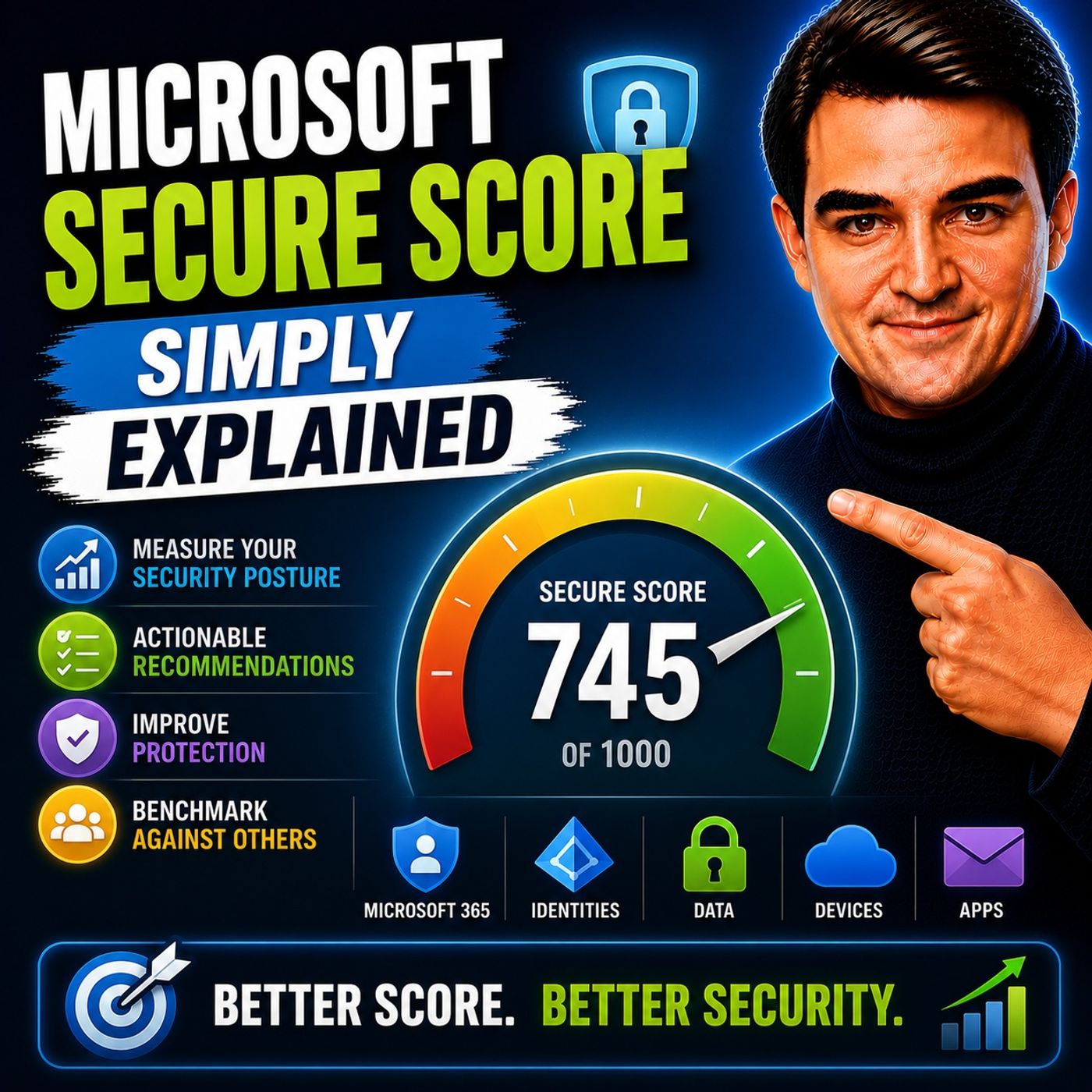
Welcome to another episode of Knowledge Nuggets with Mirko Peters. In this episode, we're exploring Microsoft Secure Score—one of the simplest yet most misunderstood security features in Microsoft 365. Many administrators log into the Microsoft Defender portal, see a percentage like 35% or 50%, and immediately wonder whether their organization is at risk. Others spend months trying to reach a perfect score of 100%, believing that's the ultimate goal. The reality is very different. Secure Score isn't a cybersecurity grade or a guarantee against attacks. Instead, it's a practical roadmap that helps organizations understand how many of Microsoft's recommended security controls have been implemented and where improvements can have the biggest impact.WHAT IS MICROSOFT SECURE SCORE? Microsoft Secure Score measures how many recommended security controls are enabled within your Microsoft 365 tenant. It evaluates configuration rather than real-world security effectiveness. Think of it as a checklist rather than a vulnerability scanner. The score answers questions such as:Is Multi-Factor Authentication enabled?Are security policies configured?Are recommended protections implemented?Have important security settings been activated?Secure Score lives inside the Microsoft Defender portal under Exposure Management and provides organizations with a continuously updated view of their Microsoft security configuration.HOW SECURE SCORE IS CALCULATED Secure Score follows a simple formula: Points Earned ÷ Total Available Points = Secure Score Organizations earn points in two ways. Binary Controls Some recommendations are either enabled or disabled. For example:Multi-Factor AuthenticationLegacy Authentication blockingSecurity DefaultsIf the control is enabled, full points are awarded. If not, no points are earned. Proportional Controls Other recommendations award partial credit. For example, if BitLocker encryption is enabled on 80% of managed devices, Secure Score awards approximately 80% of the available points. This allows organizations to receive recognition while gradually expanding security across their environment.WHAT IS A GOOD SECURE SCORE? One of the biggest misconceptions is that every organization should achieve 100%. In reality, Microsoft itself recognizes that this isn't always practical. Reasons include:Different licensing levelsFeatures not relevant to every organizationBusiness requirementsLegacy systemsAccepted business risksMany Microsoft 365 environments begin between 30% and 45%, while organizations with mature security programs often maintain scores between 70% and 85%. Rather than chasing perfection, Secure Score should help organizations prioritize meaningful security improvements without negatively affecting productivity.THE FOUR PILLARS OF SECURE SCORE Secure Score organizes recommendations into four primary categories. Identity Identity focuses on:Multi-Factor AuthenticationConditional AccessPassword protectionBlocking legacy authenticationSince compromised identities remain one of the most common attack vectors, this category carries significant weight. Devices Device recommendations include:BitLockerMicrosoft Defender AntivirusAttack Surface ReductionTamper ProtectionThese settings strengthen endpoint security across managed devices. Data Data recommendations focus on:Sensitivity LabelsData Loss PreventionEncryptionMicrosoft PurviewThese controls help protect sensitive organizational information. Apps Application security evaluates:App governanceThird-party application permissionsCloud application securityOAuth managementTogether, these four pillars provide a broad overview of Microsoft's recommended security controls across the Microsoft ecosystem.COMMON MISCONCEPTIONS Secure Score is frequently misunderstood. A high score does not mean an organization cannot be compromised. It simply indicates that recommended security configurations have been implemented. Likewise, a lower score doesn't necessarily indicate an insecure organization. Another misconception is believing every recommendation should always be implemented. Some recommendations may:Conflict with business requirementsRequire licenses that aren't availableBreak legacy applicationsIntroduce unnecessary operational complexityOrganizations can document accepted risks or alternative mitigations when recommendations aren't appropriate for their environment. Secure Score supports these decisions instead of forcing every recommendation to be implemented.USING SECURE SCORE AS A ROADMAP The greatest value of Secure Score comes from its Recommended Actions. Instead of treating the score as a report card, administrators should use it as a prioritized work queue. Each recommendation includes:Security impactRequired configurationImplementation guidanceDirect links to configuration pagesAdministrators can mark recommendations as:PlannedRisk AcceptedResolved through Alternative MitigationThis creates both technical progress and valuable documentation for future administrators and auditors. Small monthly improvements often provide greater long-term value than trying to complete dozens of recommendations simultaneously.PART OF A LARGER SECURITY STRATEGY Secure Score represents only one component of Microsoft's overall security ecosystem. It complements solutions including:Microsoft Defender XDRMicrosoft SentinelMicrosoft Entra IDMicrosoft Defender for EndpointMicrosoft Defender for Office 365While Secure Score measures configuration coverage, these additional products provide:Threat detectionIncident responseIdentity protectionSecurity monitoringVulnerability managementA strong Secure Score improves an organization's security posture, but effective cybersecurity also requires continuous monitoring, user awareness, patch management, and operational security practices.Become a supporter of this podcast: https://www.spreaker.com/podcast/m365-fm-modern-work-security-and-productivity-with-microsoft-365--6704921/support.
Embed this episode
What this episode covers
Welcome to another episode of Knowledge Nuggets with Mirko Peters. In this episode, we're exploring Microsoft Secure Score—one of the simplest yet most misunderstood security features in Microsoft 365. Many administrators log into the Microsoft Defender portal, see a percentage like 35% or 50%, and immediately wonder whether their organization is at risk. Others spend months trying to reach a perfect score of 100%, believing that's the ultimate goal. The reality is very different. Secure Score isn't a cybersecurity grade or a guarantee against attacks. Instead, it's a practical roadmap that helps organizations understand how many of Microsoft's recommended security controls have been implemented and where improvements can have the biggest impact. WHAT IS MICROSOFT SECURE SCORE? Microsoft Secure Score measures how many recommended security controls are enabled within your Microsoft 365 tenant. It evaluates configuration rather than real-world security effectiveness. Think of it as a checklist rather than a vulnerability scanner. The score answers questions such as: Is Multi-Factor Authentication enabled? Are security policies configured? Are recommended protections implemented? Have important security settings been activated? Secure Score lives inside the Microsoft Defender portal under Exposure Management and provides organizations with a continuously updated view of their Microsoft security configuration. HOW SECURE SCORE IS CALCULATED Secure Score follows a simple formula: Points Earned ÷ Total Available Points = Secure Score Organizations earn points in two ways. Binary Controls Some recommendations are either enabled or disabled. For example: Multi-Factor Authentication Legacy Authentication blocking Security Defaults If the control is enabled, full points are awarded. If not, no points are earned. Proportional Controls Other recommendations award partial credit. For example, if BitLocker encryption is enabled on 80% of managed devices, Secure Score awards approximately 80% of the available points. This allows organizations to receive recognition while gradually expanding security across their environment. WHAT IS A GOOD SECURE SCORE? One of the biggest misconceptions is that every organization should achieve 100%. In reality, Microsoft itself recognizes that this isn't always practical. Reasons include: Different licensing levels Features not relevant to every organization Business requirements Legacy systems Accepted business risks Many Microsoft 365 environments begin between 30% and 45%, while organizations with mature security programs often maintain scores between 70% and 85%. Rather than chasing perfection, Secure Score should help organizations prioritize meaningful security improvements without negatively affecting productivity. THE FOUR PILLARS OF SECURE SCORE Secure Score organizes recommendations into four primary categories. Identity Identity focuses on: Multi-Factor Authentication Conditional Access Password protection Blocking legacy authentication Since compromised identities remain one of the most common attack vectors, this category carries significant weight. Devices Device recommendations include: BitLocker Microsoft Defender Antivirus Attack Surface Reduction Tamper Protection These settings strengthen endpoint security across managed devices. Data Data recommendations focus on: Sensitivity Labels Data Loss Prevention Encryption Microsoft Purview These controls help protect sensitive organizational information. Apps Application security evaluates: App governance Third-party application permissions Cloud...
NOW PLAYING
Microsoft Secure Score - Simply Explained
No transcript for this episode yet
Similar Episodes
No similar episodes found.
Similar Podcasts
No similar podcasts found.