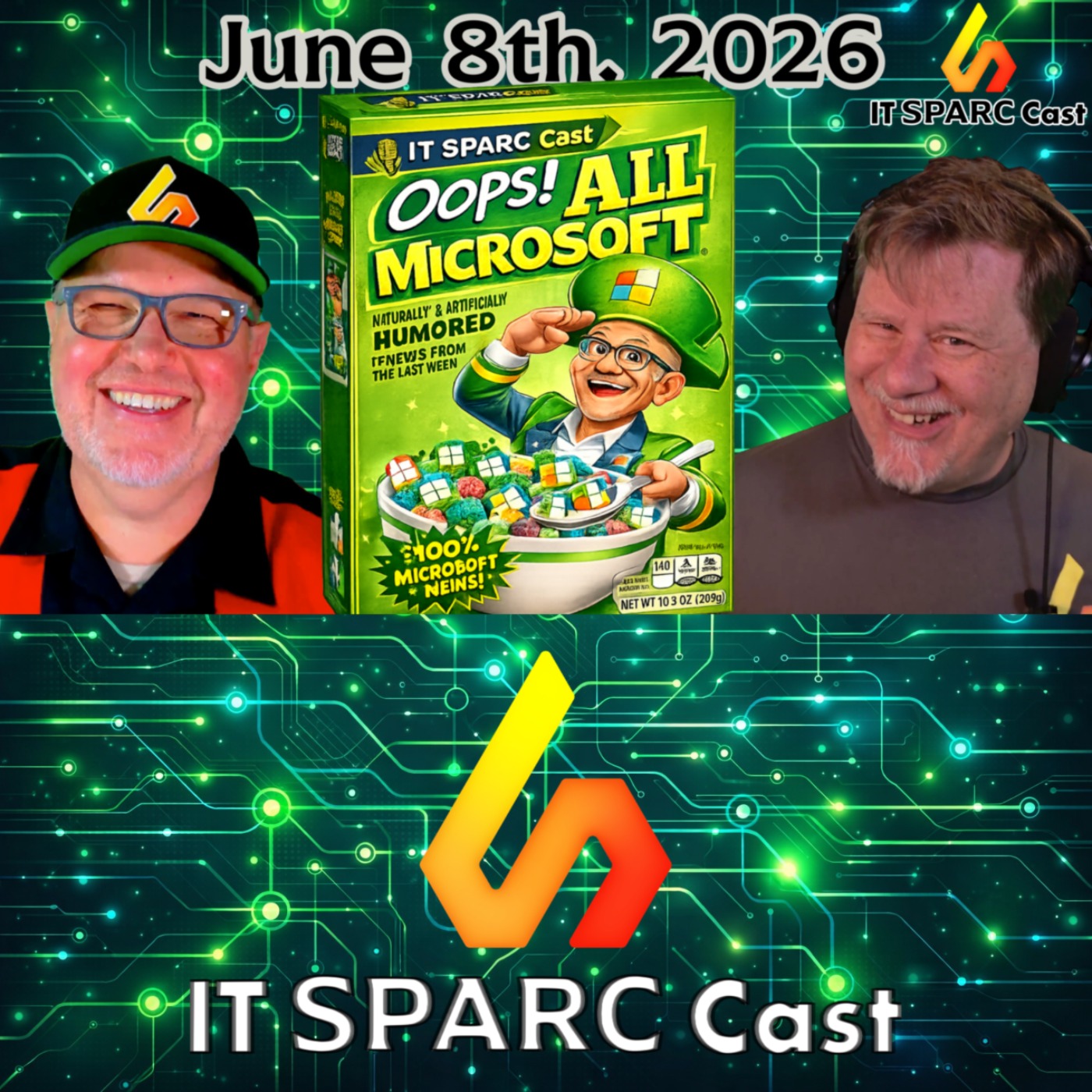
Microsoft vs Security Researchers | RTX Spark & Why Linux Won episode artwork

EPISODE · Jun 8, 2026 · 24 MIN

Microsoft vs Security Researchers | RTX Spark & Why Linux Won

from IT SPARC Cast

In this episode of IT SPARC Cast - News Bytes, John & Lou take a deep dive into a Microsoft-heavy week that touches nearly every corner of enterprise IT. From a growing controversy around vulnerability disclosure practices to Microsoft’s new AI-native device strategy and NVIDIA’s RTX Spark platform, the discussion explores how AI is reshaping operating systems, endpoints, and enterprise workflows.The episode also examines a surprising announcement that may signal a major shift in the desktop computing landscape: Microsoft bringing Linux CoreUtils directly into Windows. Combined with AI agents, local inference, and cross-platform development, the lines between operating systems are blurring faster than ever. If you work in enterprise IT, cloud, AI, or cybersecurity, this episode is packed with insights into where the industry is heading next.  📌 Show Notes00:00 – IntroThis week’s episode focuses on Microsoft’s evolving AI strategy, security challenges, AI-native devices, and the growing convergence between Windows and Linux. News Bytes00:46 – Microsoft’s Coordinated Vulnerability Disclosure (CVD) ControversyMicrosoft defended its coordinated vulnerability disclosure process after several high-profile Windows vulnerabilities were publicly disclosed before fixes were available. Researchers argue Microsoft has become increasingly difficult to work with and too slow to patch critical issues.John & Lou discuss both sides of the debate and why faster vulnerability discovery driven by AI is putting pressure on traditional disclosure models.Key takeaways:Vulnerability disclosure requires cooperation between researchers and vendorsPatch timelines are becoming increasingly importantAI is accelerating vulnerability discovery faster than everhttps://www.microsoft.com/en-us/msrc/blog/2026/05/a-shared-responsibility-protecting-customers-through-coordinated-vulnerability-disclosure07:20 – Inside Microsoft’s Project SolaraMicrosoft unveiled Project Solara, an AI-native platform designed around agents rather than traditional applications. Running on Android-based hardware, Solara aims to provide AI-first devices that handle workflows, context, and automation without requiring users to jump between apps.The platform includes wearable and desktop reference designs and reflects Microsoft’s vision of AI assistants becoming a core part of everyday work.https://www.geekwire.com/2026/inside-microsofts-project-solara-a-new-platform-for-devices-that-run-ai-agents-instead-of-apps/11:36 – NVIDIA & Microsoft Reinvent Windows PCs with RTX SparkNVIDIA and Microsoft announced RTX Spark, a new AI-focused platform designed to run large AI models, local agents, and advanced inference workloads directly on PCs and workstations.The platform combines NVIDIA Blackwell GPUs with AI-optimized software to reduce cloud dependency and improve data privacy while enabling powerful local AI experiences.https://www.theverge.com/tech/940589/nvidia-rtx-spark-n1-n1x-laptop-desktop-pc-cpu-gpu-ai-release-date17:43 – Microsoft Adds CoreUtils to Windows. So What? Linux Won.Microsoft is bringing native Linux CoreUtils commands directly into Windows, allowing cross-platform scripting without relying on WSL. Commands like grep, cat, find, sort, head, tail, and cut will become first-class Windows citizens.The bigger story isn’t the tools themselves—it’s what they represent: the operating system matters less than the applications, services, and workflows running on top of it.https://blogs.windows.com/windowsdeveloper/2026/06/02/build-2026-furthering-windows-as-the-trusted-platform-for-development/⸻🔚 23:22 – Wrap Up⸻🌐 Social LinksIT SPARC Cast@ITSPARCCast on Xhttps://www.linkedin.com/company/sparc-sales/ on LinkedInJohn Barger@john_Video on Xhttps://www.linkedin.com/in/johnbarger/ on LinkedInLou Schmidt@loudoggeek on Xhttps://www.linkedin.com/in/louis-schmidt-b102446/ on LinkedIn Hosted on Acast. See acast.com/privacy for more information.

In this episode of IT SPARC Cast - News Bytes, John & Lou take a deep dive into a Microsoft-heavy week that touches nearly every corner of enterprise IT. From a growing controversy around vulnerability disclosure practices to Microsoft’s new AI-native device strategy and NVIDIA’s RTX Spark platform, the discussion explores how AI is reshaping operating systems, endpoints, and enterprise workflows.The episode also examines a surprising announcement that may signal a major shift in the desktop computing landscape: Microsoft bringing Linux CoreUtils directly into Windows. Combined with AI agents, local inference, and cross-platform development, the lines between operating systems are blurring faster than ever. If you work in enterprise IT, cloud, AI, or cybersecurity, this episode is packed with insights into where the industry is heading next.  📌 Show Notes00:00 – IntroThis week’s episode focuses on Microsoft’s evolving AI strategy, security challenges, AI-native devices, and the growing convergence between Windows and Linux. News Bytes00:46 – Microsoft’s Coordinated Vulnerability Disclosure (CVD) ControversyMicrosoft defended its coordinated vulnerability disclosure process after several high-profile Windows vulnerabilities were publicly disclosed before fixes were available. Researchers argue Microsoft has become increasingly difficult to work with and too slow to patch critical issues.John & Lou discuss both sides of the debate and why faster vulnerability discovery driven by AI is putting pressure on traditional disclosure models.Key takeaways:Vulnerability disclosure requires cooperation between researchers and vendorsPatch timelines are becoming increasingly importantAI is accelerating vulnerability discovery faster than everhttps://www.microsoft.com/en-us/msrc/blog/2026/05/a-shared-responsibility-protecting-customers-through-coordinated-vulnerability-disclosure07:20 – Inside Microsoft’s Project SolaraMicrosoft unveiled Project Solara, an AI-native platform designed around agents rather than traditional applications. Running on Android-based hardware, Solara aims to provide AI-first devices that handle workflows, context, and automation without requiring users to jump between apps.The platform includes wearable and desktop reference designs and reflects Microsoft’s vision of AI assistants becoming a core part of everyday work.https://www.geekwire.com/2026/inside-microsofts-project-solara-a-new-platform-for-devices-that-run-ai-agents-instead-of-apps/11:36 – NVIDIA & Microsoft Reinvent Windows PCs with RTX SparkNVIDIA and Microsoft announced RTX Spark, a new AI-focused platform designed to run large AI models, local agents, and advanced inference workloads directly on PCs and workstations.The platform combines NVIDIA Blackwell GPUs with AI-optimized software to reduce cloud dependency and improve data privacy while enabling powerful local AI experiences.https://www.theverge.com/tech/940589/nvidia-rtx-spark-n1-n1x-laptop-desktop-pc-cpu-gpu-ai-release-date17:43 – Microsoft Adds CoreUtils to Windows. So What? Linux Won.Microsoft is bringing native Linux CoreUtils commands directly into Windows, allowing cross-platform scripting without relying on WSL. Commands like grep, cat, find, sort, head, tail, and cut will become first-class Windows citizens.The bigger story isn’t the tools themselves—it’s what they represent: the operating system matters less than the applications, services, and workflows running on top of it.https://blogs.windows.com/windowsdeveloper/2026/06/02/build-2026-furthering-windows-as-the-trusted-platform-for-development/⸻🔚 23:22 – Wrap Up⸻🌐 Social LinksIT SPARC Cast@ITSPARCCast on Xhttps://www.linkedin.com/company/sparc-sales/ on LinkedInJohn Barger@john_Video on Xhttps://www.linkedin.com/in/johnbarger/ on LinkedInLou Schmidt@loudoggeek on Xhttps://www.linkedin.com/in/louis-schmidt-b102446/ on LinkedIn Hosted on Acast. See acast.com/privacy for more information.

NOW PLAYING

Microsoft vs Security Researchers | RTX Spark & Why Linux Won

0:00 24:21

No transcript for this episode yet

We transcribe on demand. Request one and we'll notify you when it's ready — usually under 10 minutes.

No similar episodes found.

No similar podcasts found.

Frequently Asked Questions

How long is this episode of IT SPARC Cast?

This episode is 24 minutes long.

When was this IT SPARC Cast episode published?

This episode was published on June 8, 2026.

What is this episode about?

In this episode of IT SPARC Cast - News Bytes, John & Lou take a deep dive into a Microsoft-heavy week that touches nearly every corner of enterprise IT. From a growing controversy around vulnerability disclosure practices to Microsoft’s new...

Can I download this IT SPARC Cast episode?

Yes, you can download this episode by clicking the download button on the episode player, or subscribe to the podcast in your preferred podcast app for automatic downloads.
URL copied to clipboard!