
EPISODE · Nov 21, 2021 · 13 MIN
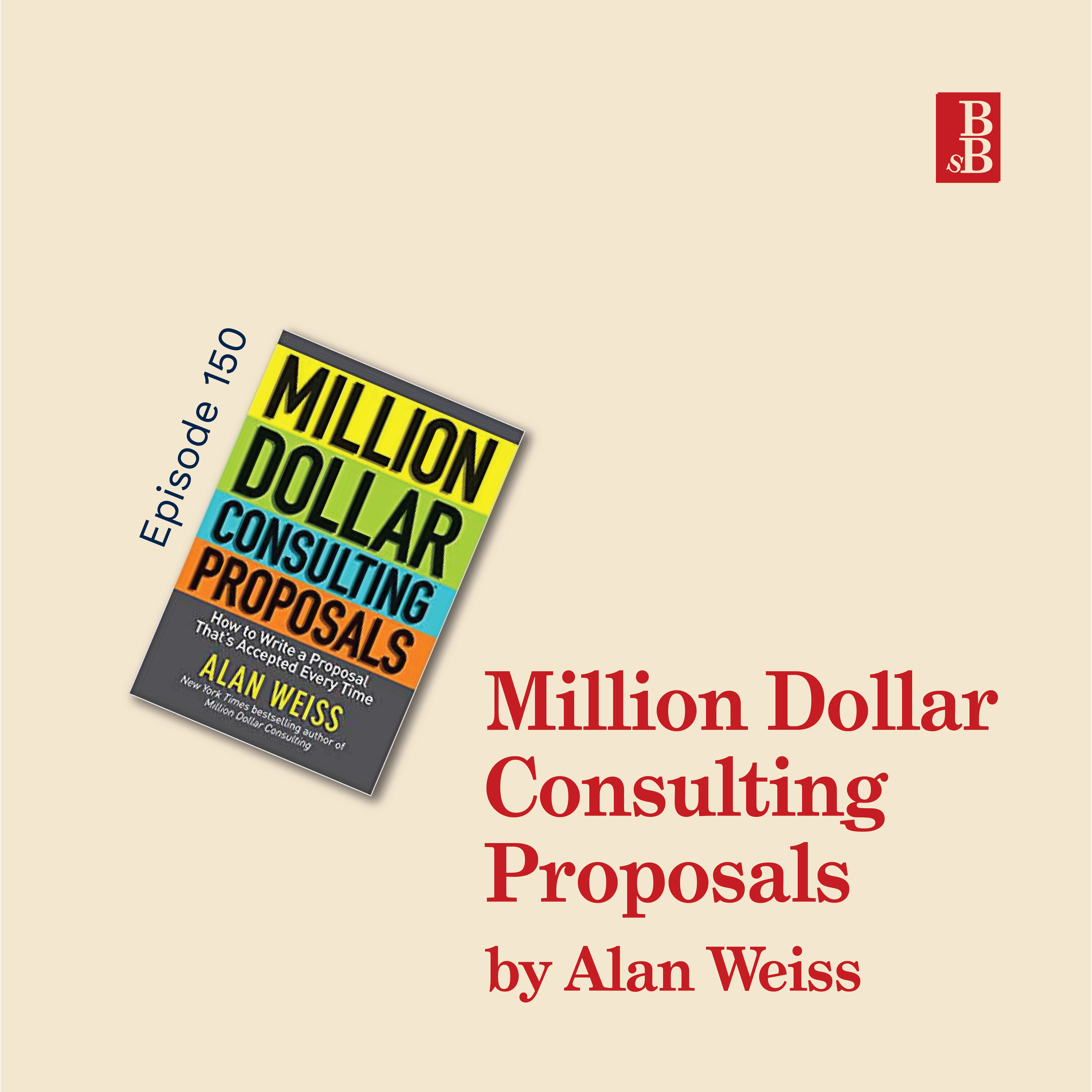
Million Dollar Consulting Proposals by Alan Weiss: how to get around the gatekeepers
from Steph's Business Bookshelf Podcast · host Steph Clarke
About the author Alan Weiss is one of those rare people who can say he is a consultant, speaker, and author and mean it. His consulting firm, Summit Consulting Group, Inc., has attracted clients such as Merck, Hewlett-Packard, GE, Mercedes-Benz, State Street Corporation, Times Mirror Group, The Federal Reserve, The New York Times Corporation, Toyota, and over 500 other leading organizations. He has served on the boards of directors of the Trinity Repertory Company, a Tony-Award-winning New England regional theater, Festival Ballet, and chaired the Newport International Film Festival. His speaking typically includes 20 keynotes a year at major conferences, and he has been a visiting faculty member at Case Western Reserve University, Boston College, Tufts, St. John’s, the University of Illinois, the Institute of Management Studies, and the University of Georgia Graduate School of Business. He has held an appointment as adjunct professor in the Graduate School of Business at the University of Rhode Island where he taught courses on advanced management and consulting skills to MBA and PhD candidates. He once held the record for selling out the highest priced workshop (on entrepreneurialism) in the then-21-year history of New York City’s Learning Annex. His Ph.D. is in psychology. He has served on the Board of Governors of Harvard University’s Center for Mental Health and the Media. Source: https://alanweiss.com/about-alan-weiss/ About the book The newest thoughts and examples on the best practices and language for successful professional services proposals. This is the contemporary version of the seminal book How to Write A Proposal That’s Accepted Every Time, originally written in 1998 and updated in 2002. Adopt the best global practices Alan has generated for conceptual agreement, options, escalating fees, avoiding the legal department, eliminating cancellations, and much more. He includes information about RFPs (requests for proposals) and retainers. Increase your income by six figures a year without doing anything different — except how you formulate your proposals. Source: https://alanweiss.com/shop/books/paperback/million-dollar-consulting-proposals/ Big idea #1 — Proposals with purpose Your proposal doesn’t do the selling for you. This is the fundamental idea of the book; the proposal isn’t doing anything that you haven’t already done. The sale should really already have been made from the meetings you’ve had, and the relationship you have built with the economic buyer. It’s a summary of what has come before and what has been agreed. There’s a quote in the book that says; A proposal is a summation, not an explanation. It is a summary of the conceptual agreement you’ve reached with your economic buyer and not a negotiating document or an attempt to make a sale. It’s easy to fall into the trap of sending a proposal without having actually ever sold anything, and making the mistake of seeing a proposal as the start of the sales process, rather than the end. Alan says that the things that proposal should do include; summarizing the agreement detailing the objectives, metrics of success, and the value of those objectives being met giving options for levels of value detailing the fees and the terms and conditions Conversely, what the proposal documents shouldn’t do is; be a document for gatekeepers to use on your behalf be vague establish credibility (that should already have been done) include anything that hasn’t already been agreed to be used to build a relationship with a buyer (again, that should already have been done), be a comparison point for competitors (ie you shouldn’t be in a situation where your proposal was being looked at and compared to another) He says that most people send proposals too early and too often, even sometimes using the number of proposals sent out as a measure of success. Big idea #2 — Know your buyer This isn’t just from an avatar perspective and coming up with your stick figure pretend ‘buyer’ and writing things that they like / feel etc. This is about really building a relationship with the economic buyer; the person who can sign off the purchase order, who can pay the invoice, who can approve the finances involved in working with you. At several points in the book Alan makes some sick burns at HR people (he often refers to them as Hardly Relevant in other talks / podcasts) and emphasizes many times that you should never deal with them. A proposal in the wrong hands, he says, is worse than no proposal at all. So we need to be working directly with our economic buyer. Building a trusted relationship with your economic buyer might take several meetings or interactions, and is not done through a proposal document. He says you know the relationship building is going well when the other person shares undisclosed/non-public information with you and ask your opinion. By working with the buyer you are able to better articulate value, because you know exactly what is important to them, what their objectives are, what outcomes would be valuable to them, and how to talk about those things in their words. He says when gatekeepers are involved (or low-level people, as he often refers to them) that keep you from your buyer, it’s time to ‘blow a hole in the wall’ and find your own way to the economic buyer. He acknowledges this is a bit of a risky approach, and may only work 10% of the time, but that’s better than the 0% which you’re going to get if the gatekeeper keeps you from the economic buyer. Big idea #3 — The nine key components Alan very helpfully in the book provides several templates to use an example proposal, including wording and structures. Some of the wording you might not like, but it gives you a chance to make these your own. There are nine key components to one of his million dollar proposals: Situational appraisal: the context of the problem (keep it short and focused on the problem, don’t include the company history / what they do… your buyer already knows this!) Objectives: the desired business outcome Metrics: how success and/or progress will be measured Value: the impact of meeting the objectives Methodology and options: how the outcomes will be achieved / the levels of value available Timing: key dates / timing estimates / overall timeline Joint accountability: what you will do and what the client needs to commit to, in order to be successful Terms & conditions: legal blurb and payment terms / rates etc Acceptance: how does the client accept the proposal? He says including these sections means easier and clearer conversations every single time, and therefore a better acceptance rate. But only if the work has been done upfront and you’re using proposals to summarize, not sell. Support my book habit: https://www.buymeacoffee.com/stephsbookshelfSee omnystudio.com/listener for privacy information.
Embed this episode
NOW PLAYING
Million Dollar Consulting Proposals by Alan Weiss: how to get around the gatekeepers
No transcript for this episode yet
Similar Episodes
No similar episodes found.
Similar Podcasts
No similar podcasts found.